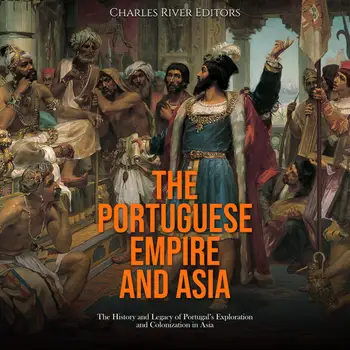
The Portuguese Empire and Asia: The History and Legacy of Portugal’s Exploration and Colonization in Asia

By the mid-15th century, the Byzantine Empire had collapsed and the various Crusades that had taken place in the region had largely disrupted the overland routes of the Silk Road and trade. Compounding the difficulties of trade was the rise of the Ottoman Empire in place of the Byzantines and the outbreak of the Black Death in Europe.

It was roughly around this time that a period of European exploration began, and major factors that contributed to this period of exploration were introduced by the Chinese, albeit indirectly. The magnetic compass had already been developed and used by the Chinese sailors since the 12th century, although it had first been created in the 3rd century BCE as a divination device. The Portuguese started exploring the west coast of Africa and the Atlantic under orders from Prince Henry the Navigator. At this point, Europeans had not yet been capable of navigating completely around Africa since the ships being built were not yet fully capable of being able to sail very far from the coast and navigation in open waters was difficult, but the Portuguese continued pushing down the western African coast looking for ways to bypass the Ottomans and Muslims of Africa who had been making overland trade routes difficult.

In 1488, Bartholomew Diaz rounded the southern tip of Africa, named the Cape of Good Hope by King John of Portugal, and entered the Indian Ocean from the Atlantic. The Portuguese had found access to the trade regions that they had been searching for, but sailing from Portugal to India and beyond would require too many resources to travel with at once. To remedy this problem, Portugal began establishing a number of forts and trading posts along the route. The Portuguese were able to establish a fort on the west coast of India, Fort Manuel, in 1500, and in 1505 a fort was erected off the coast of Tanzania.


Kom igång med den här boken idag för 0 kr

  • Få full tillgång till alla böcker i appen under provperioden
  • Ingen bindningstid, avsluta när du vill
Prova gratis nu
Mer än 52 000 personer har gett Nextory 5 stjärnor i App Store och på Google Play.

  1. 4.0

    The Rise and Fall of the Banate of Bosnia: The History of Bosnia’s Struggle for Independence in the Middle Ages

    Charles River Editors

  2. Zoroastrianism: The History and Legacy of One of the World’s Oldest Religions

    Charles River Editors

  3. Dick Bong: The Life and Legacy of America’s Greatest Combat Ace during World War II

    Charles River Editors

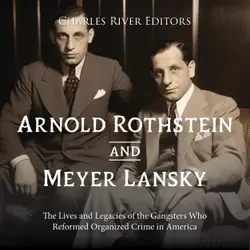
  4. Arnold Rothstein and Meyer Lansky: The Lives and Legacies of the Gangsters Who Reformed Organized Crime in America

    Charles River Editors

  5. Crusading against the Ottomans: The History and Legacy of the Christian Battles against the Ottoman Empire in Central Europe

    Charles River Editors

  6. The Anunnaki: The History and Legacy of the Ancient Mesopotamian Deities

    Charles River Editors

  7. 5.0

    The Amorite Kingdoms: The History of the First Babylonian Dynasty and the Other Mesopotamian Kingdoms Established by the Amorites

    Charles River Editors

  8. 5.0

    Roman Arches: The History of the Famous Monuments in Rome and Throughout the Roman Empire

    Charles River Editors

  9. Ernest Shackleton and Robert Falcon Scott: The History of the British Explorers’ Notorious Rivalry during the Heroic Age of Antarctic Exploration

    Charles River Editors

  10. 4.0

    The New Zealand Wars: The History and Legacy of the British Empire’s Conflicts with the Indigenous Māori

    Charles River Editors

  11. 4.0

    The Circassians: The Turbulent History of the Ethnic Group in the North Caucasus

    Charles River Editors

  12. 3.5

    Sigmund Freud and Carl Jung: The Pioneering Lives and Works of History’s Most Influential Psychologists

    Charles River Editors