Voltaire's Philosophical Dictionary : Enriched edition.

In "Voltaire's Philosophical Dictionary," the esteemed Enlightenment thinker critiques and examines a range of philosophical topics, from religion and morality to science and government. Employing a distinct literary style characterized by wit, irony, and eloquent prose, Voltaire's work serves as both a compendium of Enlightenment thought and a caustic commentary on societal norms. Each entry is infused with his trademark skepticism, encouraging readers to question established doctrines and consider alternative perspectives, ensuring that the text resonates within the broader context of 18th-century intellectual discourse. Voltaire, born François-Marie Arouet, was a prolific writer, historian, and philosopher whose life experiences—marked by censorship, exile, and advocacy for civil liberties—shaped his critical perspective. His encounters with religious dogma and abuses of power fueled his desire to promote reason and tolerance. "Philosophical Dictionary" reflects his commitment to intellectual freedom and the examination of life's profound questions, reinforcing the values of the Age of Enlightenment and underscoring the importance of critical inquiry. This book is an essential read for anyone seeking to engage deeply with the philosophical questions that define humanity. Voltaire's sharp insights and articulate arguments invite readers to reflect on their own beliefs and the world around them, making it a timeless resource for philosophy enthusiasts and students alike.

In this enriched edition, we have carefully created added value for your reading experience:

- A comprehensive Introduction outlines these selected works' unifying features, themes, or stylistic evolutions.

- The Author Biography highlights personal milestones and literary influences that shape the entire body of writing.

- A Historical Context section situates the works in their broader era—social currents, cultural trends, and key events that underpin their creation.

- A concise Synopsis (Selection) offers an accessible overview of the included texts, helping readers navigate plotlines and main ideas without revealing critical twists.

- A unified Analysis examines recurring motifs and stylistic hallmarks across the collection, tying the stories together while spotlighting the different work's strengths.

- Reflection questions inspire deeper contemplation of the author's overarching message, inviting readers to draw connections among different texts and relate them to modern contexts.

- Lastly, our hand‐picked Memorable Quotes distill pivotal lines and turning points, serving as touchstones for the collection's central themes.
Om den här boken

In "Voltaire's Philosophical Dictionary," the esteemed Enlightenment thinker critiques and examines a range of philosophical topics, from religion and morality to science and government. Employing a distinct literary style characterized by wit, irony, and eloquent prose, Voltaire's work serves as both a compendium of Enlightenment thought and a caustic commentary on societal norms. Each entry is infused with his trademark skepticism, encouraging readers to question established doctrines and consider alternative perspectives, ensuring that the text resonates within the broader context of 18th-century intellectual discourse. Voltaire, born François-Marie Arouet, was a prolific writer, historian, and philosopher whose life experiences—marked by censorship, exile, and advocacy for civil liberties—shaped his critical perspective. His encounters with religious dogma and abuses of power fueled his desire to promote reason and tolerance. "Philosophical Dictionary" reflects his commitment to intellectual freedom and the examination of life's profound questions, reinforcing the values of the Age of Enlightenment and underscoring the importance of critical inquiry. This book is an essential read for anyone seeking to engage deeply with the philosophical questions that define humanity. Voltaire's sharp insights and articulate arguments invite readers to reflect on their own beliefs and the world around them, making it a timeless resource for philosophy enthusiasts and students alike.

In this enriched edition, we have carefully created added value for your reading experience:

- A comprehensive Introduction outlines these selected works' unifying features, themes, or stylistic evolutions.

- The Author Biography highlights personal milestones and literary influences that shape the entire body of writing.

- A Historical Context section situates the works in their broader era—social currents, cultural trends, and key events that underpin their creation.

- A concise Synopsis (Selection) offers an accessible overview of the included texts, helping readers navigate plotlines and main ideas without revealing critical twists.

- A unified Analysis examines recurring motifs and stylistic hallmarks across the collection, tying the stories together while spotlighting the different work's strengths.

- Reflection questions inspire deeper contemplation of the author's overarching message, inviting readers to draw connections among different texts and relate them to modern contexts.

- Lastly, our hand‐picked Memorable Quotes distill pivotal lines and turning points, serving as touchstones for the collection's central themes.

Kom igång med den här boken idag för 0 kr

  • Få full tillgång till alla böcker i appen under provperioden
  • Ingen bindningstid, avsluta när du vill
Prova gratis nu
Mer än 52 000 personer har gett Nextory 5 stjärnor i App Store och på Google Play.

  1. Learn German with Bilingual Books : (English - German)

    Heinrich Hoffmann, Oscar Wilde, Gustave Flaubert, Victor Hugo, Wilhelm Busch, Niccolo Machiavelli, William Shakespeare, Hans Theodor Woldsen Storm, Leo Tolstoy, Joseph Karl Benedikt Freiherr von Eichendorff, Charles Dickens, Charlotte Bronte, Voltaire, Friedrich Wilhelm Nietzsche, Edgar Allan Poe

  2. Candide och Traktat om toleransen

    Voltaire

  3. Candide : The Classic Tale

    Voltaire

  4. 2.0

    Perfect Love, Emotional Romance: A Heartwarming Collection of 100 Classic Poems and Letters for the Lovers (Valentine's Day 2019 Edition)

    William Shakespeare, Christina Rossetti, Walt Whitman, Golden Deer Classics, Lord Byron, John Donne, Kahlil Gibran, Robert Browning, Emily Dickinson, Percy Bysshe Shelley, Alfred Tennyson, Edgar Allan Poe, John Keats, Andrew Marvell, Rabindranath Tagore, Elizabeth B. Browning, Ella W. Wilcox, Sara Teasdale, George Etherege, Michael Drayton, Samuel T. Coleridge, Robert Burns, Sir Thomas Wyatt, Patience Worth, Christopher John Brennan, Oscar Wilde, C., unknown, William Morris, John Clare, Thomas Moore, Robert Louis Stevenson, Anne Bradstreet, John B. O'Reilly, Ralph Waldo Emerson, Leigh Hunt, Dante G. Rossetti, Sir Walter Scott, John Wilmot, Robert Herrick, Ludwig van Bethoveen, Emma Darwin, Charles Darwin, Virginia Woolf, Vita Sackville-West, Honoré de Balzac, Napoleon Bonaparte, Voltaire, Henry VIII, Leo Tolstoy, Gustave Flaubert, Nathaniel Hawthorne, Jack London, Johann Von Goethe, James Joyce, Abigail Adams, Sullivan Ballou, Harriet Beecher Stowe, Pietro Bembo, Charlotte Brontë, Lewis Carroll, Catherine Of Aragon, Mark Twain, John Constable, Oliver Cromwell, Ninon De L'Enclos, Alfred de Musset, Zelda Fitzgerald, Mary Wollstonecraft, Heloise, Count Gabriel De Mirbeau, Lyman Hodge, King Henry IV, Franz Liszt, Katherine Mansfield, Wolfgang Amadeus Mozart, Thomas Otway, Ovid, Robert Schumann, Vincent van Gogh, Tsarina Alexandra, Laura Lyttleton

  5. 33 Human Science Masterpieces You Must Read Before You Die. Illustrated : The Art of Public Speaking, The Meditations, The Kama Sutra and other masterpieces

    Edwin A. Abbott, Aristotle, Dale Carnegie, Gilbert Chesterton, René Descartes, Epictetus, Marcus Aurelius Antoninus, Sigmund Freud, Hermann Hesse, David Hume, Lao Tzu, Confucius, Swami Abhedananda, Anonimous, David Herbert Lawrence, Niccolò Machiavelli, Benedictus de Spinoza, John Mill, Prentice Mulford, Thomas More, Friedrich Nietzsche, J. Allanson Picton, Plato, Sun Tzu, Vatsyayana, Voltaire, H.G. Wells, Frances Bacon

  6. 50 Great Love Letters You Have To Read (Golden Deer Classics)

    Ludwig van Bethoveen, Oscar Wilde, Emma Darwin, Vita Sackville-West, Virginia Woolf, Honoré de Balzac, Napoléon Bonaparte, John Keats, Lord Byron, Voltaire, Henri VIII, Leo Tolstoy, Gustave Flaubert, Nathaniel Hawthorne, Jack London, Johann Von Goethe, James Joyce, Abigail Adams, Sullivan Ballou, Harriet Beecher Stowe, Pietro Bembo, Charlotte Brontë, Lewis Carroll, Catherine Of Aragon, Mark Twain, John Constable, Oliver Cromwell, Ninon De L'Enclos, Alfred de Musset, Zelda Fitzgerald, Mary Wollstonecraft, Heloise, Count Gabriel De Mirbeau, Lyman Hodge, King Henry IV, Franz Liszt, Katherine Mansfield, Wolfgang Amadeus Mozart, Thomas Otway, Ovid, Robert Schumann, Vincent van Gogh, Tsarina Alexandra, Laura Lyttleton

  7. 4.0

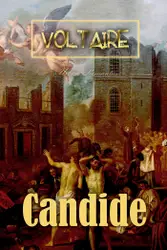
    Candide

    Voltaire

  8. 1800 Citations de philosophes

    Aristote, Épicure, Platon, Thalès de Milet, – Socrate, Protagoras, Anaximandre, Épictète, Héraclite, Marc Aurèle, René Descartes, Michel de Montaigne, Alexis de Tocqueville, Voltaire, Charles De Montesquieu, Jean-Jacques Rousseau, Emmanuel Kant, Hannah Arendt, Gottfried Wilhelm Leibniz, Georg Wilhelm Friedrich Hegel, Friedrich Nietzsche, Arthur Schopenhauer, David Hume, John Locke, Francis Bacon, Thomas Hobbes, Thomas More, Confucius, Érasme, Lao Tseu, Baruch Spinoza, Søren Kierkegaard, Nicolas Machiavel, Thomas d'Aquin, Henry David Thoreau

  9. An Essay On Crime & Punishments :

    Voltaire

  10. The Collected Works of Voltaire : Enriched edition. Enlightenment Insights: Satire, Philosophy, and Social Critique in Voltaire's Literary Legacy

    Voltaire

  11. 101 Libros Imprescindibles Para Leer En Tu Vida : Edición enriquecida. Explorando la vastedad literaria a través de 101 obras imprescindibles

    Franz Kafka, Lewis Carroll, Henrik Ibsen, Mark Twain, Immanuel Kant, Harriet Beecher Stowe, Oscar Wilde, Robert Louis Stevenson, Edgar Allan Poe, William Shakespeare, Dante Alighieri, Giovanni Boccaccio, Bram Stoker, Emily Brontë, Jack London, Victor Hugo, Arthur Conan Doyle, Jane Austen, Herman Melville, Gustavo Adolfo Bécquer, Vicente Blasco Ibáñez, Benito Pérez Galdós, Jean-Jacques Rousseau, Washington Irving, Juan Valera, Horacio Quiroga, Charles Baudelaire, Voltaire, Leopoldo Alas, John Milton, José Martí, Rubén Darío, Antonio Machado, Emilia Pardo Bazán, L. Frank Baum, H.G. Wells, H.P. Lovecraft, Seneca, Hans Christian Andersen, Friedrich Nietzsche, Mary Shelley, Sófocles, Sun Tzu, Antón Chéjov, León Tolstoi, Tomás Moro, San Agustín, Julio Verne, Homero, Platón, Hermanos Grimm, Jorge Isaacs, Ignacio De Loyola, Nicolás Maquiavelo, Miguel Cervantes, Teresa de Jesús, Miguel De Unamuno, Duque de Rivas, Ramón María del Valle-Inclán, Federico García Lorca, Gibrán Jalil Gibrán

  12. The History of Peter the Great, Emperor of Russia

    Voltaire