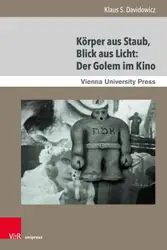
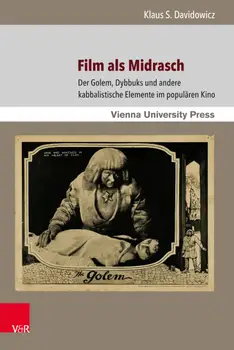
The book explores the conscious usage of Jewish mystical themes and motifs in popular (as well as arthouse) cinema from the silent film era to the present. This historical, as well as geographic, arc spanning from Paul Wegener's Golem (1920) to films such as David Goyer's The Unborn (2009), Ang Lee's Life of Pi (2012) or David Aronofsky's Noah (2014), is held together by a tightly argued and detailed discussion of both the kabbalist elements themselves and their presence in film and television.Organized in four interrelated parts, the study focuses on mystical secrets of the Hebrew alphabet (where each letter is attributed a numerical value and each number has a hidden meaning), the idea of the Dybbuk as an exiled soul looking for a bodily home, the Lurianic concepts of Tzimtzum (contraction) and Tikkun olam (repair of the world) and, finally, the legend of the Golem, whose Prague origins have been reworked not only in numerous movies but also in popular US television shows including the X-Files and The Simpsons.
Starte noch heute mit diesem Buch für € 0
- Hole dir während der Testphase vollen Zugriff auf alle Bücher in der App
- Keine Verpflichtungen, jederzeit kündbar
Autor*in:
Reihe:
Band 6 in Poetik, Exegese und Narrative / Poetics, Exegesis and NarrativeSprache:
Deutsch
Format:

Sonnenuntergang auf eisig-blauen Wegen : Zur Thematisierung von Diaspora und Sprache in der jiddischen Literatur des 20. Jahrhunderts

Die andere Tradition : Psalm-Gedichte im 20. Jahrhundert

Über die Verzweiflung hinaus : Das Jahrhundert zwischen Stefan Zweig und Aharon Appelfeld

Michelangelo und die jüdische Moderne

Wer hat zu entscheiden, wohin ich gehöre? : Die deutsch-jüdische Aphoristik

Das Phantasma der Assimilation : Interpretationen des »Jüdischen« in der deutschen Phantastik 1890–1930

Hat der jüdisch-christliche Dialog Zukunft? : Gegenwärtige Aspekte und zukünftige Perspektiven in Mitteleuropa

Darstellen, Vermitteln, Aneignen : Gegenwärtige Reflexionen des Holocaust

Ich will euch eine Zukunft und eine Hoffnung geben (Jer 29,11) : Die biblische Prophetengestalt und ihre Rezeption in der dramatischen Dichtung Jeremias von Stefan Zweig

Das Märchen vom Märchen : Eine kultur- und literaturwissenschaftliche Untersuchung des deutschsprachigen jüdischen Volks- und Kindermärchens

Wer oben sitzt, der hat die Macht : Die Verschränkung von Sexualität und Shoah im Werk Edgar Hilsenraths