Über dieses Buch

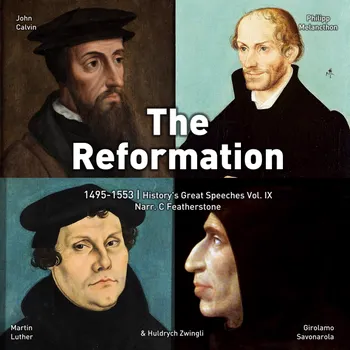
Martin Luther and John Calvin are household names, where people have little knowledge of them besides their vast impact on Christian thought and culture. It is surprising how closely their language and concerns reflect modern times.

Martin Luther was a rabble-rousing man of the people, filled with invective and the emotional force of connecting with humanity rather than culture or wealth.

John Calvin’s sardonic sense of humour permeates a constant barrage of mythbusting that would do a modern-day fact checker proud.

Three less well-known writers round out the collection. Zwingli, Melancthon and Savonarola all preach with a force befitting true Christians fighting against the vast powers of a Catholic church that was the most powerful entity in Europe, and had consolidated a wide range of practices that broke the people away from an experience of divinity.

Savonarola speaks with the voice of a travelling preacher, a man of the people whose voice matched that of Eugene Debs. Zwingli spoke with a proud nationalism and pride that was wounded by the use of foreign armies, when the land could provide for all its citizens if managed correctly. Melancthon is an academic, providing a point-by-point deconstruction of the Pope’s claimed powers in ways that were irrefutable even for the Jesuit strains that held the Catholic Church’s intellectual force.

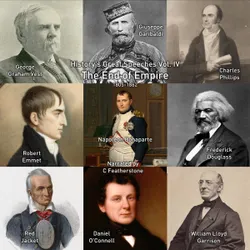
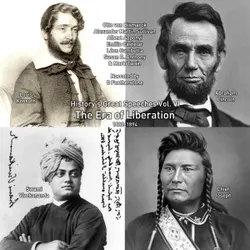
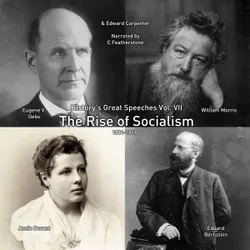
Just as with the liberation fighters, socialists, and anarchists of previous volumes, these historical figures lived under great threat, attacking vast forces with little more than courage and the certainty of their beliefs. They stand as the bridge over the cultural change between the middle ages and the renaissance.

Starte noch heute mit diesem Buch für € 0

  • Hole dir während der Testphase vollen Zugriff auf alle Bücher in der App
  • Keine Verpflichtungen, jederzeit kündbar
Jetzt kostenlos testen
Mehr als 52 000 Menschen haben Nextory im App Store und auf Google Play 5 Sterne gegeben.

Mehr von Martin Luther

  1. Neu

    Luthers sprichwörtersammlung

    Martin Luther

  2. Die Bibel - Die Offenbarung des Johannes nach der Übersetzung Martin Luthers

    Martin Luther

  3. Harvard Classics : The Five-Foot Shelf of Books

    Aesop, Dante Alighieri, Hans Christian Andersen, Augustine of Hippo, Marcus Aurelius, Jane Austen, Francis Bacon, Honoré de Balzac, Francis Beaumont, Bjørnstjerne Bjørnson, Thomas Browne, Robert Browning, John Bunyan, EDMUND BURKE, Robert Burns, Lord Byron, Thomas Carlyle, Benvenuto Cellini, Miguel de Cervantes, Marcus Tullius Cicero, Richard Henry Jr., Charles Darwin, Alphonse Daudet, Thomas Dekker, Charles Dickens, Fyodor Dostoevsky, John Dryden, Charles W. Eliot, George Eliot, Ralph Waldo Emerson, Epictetus, John Fletcher, Theodor Fontane, Benjamin Franklin, Johann Wolfgang Goethe, Oliver Goldsmith, Jacob Grimm, Edward Everett Hale, Bret Harte, Nathaniel Hawthorne, Homer, Victor Hugo, Washington Irving, Henry James, Ben Jonson, Gottfried Keller, Thomas à Kempis, Alexander L. Kielland, Martin Luther, Niccolò Machiavelli, Alessandro Manzoni, Christopher Marlowe, Philip Massinger, Guy De Maupassant, John Stuart Mill, John Milton, Thomas More, William Morris, Alfred de Musset, William Allan Neilson, William Penn, Plato, Pliny the Younger, Plutarch, George Sand, Percy Bysshe Shelley, Richard Brinsley Sheridan, Adam Smith, Laurence Sterne, Theodor Storm, William Makepeace Thackeray, Leo Tolstoy, Ivan Turgenev, Mark Twain, Juan Valera, Virgil, Izaak Walton, John Webster, John Woolman

  4. Die Bibel - Genesis: 1. Buch Mose nach der Übersetzung Martin Luthers

    Martin Luther

  5. Der Prediger Salomo (Kohelet)

    Martin Luther

  6. Das Magnifikat : Verdeutscht und ausgelegt

    Martin Luther

  7. Le petit catéchisme

    Martin Luther

  8. Hauspredigten

    Martin Luther

  9. Der Große Katechismus : vorgelesen von Hans Jochim Schmidt

    Martin Luther

  10. 2. Brief des Paulus an die Korinther

    Martin Luther

  11. Gekürzt

    Apokalypse - Die Offenbarung des Johannes : Gekürzt

    Martin Luther

  12. Der Brief des Paulus an die Römer

    Martin Luther