3.8(4)

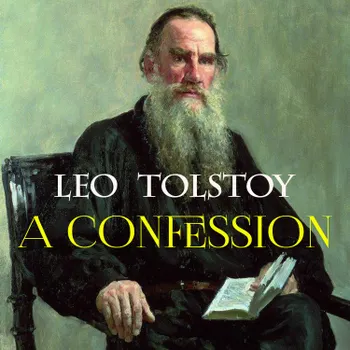
A Confession

A Confession, or My Confession, is a short work on the subject of melancholia, philosophy and religion by the acclaimed Russian novelist Leo Tolstoy. It was written in 1879 to 1880, when Tolstoy was in his early fifties.

The book is a brief autobiographical story of the author's struggle with a mid-life existential crisis. It describes his search for the answer to the ultimate philosophical question: "If God does not exist, since death is inevitable, what is the meaning of life?." Without the answer to this, for him, life had become "impossible".

The story begins with the Eastern fable of the dragon in the well. A man is chased by a beast into a well, at the bottom of which is a dragon. The man clings to a branch that is being gnawed on by two mice (one black, one white, representing night and day and the relentless march of time). The man is able to lick two drops of honey (representing Tolstoy's love of his family and his writing), but because death is inevitable, he no longer finds the honey sweet.

Tolstoy goes on to describe four possible attitudes towards this dilemma. The first is ignorance. If one is oblivious to the fact that death is approaching, life becomes bearable. The problem with this for him personally is that he is not ignorant. Having become conscious of the reality of death, there is no going back.
À propos de ce livre

A Confession, or My Confession, is a short work on the subject of melancholia, philosophy and religion by the acclaimed Russian novelist Leo Tolstoy. It was written in 1879 to 1880, when Tolstoy was in his early fifties.

The book is a brief autobiographical story of the author's struggle with a mid-life existential crisis. It describes his search for the answer to the ultimate philosophical question: "If God does not exist, since death is inevitable, what is the meaning of life?." Without the answer to this, for him, life had become "impossible".

The story begins with the Eastern fable of the dragon in the well. A man is chased by a beast into a well, at the bottom of which is a dragon. The man clings to a branch that is being gnawed on by two mice (one black, one white, representing night and day and the relentless march of time). The man is able to lick two drops of honey (representing Tolstoy's love of his family and his writing), but because death is inevitable, he no longer finds the honey sweet.

Tolstoy goes on to describe four possible attitudes towards this dilemma. The first is ignorance. If one is oblivious to the fact that death is approaching, life becomes bearable. The problem with this for him personally is that he is not ignorant. Having become conscious of the reality of death, there is no going back.
Commencez ce livre dès aujourd'hui pour 0 €

  • Accédez à tous les livres de l'app pendant la période d'essai
  • Sans engagement, annulez à tout moment
Essayer gratuitement
Plus de 52 000 personnes ont noté Nextory 5 étoiles sur l'App Store et Google Play.

  1. Nouveau

    War and Peace : Five Russian Families, One Napoleonic Invasion, and the War That Reshaped a Nation

    Leo Tolstoy

  2. Nouveau

    Anna Karenina : A Society Scandal, a Doomed Love Affair, and the Train That Changed Everything

    Leo Tolstoy

  3. Nouveau

    The Death of Ivan Ilych : A Comfortable Life, a Sudden Illness, and the Truths a Dying Man Finally Faces

    Leo Tolstoy

  4. Nouveau

    Childhood

    Leo Tolstoy

  5. Nouveau

    Complete Novels and Novellas of Leo Tolstoy

    Leo Tolstoy

  6. Nouveau

    50 Masterpieces You Must Read Before You Die : Timeless Classics That Will Enrich Your Mind and Soul

    Louisa May Alcott, Jane Austen, Joseph Conrad, D. H. Lawrence, George Eliot, Leo Tolstoy, James Joyce, Charles Dickens, Bram Stoker, Oscar Wilde, Honoré de Balzac, Edgar Rice Burroughs, Anne Brontë, Charlotte Brontë, Emily Brontë, Lewis Carroll, Willa Cather, Miguel de Cervantes, E. E. Cummings, Fyodor Dostoyevsky, Daniel Defoe, Arthur Conan Doyle, Alexandre Dumas, Gustave Flaubert, Henry James, Victor Hugo

  7. Nouveau

    50 Masterpieces you have to read before you die vol 1

    Louisa May Alcott, Jane Austen, Joseph Conrad, Edwin Abbott Abbott, George Eliot, Leo Tolstoy, James Joyce, Charles Dickens, Bram Stoker, Oscar Wilde, Honoré de Balzac, Edgar Rice Burroughs, Anne Brontë, Charlotte Brontë, Emily Brontë, Lewis Carroll, Willa Cather, Miguel de Cervantes, E. E. Cummings, Fyodor Dostoyevsky, Daniel Defoe, Arthur Conan Doyle, Alexandre Dumas, Gustave Flaubert, Henry James, Victor Hugo

  8. 4.7

    Master and Man

    Leo Tolstoy

  9. La Révolution russe : sa portée mondiale

    Leo Tolstoy

  10. The Gospel In Brief : The Teachings of Jesus for Those Who Have Left the Church: A Gospel Stripped of Miracles and Returned to the Living

    Leo Tolstoy

  11. Where Love is God is

    Leo Tolstoy

  12. 3.7

    Anna Karenina

    Leo Tolstoy