3.9(122)

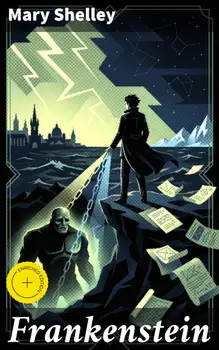
Frankenstein : Enriched edition. The Original 1818 'Uncensored' Edition

Mary Shelley's "Frankenstein" emerges as a seminal work within the Gothic literary tradition, intertwining elements of horror, science fiction, and philosophical discourse. Set against the backdrop of the early 19th century, the novel delves into the consequences of unchecked ambition and the quest for knowledge, examining the moral implications of creation through the narrative of Victor Frankenstein and his monstrous progeny. Shelley's elegant prose and intricate character development invite readers to grapple with profound existential questions about humanity, isolation, and the ethical boundaries of scientific exploration. Mary Shelley, often regarded as the mother of science fiction, penned "Frankenstein" at the tender age of eighteen, influenced by the Romantic movement and her own turbulent experiences, which included the profound loss of her mother and the complexities of her relationship with poet Percy Bysshe Shelley. Encouraged by her unique circle of literary companions'Äîincluding Lord Byron'Äîshe crafted a tale that explores not only the darker sides of human ambition but also the fragility of human connection, making her narrative both a personal and cultural commentary on the Enlightenment's obsession with reason. "Frankenstein" is highly recommended for readers who seek a profound narrative that transcends its time, inviting contemplation on the intersection of science and ethics. As relevant today as it was in the 19th century, this work challenges us to reflect on our responsibilities towards creation and the consequences of our pursuit of knowledge.

In this enriched edition, we have carefully created added value for your reading experience:

- A succinct Introduction situates the work's timeless appeal and themes.

- The Synopsis outlines the central plot, highlighting key developments without spoiling critical twists.

- A detailed Historical Context immerses you in the era's events and influences that shaped the writing.

- An Author Biography reveals milestones in the author's life, illuminating the personal insights behind the text.

- A thorough Analysis dissects symbols, motifs, and character arcs to unearth underlying meanings.

- Reflection questions prompt you to engage personally with the work's messages, connecting them to modern life.

- Hand‐picked Memorable Quotes shine a spotlight on moments of literary brilliance.

- Interactive footnotes clarify unusual references, historical allusions, and archaic phrases for an effortless, more informed read.
À propos de ce livre

Mary Shelley's "Frankenstein" emerges as a seminal work within the Gothic literary tradition, intertwining elements of horror, science fiction, and philosophical discourse. Set against the backdrop of the early 19th century, the novel delves into the consequences of unchecked ambition and the quest for knowledge, examining the moral implications of creation through the narrative of Victor Frankenstein and his monstrous progeny. Shelley's elegant prose and intricate character development invite readers to grapple with profound existential questions about humanity, isolation, and the ethical boundaries of scientific exploration. Mary Shelley, often regarded as the mother of science fiction, penned "Frankenstein" at the tender age of eighteen, influenced by the Romantic movement and her own turbulent experiences, which included the profound loss of her mother and the complexities of her relationship with poet Percy Bysshe Shelley. Encouraged by her unique circle of literary companions'Äîincluding Lord Byron'Äîshe crafted a tale that explores not only the darker sides of human ambition but also the fragility of human connection, making her narrative both a personal and cultural commentary on the Enlightenment's obsession with reason. "Frankenstein" is highly recommended for readers who seek a profound narrative that transcends its time, inviting contemplation on the intersection of science and ethics. As relevant today as it was in the 19th century, this work challenges us to reflect on our responsibilities towards creation and the consequences of our pursuit of knowledge.

In this enriched edition, we have carefully created added value for your reading experience:

- A succinct Introduction situates the work's timeless appeal and themes.

- The Synopsis outlines the central plot, highlighting key developments without spoiling critical twists.

- A detailed Historical Context immerses you in the era's events and influences that shaped the writing.

- An Author Biography reveals milestones in the author's life, illuminating the personal insights behind the text.

- A thorough Analysis dissects symbols, motifs, and character arcs to unearth underlying meanings.

- Reflection questions prompt you to engage personally with the work's messages, connecting them to modern life.

- Hand‐picked Memorable Quotes shine a spotlight on moments of literary brilliance.

- Interactive footnotes clarify unusual references, historical allusions, and archaic phrases for an effortless, more informed read.
Commencez ce livre dès aujourd'hui pour 0 €

  • Accédez à tous les livres de l'app pendant la période d'essai
  • Sans engagement, annulez à tout moment
Essayer gratuitement
Plus de 52 000 personnes ont noté Nextory 5 étoiles sur l'App Store et Google Play.

  1. Nouveau
    3.9

    Frankenstein

    Mary Shelley

  2. Nouveau

    On Ghosts

    Mary Shelley

  3. Nouveau
    3.9

    Frankenstein

    Mary Shelley

  4. Nouveau
    3.5

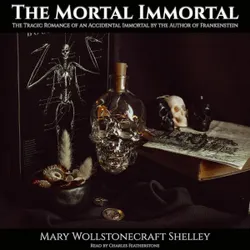
    The Mortal Immortal : The Tragic Romance of an Accidental Immortal by the Author of Frankenstein

    Mary Shelley

  5. Nouveau

    Mondolfos arv

    Mary Shelley

  6. Nouveau
    3.0

    50 Masterpieces you have to read before you die vol: 2

    Lewis Carroll, Mark Twain, Jules Verne, Oscar Wilde, Arthur Conan Doyle, Louisa May Alcott, Jane Austen, G.K. Chesterton, Wilkie Collins, Charles Dickens, Fyodor Dostoyevsky, Alexandre Dumas, F. Scott Fitzgerald, E. M. Forster, Thomas Hardy, Hermann Hesse, James Joyce, Jack London, H.P. Lovecraft, Lucy Maud Montgomery, Edgar Allan Poe, Marcel Proust, William Shakespeare, Robert Louis Stevenson, H.G. Wells, Virginia Woolf, Rudyard Kipling, D. H. Lawrence, Thomas Mann, William Somerset Maugham, Herman Melville, George Sand, Mary Shelley, Walter Scott, Leo Tolstoy, Bram Stoker

  7. Nouveau
    3.9

    Frankenstein

    Mary Shelley

  8. Nouveau

    100 Clásicos de la Literatura Universal

    Francis Scott Fitzgerald, Mary Shelley, Lyman Frank Baum, Louisa May Alcott, Dante Alighieri, Jane Austen, Ambrose Bierce, Emily Brontë, Edgar Rice Burroughs, Lewis Carroll, Wilkie Collins, René Descartes, Charles Dickens, Emily Dickinson, Alexandre Dumas, Gustave Flaubert, Benito Pérez Galdós, Johann Wolfgang von Goethe, Thomas Hardy, E T A Hoffmann, Washington Irving, Henry James, James Joyce, Franz Kafka, Gaston Leroux, Federico García Lorca, H.P. Lovecraft, Publio Virgilio Marón, Lucy Maud Montgomery, John William Polidori, Marco Polo, Antoine de Saint-Exupéry, Emilio Salgari, Walter Scott, Mark Twain, Jules Verne, Julio Verne, H.G. Wells, Edith Wharton, Mary Wollstonecraft, Stefan Zweig, Sun Tzu, Bram Stoker, - Aristoteles, George Bernard Shaw, Henryk Sienkiewicz, Concepción Arenal, Charlotte Brontë, Miguel de Cervantes, G.K. Chesterton, Daniel Defoe, Fyodor Mikhailovich Dostoyevsky, Arthur Conan Doyle, Sigmund Freud, H. Rider Haggard, Homero, Immanuel Kant, Rudyard Kipling, Molière, Friedrich Nietzsche, Fernando de Rojas, Sófocles, William Makepeace Thackeray, León Tolstói, Voltaire, Ramón María del Valle-Inclán, Oscar Wilde, Virginia Woolf

  9. Nouveau

    100 Obras Maestras Que Debes Leer Antes De Morir

    Francis Scott Fitzgerald, Mary Shelley, Lyman Frank Baum, Edith Nesbit, Dante Alighieri, Jane Austen, Ambrose Bierce, Emily Brontë, Edgar Rice Burroughs, Lewis Carroll, Wilkie Collins, René Descartes, Charles Dickens, Emily Dickinson, Alexandre Dumas, Gustave Flaubert, Benito Pérez Galdós, Johann Wolfgang von Goethe, Thomas Hardy, E T A Hoffmann, Washington Irving, Henry James, James Joyce, Franz Kafka, Gaston Leroux, Federico García Lorca, H.P. Lovecraft, Publio Virgilio Marón, Lucy Maud Montgomery, John William Polidori, Marco Polo, Antoine de Saint-Exupéry, Emilio Salgari, Walter Scott, Mark Twain, Jules Verne, H.G. Wells, Edith Wharton, Mary Wollstonecraft, Fernando de Rojas

  10. Apocalypse Then : 6 Early Tales of Humanities End

    E. M. Forster, Jack London, Arthur Conan Doyle, M.P. Shiel, H.P. Lovecraft, Mary Shelley

  11. 3.9

    Frankenstein : Mary Shelley's Classic Horror Novel

    Mary Shelley

  12. 3.0

    Mathilda

    Mary Shelley