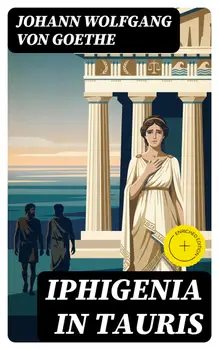
Iphigenia in Tauris : Enriched edition.

In "Iphigenia in Tauris," Johann Wolfgang von Goethe reinterprets the ancient Greek myth of Iphigenia, infusing it with themes of redemption, reconciliation, and the power of human emotion. Written in a neoclassical style, the play explores the tension between individual desires and societal obligations, showcasing Goethe's mastery of poetic dialogue and dramatic structure. The narrative revolves around Iphigenia's plight as she confronts her fate in a foreign land, ultimately leading to profound reflections on identity and familial bonds. The work stands as a bridge between classical tradition and modern sensibilities, embodying the Enlightenment's quest for moral clarity and emotional sincerity. Goethe, a pivotal figure in German literature and a leading light of the Sturm und Drang movement, drew on his extensive knowledge of classical texts and his personal experiences with themes of conflict and resolution. His travels to Italy and his encounters with diverse artistic expressions greatly informed his appreciation for drama and the human condition. By capturing the essence of longing and hope, Goethe crafts a narrative that transcends its classical origins. For readers and scholars alike, "Iphigenia in Tauris" offers an enriching exploration of ethical dilemmas and the complexities of human relationships, making it a must-read for anyone interested in the interplay of mythology, literature, and philosophy.

In this enriched edition, we have carefully created added value for your reading experience:

- A succinct Introduction situates the work's timeless appeal and themes.

- The Synopsis outlines the central plot, highlighting key developments without spoiling critical twists.

- A detailed Historical Context immerses you in the era's events and influences that shaped the writing.

- An Author Biography reveals milestones in the author's life, illuminating the personal insights behind the text.

- A thorough Analysis dissects symbols, motifs, and character arcs to unearth underlying meanings.

- Reflection questions prompt you to engage personally with the work's messages, connecting them to modern life.

- Hand‐picked Memorable Quotes shine a spotlight on moments of literary brilliance.

- Interactive footnotes clarify unusual references, historical allusions, and archaic phrases for an effortless, more informed read.

À propos de ce livre

In "Iphigenia in Tauris," Johann Wolfgang von Goethe reinterprets the ancient Greek myth of Iphigenia, infusing it with themes of redemption, reconciliation, and the power of human emotion. Written in a neoclassical style, the play explores the tension between individual desires and societal obligations, showcasing Goethe's mastery of poetic dialogue and dramatic structure. The narrative revolves around Iphigenia's plight as she confronts her fate in a foreign land, ultimately leading to profound reflections on identity and familial bonds. The work stands as a bridge between classical tradition and modern sensibilities, embodying the Enlightenment's quest for moral clarity and emotional sincerity. Goethe, a pivotal figure in German literature and a leading light of the Sturm und Drang movement, drew on his extensive knowledge of classical texts and his personal experiences with themes of conflict and resolution. His travels to Italy and his encounters with diverse artistic expressions greatly informed his appreciation for drama and the human condition. By capturing the essence of longing and hope, Goethe crafts a narrative that transcends its classical origins. For readers and scholars alike, "Iphigenia in Tauris" offers an enriching exploration of ethical dilemmas and the complexities of human relationships, making it a must-read for anyone interested in the interplay of mythology, literature, and philosophy.

In this enriched edition, we have carefully created added value for your reading experience:

- A succinct Introduction situates the work's timeless appeal and themes.

- The Synopsis outlines the central plot, highlighting key developments without spoiling critical twists.

- A detailed Historical Context immerses you in the era's events and influences that shaped the writing.

- An Author Biography reveals milestones in the author's life, illuminating the personal insights behind the text.

- A thorough Analysis dissects symbols, motifs, and character arcs to unearth underlying meanings.

- Reflection questions prompt you to engage personally with the work's messages, connecting them to modern life.

- Hand‐picked Memorable Quotes shine a spotlight on moments of literary brilliance.

- Interactive footnotes clarify unusual references, historical allusions, and archaic phrases for an effortless, more informed read.
Commencez ce livre dès aujourd'hui pour 0 €

  • Accédez à tous les livres de l'app pendant la période d'essai
  • Sans engagement, annulez à tout moment
Essayer gratuitement
Plus de 52 000 personnes ont noté Nextory 5 étoiles sur l'App Store et Google Play.

  1. 4.0

    Faust

    Johann Wolfgang Goethe

  2. Nouveau

    Faust

    Johann Wolfgang Goethe

  3. Nouveau

    100 obras maestras que debes leer antes de morir

    Francis Scott Fitzgerald, Mary Shelley, Lyman Frank Baum, Edith Nesbit, Dante Alighieri, Jane Austen, Ambrose Bierce, Emily Brontë, Edgar Rice Burroughs, Lewis Carroll, Wilkie Collins, René Descartes, Charles Dickens, Emily Dickinson, Alexandre Dumas, Gustave Flaubert, Benito Pérez Galdós, Johann Wolfgang Goethe, Thomas Hardy, E. T. Hoffmann, Washington Irving, Henry James, James Joyce, Franz Kafka, Gaston Leroux, Federico García Lorca, H.P. Lovecraft, Publio Virgilio Marón, Lucy Maud Montgomery, John William Polidori, Marco Polo, Antoine de Saint-Exupéry, Emilio Salgari, Walter Scott, Mark Twain, Jules Verne

  4. Nouveau

    50 Clásicos que Debes Leer Antes de Morir : Un viaje literario por los tesoros de la literatura universal

    Dante Alighieri, Aristóteles, Jane Austen, Charles Baudelaire, Giovanni Boccaccio, Anne Brontë, C. Collodi, James Fenimore Cooper, Fedor Mikhaïlovitch Dostoïevski, Arthur Conan Doyle, Alexandre Dumas, José de Espronceda, Gustave Flaubert, Sigmund Freud, Benito Pérez Galdós, Kahlil Gibran, Johann Wolfgang Goethe, Victor Hugo, Thomas Hardy, Nathaniel Hawthorne, Vicente Blasco Ibáñez, Washington Irving, James Joyce, Mariano José Larra, Jack London, Federico García Lorca, H.P. Lovecraft, Antonio Machado, Gustav Meyrink, John Stuart Mill, Amado Nervo, Friedrich Nietzsche, Solomon Northup, Alexander Sergeyevich Pushkin, Francisco de Quevedo, Walter Scott, William Shakespeare, Robert Louis Stevenson, Harriet Beecher Stowe, Jonathan Swift, Mark Twain, Miguel De Unamuno, Ramón María Valle-Inclán, Julio Verne, Virginia Woolf

  5. Nouveau
    4.0

    Faust

    Johann Wolfgang Goethe

  6. 50 Clásicos que Debes Leer Antes de Morir : Un viaje literario por los tesoros de la literatura universal

    Dante Alighieri, Aristóteles, Jane Austen, Charles Baudelaire, Giovanni Boccaccio, Anne Brontë, C. Collodi, James Fenimore Cooper, Fedor Mikhaïlovitch Dostoïevski, Arthur Conan Doyle, Alexandre Dumas, José de Espronceda, Gustave Flaubert, Sigmund Freud, Benito Pérez Galdós, Kahlil Gibran, Johann Wolfgang Goethe, Johann Wolfgang von Goethe, Victor Hugo, Thomas Hardy, Nathaniel Hawthorne, Vicente Blasco Ibáñez, Washington Irving, James Joyce, Mariano José de Larra, Jack London, Federico García Lorca, H.P. Lovecraft, Antonio Machado, Gustav Meyrink, John Stuart Mill, Amado Nervo, Friedrich Nietzsche, Solomon Northup, Alexander Sergeyevich Pushkin, Francisco de Quevedo, Walter Scott, William Shakespeare, Robert Louis Stevenson, Harriet Beecher Stowe, Jonathan Swift, Mark Twain, Miguel De Unamuno, Ramón María del Valle-Inclán, Julio Verne, Virginia Woolf

  7. #54

    Epistolario estético Schiller‐Goethe : Una antología

    Friedrich Schiller, Johann Wolfgang Goethe

  8. The Sorrows of Young Werther

    Johann Wolfgang Goethe

  9. Faust (part 1) : Translated Into English in the Original Metres

    Johann Wolfgang Goethe

  10. Las afinidades electivas

    Johann Wolfgang Goethe

  11. Faust : Traduzione ottocentesca

    Johann Wolfgang Goethe

  12. 50 Clásicos que debes leer antes de morir

    Dante Alighieri, Aristóteles, Jane Austen, Charles Baudelaire, Giovanni Boccaccio, Anne Brontë, C. Collodi, James Fenimore Cooper, Fedor Mikhaïlovitch Dostoïevski, Arthur Conan Doyle, Alexandre Dumas, José de Espronceda, Gustave Flaubert, Sigmund Freud, Benito Pérez Galdós, Kahlil Gibran, Johann Wolfgang Goethe, Johann Wolfgang von Goethe, Victor Hugo, Thomas Hardy, Nathaniel Hawthorne, Vicente Blasco Ibáñez, Washington Irving, James Joyce, Mariano José de Larra, Jack London, Federico García Lorca, H.P. Lovecraft, Antonio Machado, Gustav Meyrink, John Stuart Mill, Amado Nervo, Friedrich Nietzsche, Solomon Northup, Alexander Sergeyevich Pushkin, Francisco de Quevedo, Walter Scott, William Shakespeare, Robert Louis Stevenson, Harriet Beecher Stowe, Jonathan Swift, Mark Twain, Miguel De Unamuno, Ramón María del Valle-Inclán, Julio Verne, Virginia Woolf