4.0(5)

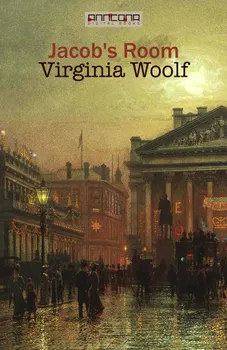
Jacob's Room

Jacob's Room is the third novel by Virginia Woolf, first published on 26 October 1922.

The novel centres, in a very ambiguous way, around the life story of the protagonist Jacob Flanders and is presented almost entirely through the impressions other characters have of Jacob. Thus, although it could be said that the book is primarily a character study and has little in the way of plot or background, the narrative is constructed with a void in place of the central character if, indeed, the novel can be said to have a 'protagonist' in conventional terms.

Set in pre-war England, the novel begins in Jacob's childhood and follows him through college at Cambridge and into adulthood. The story is told mainly through the perspectives of the women in Jacob's life, including the repressed upper-middle-class Clara Durrant and the uninhibited young art student Florinda, with whom he has an affair. His time in London forms a large part of the story, though towards the end of the novel he travels to Italy and then Greece.

The novel is a departure from Woolf's earlier two novels, The Voyage Out (1915) and Night and Day (1919), which are more conventional in form and narration. The work is seen as an important modernist text; its experimental form is viewed as a progression of the innovative writing style Woolf presented in her earlier collection of short fiction titled Monday or Tuesday (1919).

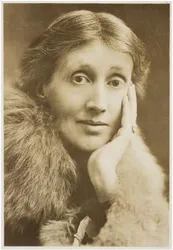
Adeline Virginia Woolf (1882-1941) was an English author, essayist, publisher, and writer of short stories, regarded as one of the foremost modernist literary figures of the twentieth century.

During the interwar period, Woolf was a significant figure in London literary society and a member of the Bloomsbury Group.

Her most famous works include the novels Mrs. Dalloway (1925), To the Lighthouse (1927), and Orlando (1928), and the book-length essay A Room of One's Own (1929), with its famous dictum, "A woman must have money and a room of her own if she is to write fiction."
À propos de ce livre

Jacob's Room is the third novel by Virginia Woolf, first published on 26 October 1922.

The novel centres, in a very ambiguous way, around the life story of the protagonist Jacob Flanders and is presented almost entirely through the impressions other characters have of Jacob. Thus, although it could be said that the book is primarily a character study and has little in the way of plot or background, the narrative is constructed with a void in place of the central character if, indeed, the novel can be said to have a 'protagonist' in conventional terms.

Set in pre-war England, the novel begins in Jacob's childhood and follows him through college at Cambridge and into adulthood. The story is told mainly through the perspectives of the women in Jacob's life, including the repressed upper-middle-class Clara Durrant and the uninhibited young art student Florinda, with whom he has an affair. His time in London forms a large part of the story, though towards the end of the novel he travels to Italy and then Greece.

The novel is a departure from Woolf's earlier two novels, The Voyage Out (1915) and Night and Day (1919), which are more conventional in form and narration. The work is seen as an important modernist text; its experimental form is viewed as a progression of the innovative writing style Woolf presented in her earlier collection of short fiction titled Monday or Tuesday (1919).

Adeline Virginia Woolf (1882-1941) was an English author, essayist, publisher, and writer of short stories, regarded as one of the foremost modernist literary figures of the twentieth century.

During the interwar period, Woolf was a significant figure in London literary society and a member of the Bloomsbury Group.

Her most famous works include the novels Mrs. Dalloway (1925), To the Lighthouse (1927), and Orlando (1928), and the book-length essay A Room of One's Own (1929), with its famous dictum, "A woman must have money and a room of her own if she is to write fiction."

Commencez ce livre dès aujourd'hui pour 0 €

  • Accédez à tous les livres de l'app pendant la période d'essai
  • Sans engagement, annulez à tout moment
Essayer gratuitement
Plus de 52 000 personnes ont noté Nextory 5 étoiles sur l'App Store et Google Play.

  1. 3.4

    Mrs Dalloway

    Virginia Woolf

  2. 1 oct.
    #6

    La señora Dalloway en Bond Street

    Virginia Woolf

  3. 1 oct.
    4.0
    #3

    Una Habitación Propia :

    Virginia Woolf

  4. Nouveau
    3.0

    50 Masterpieces you have to read before you die vol: 2

    Lewis Carroll, Mark Twain, Jules Verne, Oscar Wilde, Arthur Conan Doyle, Louisa May Alcott, Jane Austen, G.K. Chesterton, Wilkie Collins, Charles Dickens, Fyodor Dostoyevsky, Alexandre Dumas, F. Scott Fitzgerald, E. M. Forster, Thomas Hardy, Hermann Hesse, James Joyce, Jack London, H.P. Lovecraft, Lucy Maud Montgomery, Edgar Allan Poe, Marcel Proust, William Shakespeare, Robert Louis Stevenson, H.G. Wells, Virginia Woolf, Rudyard Kipling, D. H. Lawrence, Thomas Mann, William Somerset Maugham, Herman Melville, George Sand, Mary Shelley, Walter Scott, Leo Tolstoy, Bram Stoker

  5. Nouveau

    100 Clásicos de la Literatura Universal

    Francis Scott Fitzgerald, Mary Shelley, Lyman Frank Baum, Louisa May Alcott, Dante Alighieri, Jane Austen, Ambrose Bierce, Emily Brontë, Edgar Rice Burroughs, Lewis Carroll, Wilkie Collins, René Descartes, Charles Dickens, Emily Dickinson, Alexandre Dumas, Gustave Flaubert, Benito Pérez Galdós, Johann Wolfgang von Goethe, Thomas Hardy, E T A Hoffmann, Washington Irving, Henry James, James Joyce, Franz Kafka, Gaston Leroux, Federico García Lorca, H.P. Lovecraft, Publio Virgilio Marón, Lucy Maud Montgomery, John William Polidori, Marco Polo, Antoine de Saint-Exupéry, Emilio Salgari, Walter Scott, Mark Twain, Jules Verne, Julio Verne, H.G. Wells, Edith Wharton, Mary Wollstonecraft, Stefan Zweig, Sun Tzu, Bram Stoker, - Aristoteles, George Bernard Shaw, Henryk Sienkiewicz, Concepción Arenal, Charlotte Brontë, Miguel de Cervantes, G.K. Chesterton, Daniel Defoe, Fyodor Mikhailovich Dostoyevsky, Arthur Conan Doyle, Sigmund Freud, H. Rider Haggard, Homero, Immanuel Kant, Rudyard Kipling, Molière, Friedrich Nietzsche, Fernando de Rojas, Sófocles, William Makepeace Thackeray, León Tolstói, Voltaire, Ramón María del Valle-Inclán, Oscar Wilde, Virginia Woolf

  6. Nouveau

    50 Clásicos que Debes Leer Antes de Morir : Un viaje literario por los tesoros de la literatura universal

    Dante Alighieri, Aristóteles, Jane Austen, Charles Baudelaire, Giovanni Boccaccio, Anne Brontë, C. Collodi, James Fenimore Cooper, Fedor Mikhaïlovitch Dostoïevski, Arthur Conan Doyle, Alexandre Dumas, José de Espronceda, Gustave Flaubert, Sigmund Freud, Benito Pérez Galdós, Kahlil Gibran, Johann Wolfgang Goethe, Johann Wolfgang von Goethe, Victor Hugo, Thomas Hardy, Nathaniel Hawthorne, Vicente Blasco Ibáñez, Washington Irving, James Joyce, Mariano José de Larra, Jack London, Federico García Lorca, H.P. Lovecraft, Antonio Machado, Gustav Meyrink, John Stuart Mill, Amado Nervo, Friedrich Nietzsche, Solomon Northup, Alexander Sergeyevich Pushkin, Francisco de Quevedo, Walter Scott, William Shakespeare, Robert Louis Stevenson, Harriet Beecher Stowe, Jonathan Swift, Mark Twain, Miguel De Unamuno, Ramón María del Valle-Inclán, Julio Verne, Virginia Woolf

  7. Nouveau

    Night and Day : Official Movie tie-in edition read by Sally Phillips

    Virginia Woolf

  8. Nouveau

    Elles

    Virginia Woolf

  9. Nouveau

    Röster i grönskan

    Virginia Woolf

  10. Nouveau

    Främlingen på tåget: En studie i besatthet

    Virginia Woolf

  11. Nouveau

    Vi är inga anständiga kvinnor

    Virginia Woolf

  12. Nouveau

    Märket på den vita väggen

    Virginia Woolf