3.7(14)

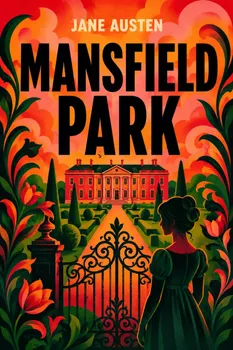
Mansfield Park

Jane Austen's Mansfield Park is one of her most complex and morally searching novels, a powerful story of family obligation, social ambition, personal integrity, and quiet endurance.

Fanny Price is sent as a child to live with wealthy relatives, where she grows up in comfort but never as an equal. Shy, observant, and often underestimated, she occupies a delicate place within the household: dependent on others, yet inwardly guided by a strong sense of right and wrong. Around her, vanity, flirtation, selfishness, and careless privilege shape the lives of those who believe themselves more confident and more worldly.

When the charming Crawford siblings arrive, they bring excitement, wit, and disruption into the family circle. Their presence exposes hidden desires, weak principles, and fragile relationships, forcing Fanny to defend her values even when doing so leaves her isolated. As affection, ambition, temptation, and social expectations collide, Austen examines the cost of remaining true to oneself in an environment that rewards beauty, status, and performance.

Unlike the sparkling comedy of Pride and Prejudice or the playful irony of Northanger Abbey, this novel offers a deeper, more restrained study of character and conduct. It explores education, marriage, wealth, moral judgment, family hierarchy, and the difference between appearance and substance. Fanny Price may be one of Austen's quietest heroines, but her strength lies in patience, perception, and conviction.

Elegant, intelligent, and emotionally layered, Mansfield Park remains essential reading for anyone interested in classic English literature, Regency society, literary realism, and the enduring questions of conscience, love, and social responsibility.

À propos de ce livre

Jane Austen's Mansfield Park is one of her most complex and morally searching novels, a powerful story of family obligation, social ambition, personal integrity, and quiet endurance.

Fanny Price is sent as a child to live with wealthy relatives, where she grows up in comfort but never as an equal. Shy, observant, and often underestimated, she occupies a delicate place within the household: dependent on others, yet inwardly guided by a strong sense of right and wrong. Around her, vanity, flirtation, selfishness, and careless privilege shape the lives of those who believe themselves more confident and more worldly.

When the charming Crawford siblings arrive, they bring excitement, wit, and disruption into the family circle. Their presence exposes hidden desires, weak principles, and fragile relationships, forcing Fanny to defend her values even when doing so leaves her isolated. As affection, ambition, temptation, and social expectations collide, Austen examines the cost of remaining true to oneself in an environment that rewards beauty, status, and performance.

Unlike the sparkling comedy of Pride and Prejudice or the playful irony of Northanger Abbey, this novel offers a deeper, more restrained study of character and conduct. It explores education, marriage, wealth, moral judgment, family hierarchy, and the difference between appearance and substance. Fanny Price may be one of Austen's quietest heroines, but her strength lies in patience, perception, and conviction.

Elegant, intelligent, and emotionally layered, Mansfield Park remains essential reading for anyone interested in classic English literature, Regency society, literary realism, and the enduring questions of conscience, love, and social responsibility.
Commencez ce livre dès aujourd'hui pour 0 €

  • Accédez à tous les livres de l'app pendant la période d'essai
  • Sans engagement, annulez à tout moment
Essayer gratuitement
Plus de 52 000 personnes ont noté Nextory 5 étoiles sur l'App Store et Google Play.

  1. 5.0

    The Complete Works of Jane Austen: (In One Volume) Sense and Sensibility, Pride and Prejudice, Mansfield Park, Emma, Northanger Abbey, Persuasion, Lady ... Sandition, and the Complete Juvenilia

    Jane Austen

  2. 3.0

    Orgueil et Préjugés : Édition bilingue

    Jane Austen

  3. 4.0
    #1

    Orgueil et Préjugé

    Jane Austen

  4. 4.4

    Orgueil et Préjugés

    Jane Austen

  5. Gevoel en verstand

    Gonne Van Uildriks, Jane Austen

  6. 4.5

    Persuasion

    Jane Austen

  7. Les mieux notés
    4.6

    Orgueil et préjugés

    Jane Austen

  8. Les mieux notés
    4.6
    #1

    Orgueil et préjugés

    Jane Austen

  9. 1 nov.
    3.9

    Persuasión

    Jane Austen

  10. Nouveau

    100 Clásicos de la Literatura Universal

    Francis Scott Fitzgerald, Mary Shelley, Lyman Frank Baum, Louisa May Alcott, Dante Alighieri, Jane Austen, Ambrose Bierce, Emily Brontë, Edgar Rice Burroughs, Lewis Carroll, Wilkie Collins, René Descartes, Charles Dickens, Emily Dickinson, Alexandre Dumas, Gustave Flaubert, Benito Pérez Galdós, Johann Wolfgang von Goethe, Thomas Hardy, E T A Hoffmann, Washington Irving, Henry James, James Joyce, Franz Kafka, Gaston Leroux, Federico García Lorca, H.P. Lovecraft, Publio Virgilio Marón, Lucy Maud Montgomery, John William Polidori, Marco Polo, Antoine de Saint-Exupéry, Emilio Salgari, Walter Scott, Mark Twain, Jules Verne, Julio Verne, H.G. Wells, Edith Wharton, Mary Wollstonecraft, Stefan Zweig, Sun Tzu, Bram Stoker, - Aristoteles, George Bernard Shaw, Henryk Sienkiewicz, Concepción Arenal, Charlotte Brontë, Miguel de Cervantes, G.K. Chesterton, Daniel Defoe, Fyodor Mikhailovich Dostoyevsky, Arthur Conan Doyle, Sigmund Freud, H. Rider Haggard, Homero, Immanuel Kant, Rudyard Kipling, Molière, Friedrich Nietzsche, Fernando de Rojas, Sófocles, William Makepeace Thackeray, León Tolstói, Voltaire, Ramón María del Valle-Inclán, Oscar Wilde, Virginia Woolf

  11. Nouveau

    50 Clásicos que Debes Leer Antes de Morir : Un viaje literario por los tesoros de la literatura universal

    Dante Alighieri, Aristóteles, Jane Austen, Charles Baudelaire, Giovanni Boccaccio, Anne Brontë, C. Collodi, James Fenimore Cooper, Fedor Mikhaïlovitch Dostoïevski, Arthur Conan Doyle, Alexandre Dumas, José de Espronceda, Gustave Flaubert, Sigmund Freud, Benito Pérez Galdós, Kahlil Gibran, Johann Wolfgang Goethe, Johann Wolfgang von Goethe, Victor Hugo, Thomas Hardy, Nathaniel Hawthorne, Vicente Blasco Ibáñez, Washington Irving, James Joyce, Mariano José de Larra, Jack London, Federico García Lorca, H.P. Lovecraft, Antonio Machado, Gustav Meyrink, John Stuart Mill, Amado Nervo, Friedrich Nietzsche, Solomon Northup, Alexander Sergeyevich Pushkin, Francisco de Quevedo, Walter Scott, William Shakespeare, Robert Louis Stevenson, Harriet Beecher Stowe, Jonathan Swift, Mark Twain, Miguel De Unamuno, Ramón María del Valle-Inclán, Julio Verne, Virginia Woolf

  12. Nouveau

    100 Obras Maestras Que Debes Leer Antes De Morir

    Francis Scott Fitzgerald, Mary Shelley, Lyman Frank Baum, Edith Nesbit, Dante Alighieri, Jane Austen, Ambrose Bierce, Emily Brontë, Edgar Rice Burroughs, Lewis Carroll, Wilkie Collins, René Descartes, Charles Dickens, Emily Dickinson, Alexandre Dumas, Gustave Flaubert, Benito Pérez Galdós, Johann Wolfgang von Goethe, Thomas Hardy, E T A Hoffmann, Washington Irving, Henry James, James Joyce, Franz Kafka, Gaston Leroux, Federico García Lorca, H.P. Lovecraft, Publio Virgilio Marón, Lucy Maud Montgomery, John William Polidori, Marco Polo, Antoine de Saint-Exupéry, Emilio Salgari, Walter Scott, Mark Twain, Jules Verne, H.G. Wells, Edith Wharton, Mary Wollstonecraft, Fernando de Rojas