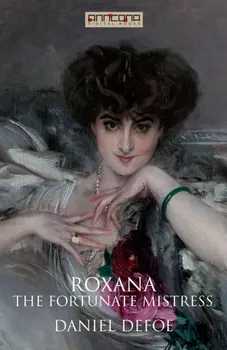
Roxana - The Fortunate Mistress

Roxana: The Fortunate Mistress (full title: The Fortunate Mistress: Or, A History of the Life and Vast Variety of Fortunes of Mademoiselle de Beleau, Afterwards Called the Countess de Wintselsheim, in Germany, Being the Person known by the Name of the Lady Roxana, in the Time of King Charles II) is a 1724 novel by Daniel Defoe.

The novel concerns the story of an unnamed "fallen woman", the second time Defoe created such a character (the first was a similar female character in Moll Flanders). In Roxana, a woman who takes on various pseudonyms, including "Roxana" (after Roxana, wife of Alexander the Great), describes her fall from wealth thanks to abandonment by a "fool" of a husband, and movement into prostitution upon his abandonment. Roxana moves up and down through the social spectrum several times, by contracting an ersatz marriage to a jeweler, secretly courting a prince, being offered marriage by a Dutch merchant, and is finally able to afford her own freedom by accumulating wealth from these men.

The novel examines the possibility of eighteenth century women owning their own estate despite a patriarchal society, as with Roxanna's celebrated claim that "the Marriage Contract is...nothing but giving up Liberty, Estate, Authority, and every-thing, to the Man". The novel further draws attention to the incompatibility between sexual freedom and freedom from motherhood: Roxana becomes pregnant many times due to her sexual exploits, and it is one of her children, Susan, who come back to expose her, years later, near the novel's close, helping to precipitate her flight abroad, subsequent loss of wealth, and (ambiguous) repentance.

The character of Roxana can be described as a proto-feminist because she carries out her actions of prostitution for her own ends of freedom but before a feminist ideology was fully formed, (though Defoe also works to undercut the radicalism of her position); while the book also explores the clash of values between the Restoration court and the middle-class.

Published anonymously, and not attributed to Defoe till 1775, Roxana was nonetheless a popular hit in the eighteenth century.

Also in 1722, Defoe wrote Moll Flanders, another first-person picaresque novel of the fall and eventual redemption of a lone woman in 17th century England. The titular heroine appears as a whore, bigamist and thief, lives in The Mint, commits adultery and incest, yet manages to retain the reader's sympathy.

Moll Flanders and Defoe's final novel Roxana: The Fortunate Mistress are examples of the remarkable way in which Defoe seems to inhabit his fictional (yet "drawn from life") characters, not least in that they are women. The latter narrates the moral and spiritual decline of a high society courtesan.

Daniel Defoe (c. 1660-1731), was an English trader, writer, journalist and spy, now most famous for his novel Robinson Crusoe. Defoe is notable for being one of the earliest proponents of the novel, as he helped to popularize the form in Britain, and, along with others such as Samuel Richardson, is among the founders of the English novel. A prolific and versatile writer, he wrote more than 500 books, pamphlets and journals on various topics (including politics, crime, religion, marriage, psychology and the supernatural).
À propos de ce livre

Roxana: The Fortunate Mistress (full title: The Fortunate Mistress: Or, A History of the Life and Vast Variety of Fortunes of Mademoiselle de Beleau, Afterwards Called the Countess de Wintselsheim, in Germany, Being the Person known by the Name of the Lady Roxana, in the Time of King Charles II) is a 1724 novel by Daniel Defoe.

The novel concerns the story of an unnamed "fallen woman", the second time Defoe created such a character (the first was a similar female character in Moll Flanders). In Roxana, a woman who takes on various pseudonyms, including "Roxana" (after Roxana, wife of Alexander the Great), describes her fall from wealth thanks to abandonment by a "fool" of a husband, and movement into prostitution upon his abandonment. Roxana moves up and down through the social spectrum several times, by contracting an ersatz marriage to a jeweler, secretly courting a prince, being offered marriage by a Dutch merchant, and is finally able to afford her own freedom by accumulating wealth from these men.

The novel examines the possibility of eighteenth century women owning their own estate despite a patriarchal society, as with Roxanna's celebrated claim that "the Marriage Contract is...nothing but giving up Liberty, Estate, Authority, and every-thing, to the Man". The novel further draws attention to the incompatibility between sexual freedom and freedom from motherhood: Roxana becomes pregnant many times due to her sexual exploits, and it is one of her children, Susan, who come back to expose her, years later, near the novel's close, helping to precipitate her flight abroad, subsequent loss of wealth, and (ambiguous) repentance.

The character of Roxana can be described as a proto-feminist because she carries out her actions of prostitution for her own ends of freedom but before a feminist ideology was fully formed, (though Defoe also works to undercut the radicalism of her position); while the book also explores the clash of values between the Restoration court and the middle-class.

Published anonymously, and not attributed to Defoe till 1775, Roxana was nonetheless a popular hit in the eighteenth century.

Also in 1722, Defoe wrote Moll Flanders, another first-person picaresque novel of the fall and eventual redemption of a lone woman in 17th century England. The titular heroine appears as a whore, bigamist and thief, lives in The Mint, commits adultery and incest, yet manages to retain the reader's sympathy.

Moll Flanders and Defoe's final novel Roxana: The Fortunate Mistress are examples of the remarkable way in which Defoe seems to inhabit his fictional (yet "drawn from life") characters, not least in that they are women. The latter narrates the moral and spiritual decline of a high society courtesan.

Daniel Defoe (c. 1660-1731), was an English trader, writer, journalist and spy, now most famous for his novel Robinson Crusoe. Defoe is notable for being one of the earliest proponents of the novel, as he helped to popularize the form in Britain, and, along with others such as Samuel Richardson, is among the founders of the English novel. A prolific and versatile writer, he wrote more than 500 books, pamphlets and journals on various topics (including politics, crime, religion, marriage, psychology and the supernatural).
Commencez ce livre dès aujourd'hui pour 0 €

  • Accédez à tous les livres de l'app pendant la période d'essai
  • Sans engagement, annulez à tout moment
Essayer gratuitement
Plus de 52 000 personnes ont noté Nextory 5 étoiles sur l'App Store et Google Play.

  1. Nouveau

    50 Masterpieces you have to read before you die vol: 1

    Joseph Conrad, D. H. Lawrence, George Eliot, Leo Tolstoy, James Joyce, Charles Dickens, Jane Austen, Bram Stoker, Oscar Wilde, Louisa May Alcott, Honoré de Balzac, Edgar Rice Burroughs, Anne Brontë, Charlotte Brontë, Emily Brontë, Lewis Carroll, Willa Cather, Miguel de Cervantes, E. E. Cummings, Fyodor Dostoyevsky, Daniel Defoe, Arthur Conan Doyle, Alexandre Dumas, Gustave Flaubert, Henry James, Victor Hugo

  2. Nouveau

    100 Clásicos de la Literatura Universal

    Francis Scott Fitzgerald, Mary Shelley, Lyman Frank Baum, Louisa May Alcott, Dante Alighieri, Jane Austen, Ambrose Bierce, Emily Brontë, Edgar Rice Burroughs, Lewis Carroll, Wilkie Collins, René Descartes, Charles Dickens, Emily Dickinson, Alexandre Dumas, Gustave Flaubert, Benito Pérez Galdós, Johann Wolfgang von Goethe, Thomas Hardy, E T A Hoffmann, Washington Irving, Henry James, James Joyce, Franz Kafka, Gaston Leroux, Federico García Lorca, H.P. Lovecraft, Publio Virgilio Marón, Lucy Maud Montgomery, John William Polidori, Marco Polo, Antoine de Saint-Exupéry, Emilio Salgari, Walter Scott, Mark Twain, Jules Verne, Julio Verne, H.G. Wells, Edith Wharton, Mary Wollstonecraft, Stefan Zweig, Sun Tzu, Bram Stoker, - Aristoteles, George Bernard Shaw, Henryk Sienkiewicz, Concepción Arenal, Charlotte Brontë, Miguel de Cervantes, G.K. Chesterton, Daniel Defoe, Fyodor Mikhailovich Dostoyevsky, Arthur Conan Doyle, Sigmund Freud, H. Rider Haggard, Homero, Immanuel Kant, Rudyard Kipling, Molière, Friedrich Nietzsche, Fernando de Rojas, Sófocles, William Makepeace Thackeray, León Tolstói, Voltaire, Ramón María del Valle-Inclán, Oscar Wilde, Virginia Woolf

  3. 4.4

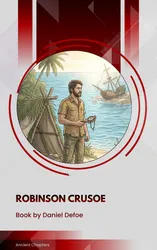
    Robinson Crusoe

    Daniel Defoe

  4. Nouveau

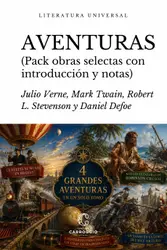
    AVENTURAS : Pack obras selectas con introducción y notas

    Julio Verne, Mark Twain, Robert Stevenson, Daniel Defoe

  5. 4.4

    Robinson Crusoe

    Daniel Defoe

  6. Nouveau

    Aventuras de Robinson Crusoe :

    Daniel Defoe

  7. Nouveau

    Memoarer från månen

    Daniel Defoe

  8. Nouveau

    50 Masterpieces you have to read before you die vol: 2

    Louisa May Alcott, Jane Austen, Joseph Conrad, D. H. Lawrence, George Eliot, Leo Tolstoy, James Joyce, Charles Dickens, Bram Stoker, Oscar Wilde, Honoré de Balzac, Edgar Rice Burroughs, Anne Brontë, Charlotte Brontë, Emily Brontë, Lewis Carroll, Willa Cather, Miguel de Cervantes, E. Cummings, Fyodor Dostoyevsky, Daniel Defoe, Arthur Conan Doyle, Alexandre Dumas, Gustave Flaubert, Henry James, Victor Hugo

  9. Nouveau

    50 Masterpieces you have to read before you die vol 1

    Louisa May Alcott, Jane Austen, Joseph Conrad, Edwin Abbott, George Eliot, Leo Tolstoy, James Joyce, Charles Dickens, Bram Stoker, Oscar Wilde, Honoré de Balzac, Edgar Rice Burroughs, Anne Brontë, Charlotte Brontë, Emily Brontë, Lewis Carroll, Willa Cather, Miguel de Cervantes, E. Cummings, Fyodor Dostoyevsky, Daniel Defoe, Arthur Conan Doyle, Alexandre Dumas, Gustave Flaubert, Henry James, Victor Hugo

  10. 4.4

    Robinson Crusoe

    Daniel Defoe

  11. 4.4

    Robinson Crusoe

    Daniel Defoe

  12. La Courtisane de Londres : Une fresque sulfureuse sur l'ascension et les secrets d'une femme libre

    Daniel Defoe