À propos de ce livre

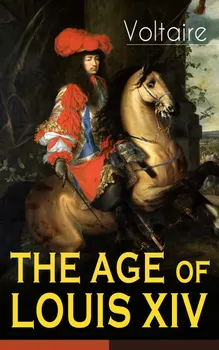
Voltaire's The Age of Louis XIV is less a conventional royal biography than a sweeping cultural history of seventeenth-century Europe, centered on France's political ascendancy and artistic brilliance under the Sun King. Written in lucid, elegant Enlightenment prose, it treats wars, diplomacy, administration, literature, philosophy, religion, and manners as interlocking expressions of civilization. In literary context, the work helped redefine historiography by shifting attention from dynastic chronicle to the progress of arts, ideas, and social institutions. Voltaire, the great philosophe of the French Enlightenment, brought to the book his lifelong fascination with reason, toleration, and the power of culture to shape public life. His experiences at court, his exile in England, and his admiration for intellectual freedom sharpened his comparative judgment. Though critical of fanaticism and political excess, he saw in Louis XIV's reign a moment when patronage, order, and genius combined to produce enduring achievements. This book is recommended to readers interested in Enlightenment history, French classicism, and the origins of modern cultural criticism. It offers not only a portrait of an age, but also Voltaire's persuasive argument that history should measure greatness by civilization as much as by conquest.

This enriched edition has been carefully crafted to add value to your reading experience.

- A succinct Introduction situates the work's timeless appeal and themes.

- The Synopsis outlines the central plot, highlighting key developments without spoiling critical twists.

- A detailed Historical Context immerses you in the era's events and influences that shaped the writing.

- An Author Biography reveals milestones in the author's life, illuminating the personal insights behind the text.

- A thorough Analysis dissects symbols, motifs, and character arcs to unearth underlying meanings.

- Reflection questions prompt you to engage personally with the work's messages, connecting them to modern life.

- Hand‐picked Memorable Quotes shine a spotlight on moments of literary brilliance.

- Interactive footnotes clarify unusual references, historical allusions, and archaic phrases for an effortless, more informed read.
Commencez ce livre dès aujourd'hui pour 0 €

  • Accédez à tous les livres de l'app pendant la période d'essai
  • Sans engagement, annulez à tout moment
Essayer gratuitement
Plus de 52 000 personnes ont noté Nextory 5 étoiles sur l'App Store et Google Play.

  1. 1800 Citations de philosophes

    Aristote, Épicure, Platon, Thalès de Milet, – Socrate, Protagoras, Anaximandre, Épictète, Héraclite, Marc Aurèle, René Descartes, Michel de Montaigne, Alexis de Tocqueville, Voltaire, Charles De Montesquieu, Jean-Jacques Rousseau, Emmanuel Kant, Hannah Arendt, Gottfried Wilhelm Leibniz, Georg Wilhelm Friedrich Hegel, Friedrich Nietzsche, Arthur Schopenhauer, David Hume, John Locke, Francis Bacon, Thomas Hobbes, Thomas More, Confucius, Érasme, Lao Tseu, Baruch Spinoza, Søren Kierkegaard, Nicolas Machiavel, Thomas d'Aquin, Henry David Thoreau

  2. 5.0

    Candide (Annoté) : Édition enrichie. Conte philosophique satirique des Lumières sur l'optimisme, le fanatisme, l'Eldorado et l'art de cultiver son jardin

    Voltaire

  3. Candide ou L'optimisme

    Voltaire

  4. Zadig, Candide, Micromégas

    Voltaire

  5. 5.0

    Candide

    Voltaire

  6. Nouveau

    Zadig o el destino

    Voltaire

  7. Nouveau

    Traité sur la tolérance : À l’occasion de la mort de Jean Calas

    Voltaire

  8. Nouveau
    5.0

    Candide : Adapted for French learners - In useful French words for conversation - French Intermediate

    Voltaire

  9. The Dawn of Science Fiction : The Visionaries Who Imagined Tomorrow First

    H.G. Wells, Mary Shelley, Voltaire, Jack London, Frank R. Stockton, Edgar Allan Poe

  10. Beyond the Stars 6 : Explore Strange Worlds Beyond the Final Frontier

    Arthur C. Clarke, Fredric Brown, Mack Reynolds, Alfred Coppel, Andre Norton, Robert F. Young, Ray Bradbury, Henry Hasse, Jack Williamson, Gene L. Henderson, Frank M. Robinson, Robert Sheckley, Bryce Walton, Mike Curry, Voltaire, William Oberfield, Donald A. Wollheim, Charles Einstein, Frederik Pohl, Ray Cummings, Alfred Bester

  11. Memnón : O la Sabiduría Humana

    Voltaire

  12. 100 Clásicos de la Literatura Universal

    Francis Scott Fitzgerald, Mary Shelley, Lyman Frank Baum, Louisa May Alcott, Dante Alighieri, Jane Austen, Ambrose Bierce, Emily Brontë, Edgar Rice Burroughs, Lewis Carroll, Wilkie Collins, René Descartes, Charles Dickens, Emily Dickinson, Alexandre Dumas, Gustave Flaubert, Benito Pérez Galdós, Johann Wolfgang von Goethe, Thomas Hardy, E T A Hoffmann, Washington Irving, Henry James, James Joyce, Franz Kafka, Gaston Leroux, Federico García Lorca, H.P. Lovecraft, Publio Virgilio Marón, Lucy Maud Montgomery, John William Polidori, Marco Polo, Antoine de Saint-Exupéry, Emilio Salgari, Walter Scott, Mark Twain, Jules Verne, Julio Verne, H.G. Wells, Edith Wharton, Mary Wollstonecraft, Stefan Zweig, Sun Tzu, Bram Stoker, - Aristoteles, George Bernard Shaw, Henryk Sienkiewicz, Concepción Arenal, Charlotte Brontë, Miguel de Cervantes, G.K. Chesterton, Daniel Defoe, Fyodor Mikhailovich Dostoyevsky, Arthur Conan Doyle, Sigmund Freud, H. Rider Haggard, Homero, Immanuel Kant, Rudyard Kipling, Molière, Friedrich Nietzsche, Fernando de Rojas, Sófocles, William Makepeace Thackeray, León Tolstói, Voltaire, Ramón María del Valle-Inclán, Oscar Wilde, Virginia Woolf