3.6(7)

The Island of Doctor Moreau

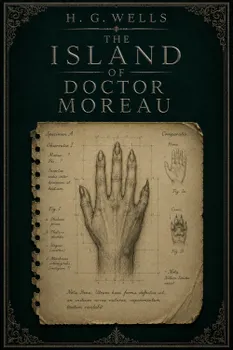
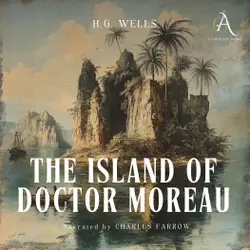
The Island of Doctor Moreau tells the story of Edward Prendick, a shipwreck survivor who is rescued and taken to a remote island in the Pacific Ocean. There he encounters the enigmatic Doctor Moreau, a scientist conducting disturbing biological experiments far from civilization.

As Prendick explores the island, he discovers that Moreau is transforming animals into human-like creatures through painful surgical procedures. These beings, known as the Beast Folk, live according to a strict code imposed by their creator. Although they possess human characteristics, they struggle against their animal instincts and the limits of their artificial transformation.

Horrified by what he learns, Prendick witnesses the consequences of Moreau's attempts to alter nature. As order on the island begins to collapse, tensions rise between humans and the Beast Folk, leading to violence, fear, and chaos.

Blending science fiction, horror, and philosophical reflection, the novel explores themes of evolution, identity, morality, and the ethical limits of scientific experimentation. One of H. G. Wells's most powerful works, The Island of Doctor Moreau remains a classic examination of humanity's desire to control nature and the consequences of playing the role of creator.

À propos de ce livre

The Island of Doctor Moreau tells the story of Edward Prendick, a shipwreck survivor who is rescued and taken to a remote island in the Pacific Ocean. There he encounters the enigmatic Doctor Moreau, a scientist conducting disturbing biological experiments far from civilization.

As Prendick explores the island, he discovers that Moreau is transforming animals into human-like creatures through painful surgical procedures. These beings, known as the Beast Folk, live according to a strict code imposed by their creator. Although they possess human characteristics, they struggle against their animal instincts and the limits of their artificial transformation.

Horrified by what he learns, Prendick witnesses the consequences of Moreau's attempts to alter nature. As order on the island begins to collapse, tensions rise between humans and the Beast Folk, leading to violence, fear, and chaos.

Blending science fiction, horror, and philosophical reflection, the novel explores themes of evolution, identity, morality, and the ethical limits of scientific experimentation. One of H. G. Wells's most powerful works, The Island of Doctor Moreau remains a classic examination of humanity's desire to control nature and the consequences of playing the role of creator.
Commencez ce livre dès aujourd'hui pour 0 €

  • Accédez à tous les livres de l'app pendant la période d'essai
  • Sans engagement, annulez à tout moment
Essayer gratuitement
Plus de 52 000 personnes ont noté Nextory 5 étoiles sur l'App Store et Google Play.

  1. 3.8

    L'Île du Docteur Moreau

    H.G. Wells

  2. 3.5

    La Guerre des mondes - Livre Audio

    H.G. Wells

  3. The Island of Doctor Moreau - Audiobook

    H.G. Wells, Classic Audiobooks

  4. 12 nov.

    The Empire of the Ants and Other Stories

    H.G. Wells

  5. 1 sept.

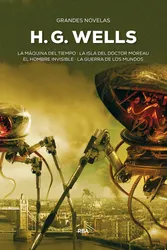
    Grandes Novelas : La máquina del tiempo - La isla del doctor Moreau - El hombre invisible - La guerra de los mundos

    H.G. Wells

  6. La Guerre des mondes

    H.G. Wells

  7. 5.0

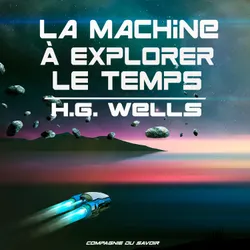
    La Machine à explorer le temps

    H.G. Wells

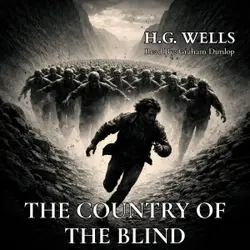
  8. The Country of the Blind :

    H.G. Wells

  9. Nouveau

    Obras completas I

    H.G. Wells

  10. Nouveau

    100 Clásicos de la Literatura Universal

    Francis Scott Fitzgerald, Mary Shelley, Lyman Frank Baum, Louisa May Alcott, Dante Alighieri, Jane Austen, Ambrose Bierce, Emily Brontë, Edgar Rice Burroughs, Lewis Carroll, Wilkie Collins, René Descartes, Charles Dickens, Emily Dickinson, Alexandre Dumas, Gustave Flaubert, Benito Pérez Galdós, Johann Wolfgang von Goethe, Thomas Hardy, E T A Hoffmann, Washington Irving, Henry James, James Joyce, Franz Kafka, Gaston Leroux, Federico García Lorca, H.P. Lovecraft, Publio Virgilio Marón, Lucy Maud Montgomery, John William Polidori, Marco Polo, Antoine de Saint-Exupéry, Emilio Salgari, Walter Scott, Mark Twain, Jules Verne, Julio Verne, H.G. Wells, Edith Wharton, Mary Wollstonecraft, Stefan Zweig, Sun Tzu, Bram Stoker, - Aristoteles, George Bernard Shaw, Henryk Sienkiewicz, Concepción Arenal, Charlotte Brontë, Miguel de Cervantes, G.K. Chesterton, Daniel Defoe, Fyodor Mikhailovich Dostoyevsky, Arthur Conan Doyle, Sigmund Freud, H. Rider Haggard, Homero, Immanuel Kant, Rudyard Kipling, Molière, Friedrich Nietzsche, Fernando de Rojas, Sófocles, William Makepeace Thackeray, León Tolstói, Voltaire, Ramón María del Valle-Inclán, Oscar Wilde, Virginia Woolf

  11. 3.2
    #6

    The Time Machine

    H.G. Wells