2.5(4)

The Scarlet Letter

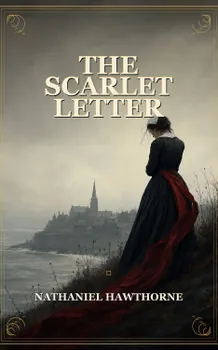
The Scarlet Letter was published in 1850; it was one of the first books to be mass-produced in America, which helped ensure its immediate popularity and ubiquitous presence on contemporary shelves. Its first printing of 2,500 books sold out in ten days. The novel is set in the Puritan Massachusetts Bay Colony between the years 1642 and 1649. Hester Prynne has had a child out of wedlock, and its father is a mystery. For her sin, she is made to wear an embroidered scarlet A on her clothes—for "Adulteress." She now faces a life of unending shame in the stern and religious Puritan colony, in a part of the world where there are no others to turn to. While the plot is simple, the novel is highly allegorical. It explores themes of sin, guilt, repentance, forgiveness, alienation, and legalism. Characters have symbolic names and appearances, and many aspects of the narrative can be viewed in a symbolist lens. Hawthorne initially thought the novel was too short for publication on its own; to pad the length, he included the "Customhouse" introduction. The introduction angered the residents of Salem, who thought the introduction was poking mean-spirited fun at them. This prompted Hawthorne to republish the book "without the change of a word," but with a reassurance that the introduction was meant in good spirits. The novel has been consistently popular since its publication, with it being required reading in many American high schools. D. H. Lawrence called it "a perfect work of American imagination."
À propos de ce livre

The Scarlet Letter was published in 1850; it was one of the first books to be mass-produced in America, which helped ensure its immediate popularity and ubiquitous presence on contemporary shelves. Its first printing of 2,500 books sold out in ten days. The novel is set in the Puritan Massachusetts Bay Colony between the years 1642 and 1649. Hester Prynne has had a child out of wedlock, and its father is a mystery. For her sin, she is made to wear an embroidered scarlet A on her clothes—for "Adulteress." She now faces a life of unending shame in the stern and religious Puritan colony, in a part of the world where there are no others to turn to. While the plot is simple, the novel is highly allegorical. It explores themes of sin, guilt, repentance, forgiveness, alienation, and legalism. Characters have symbolic names and appearances, and many aspects of the narrative can be viewed in a symbolist lens. Hawthorne initially thought the novel was too short for publication on its own; to pad the length, he included the "Customhouse" introduction. The introduction angered the residents of Salem, who thought the introduction was poking mean-spirited fun at them. This prompted Hawthorne to republish the book "without the change of a word," but with a reassurance that the introduction was meant in good spirits. The novel has been consistently popular since its publication, with it being required reading in many American high schools. D. H. Lawrence called it "a perfect work of American imagination."

Commencez ce livre dès aujourd'hui pour 0 €

  • Accédez à tous les livres de l'app pendant la période d'essai
  • Sans engagement, annulez à tout moment
Essayer gratuitement
Plus de 52 000 personnes ont noté Nextory 5 étoiles sur l'App Store et Google Play.

  1. Nouveau

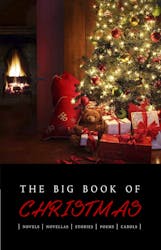
    The Big Book of Christmas: 140+ authors and 400+ novels, novellas, stories, poems & carols

    Hans Christian Andersen, Charles Dickens, Louisa May Alcott, Lucy Maud Montgomery, Anne Brontë, Willa Cather, G.K. Chesterton, F. Marion Crawford, Fyodor Dostoyevsky, Arthur Conan Doyle, Mary E. Wilkins Freeman, The Brothers Grimm, Thomas Hardy, Nathaniel Hawthorne, O.Henry, E T A Hoffmann, Washington Irving, James Joyce, Rudyard Kipling, H.P. Lovecraft, John Milton, Beatrix Potter, Arthur Quiller-Couch, Walter Scott, Robert Louis Stevenson, Harriet Beecher Stowe, Leo Tolstoy, Anthony Trollope, Mark Twain, Oscar Wilde, Anton Chekhov, L. Frank Baum, William Blake, Samuel Taylor Coleridge, Emily Dickinson, Henry Wadsworth Longfellow, Clement C. Moore, William Shakespeare, Andrew Lang

  2. 2.5
    #3

    The Scarlet Letter

    Nathaniel Hawthorne

  3. Nouveau

    50 Clásicos que Debes Leer Antes de Morir : Un viaje literario por los tesoros de la literatura universal

    Dante Alighieri, Aristóteles, Jane Austen, Charles Baudelaire, Giovanni Boccaccio, Anne Brontë, C. Collodi, James Fenimore Cooper, Fedor Mikhaïlovitch Dostoïevski, Arthur Conan Doyle, Alexandre Dumas, José de Espronceda, Gustave Flaubert, Sigmund Freud, Benito Pérez Galdós, Kahlil Gibran, Johann Wolfgang Goethe, Johann Wolfgang von Goethe, Victor Hugo, Thomas Hardy, Nathaniel Hawthorne, Vicente Blasco Ibáñez, Washington Irving, James Joyce, Mariano José de Larra, Jack London, Federico García Lorca, H.P. Lovecraft, Antonio Machado, Gustav Meyrink, John Stuart Mill, Amado Nervo, Friedrich Nietzsche, Solomon Northup, Alexander Sergeyevich Pushkin, Francisco de Quevedo, Walter Scott, William Shakespeare, Robert Louis Stevenson, Harriet Beecher Stowe, Jonathan Swift, Mark Twain, Miguel De Unamuno, Ramón María del Valle-Inclán, Julio Verne, Virginia Woolf

  4. 2.5

    The Scarlet Letter

    Nathaniel Hawthorne

  5. La casa de los siete tejados : Clásico de terror

    Nathaniel Hawthorne

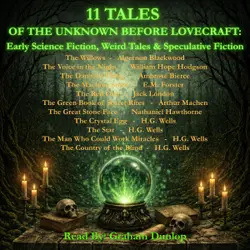
  6. 11 Tales of the Unknown Before Lovecraft : Early Science Fiction, Weird Tales & Speculative Fiction

    Algernon Blackwood, William Hope Hodgson, E. M. Forster, Ambrose Bierce, Jack London, H.G. Wells, Arthur Machen, Nathaniel Hawthorne

  7. El doble, el otro, el mismo : Cuentos Clásicos

    Franz Kafka, Nikolái Gogol, Edgar Allan Poe, Robert Louis Stevenson, Nathaniel Hawthorne, H.G. Wells, Marcel Schwob, Guy De Maupassant, Ambrose Bierce

  8. Vidunderlige historier

    Nathaniel Hawthorne

  9. Den perfekta rivalen

    Nathaniel Hawthorne

  10. Snaran i päronträdet

    Nathaniel Hawthorne

  11. Skatten i väggen

    Nathaniel Hawthorne