3.2(22)

TO THE LIGHTHOUSE

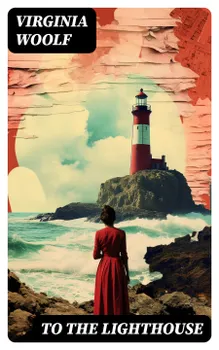
Virginia Woolf's "To the Lighthouse" is a seminal work of modernist literature, distinguished by its innovative narrative techniques and profound exploration of time, memory, and the complexities of human relationships. Set against the backdrop of an artistically rendered Scottish coastline, Woolf employs stream-of-consciousness to delve deep into the inner lives of its characters, most notably Mrs. Ramsay and her husband, reflecting broader questions about gender roles, creative ambition, and the nature of reality. The novel's divided structure, capturing a span of a decade through its three parts, ingeniously contrasts the fleeting nature of life with the enduring power of art, culminating in a poignant meditation on absence and presence. Woolf, a central figure in the modernist movement, was influenced by her own experiences as a woman in a patriarchal society, as well as her interactions within the Bloomsbury Group, which emphasized artistic freedom and intellectual exploration. Her astute observations of social dynamics, coupled with her struggle against the constraints placed upon women, informed the creation of this introspective narrative, reflecting her belief in the transformative potential of literature to illuminate the human experience. I highly recommend "To the Lighthouse" for anyone seeking a profound literary experience that challenges conventional storytelling. Woolf's exploration of time and consciousness invites readers to reflect on their own lives, while her lyrical prose serves as a testament to the artistry of the written word. This novel is not just a story; it is an invitation to engage with the subtleties of existence and to appreciate the beauty that permeates the ordinary.
À propos de ce livre

Virginia Woolf's "To the Lighthouse" is a seminal work of modernist literature, distinguished by its innovative narrative techniques and profound exploration of time, memory, and the complexities of human relationships. Set against the backdrop of an artistically rendered Scottish coastline, Woolf employs stream-of-consciousness to delve deep into the inner lives of its characters, most notably Mrs. Ramsay and her husband, reflecting broader questions about gender roles, creative ambition, and the nature of reality. The novel's divided structure, capturing a span of a decade through its three parts, ingeniously contrasts the fleeting nature of life with the enduring power of art, culminating in a poignant meditation on absence and presence. Woolf, a central figure in the modernist movement, was influenced by her own experiences as a woman in a patriarchal society, as well as her interactions within the Bloomsbury Group, which emphasized artistic freedom and intellectual exploration. Her astute observations of social dynamics, coupled with her struggle against the constraints placed upon women, informed the creation of this introspective narrative, reflecting her belief in the transformative potential of literature to illuminate the human experience. I highly recommend "To the Lighthouse" for anyone seeking a profound literary experience that challenges conventional storytelling. Woolf's exploration of time and consciousness invites readers to reflect on their own lives, while her lyrical prose serves as a testament to the artistry of the written word. This novel is not just a story; it is an invitation to engage with the subtleties of existence and to appreciate the beauty that permeates the ordinary.

Commencez ce livre dès aujourd'hui pour 0 €

  • Accédez à tous les livres de l'app pendant la période d'essai
  • Sans engagement, annulez à tout moment
Essayer gratuitement
Plus de 52 000 personnes ont noté Nextory 5 étoiles sur l'App Store et Google Play.

  1. 1 oct.
    #6

    La señora Dalloway en Bond Street

    Virginia Woolf

  2. 1 oct.
    4.0
    #3

    Una Habitación Propia :

    Virginia Woolf

  3. 17 sept.

    La habitación de Jacob

    Virginia Woolf

  4. Nouveau
    4.0

    Ett eget rum

    Virginia Woolf

  5. Nouveau

    50 Clásicos que Debes Leer Antes de Morir : Un viaje literario por los tesoros de la literatura universal

    Dante Alighieri, Aristóteles, Jane Austen, Charles Baudelaire, Giovanni Boccaccio, Anne Brontë, C. Collodi, James Fenimore Cooper, Fedor Mikhaïlovitch Dostoïevski, Arthur Conan Doyle, Alexandre Dumas, José de Espronceda, Gustave Flaubert, Sigmund Freud, Benito Pérez Galdós, Kahlil Gibran, Johann Wolfgang Goethe, Victor Hugo, Thomas Hardy, Nathaniel Hawthorne, Vicente Blasco Ibáñez, Washington Irving, James Joyce, Mariano José Larra, Jack London, Federico García Lorca, H.P. Lovecraft, Antonio Machado, Gustav Meyrink, John Stuart Mill, Amado Nervo, Friedrich Nietzsche, Solomon Northup, Alexander Sergeyevich Pushkin, Francisco de Quevedo, Walter Scott, William Shakespeare, Robert Louis Stevenson, Harriet Beecher Stowe, Jonathan Swift, Mark Twain, Miguel De Unamuno, Ramón María Valle-Inclán, Julio Verne, Virginia Woolf

  6. Nouveau
    4.0

    Jacob's Room

    Virginia Woolf

  7. Nouveau
    5.0

    The Voyage Out

    Virginia Woolf

  8. Nouveau

    The Common Reader, Second Series

    Virginia Woolf

  9. Nouveau

    The Complete Works of Virginia Woolf

    Virginia Woolf

  10. Nouveau

    30 Occult and Supernatural masterpieces in one book

    Washington Irving, Mary Shelley, Charles Dickens, Joseph Sheridan Fanu, Elizabeth Cleghorn Gaskell, Louisa May Alcott, Oscar Wilde, Rudyard Kipling, Edith Nesbit, John Meade Falkner, Henry James, H.G. Wells, Montague Rhodes James, Arnold Bennett, Henry Rider Haggard, William Hope Hodgson, Virginia Woolf, Master Hendrick Certain, Pastor Tappau's, Lefebvre, De Lacy

  11. Nouveau
    5.0

    Between the Acts

    Virginia Woolf

  12. Nouveau

    The Duchess and the Jeweller

    Virginia Woolf