Om denne bog

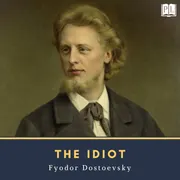
Acclaimed by the 20th-century Russian critic Mikhail Bakhtin for its "polyphony" (a literary concept introduced by Bakhtin to describe a plurality of voices within a narrative), The Idiot is regarded by modern critics as one of Dostoevsky's most experimental and artistically uneven novels.

The novel follows the entrance of the epileptic Prince Muishkin - a character Dostoevsky meant to represent a "positively good and beautiful man" - into a circle of Russian high society characterized by vanity, greed, and social ambition. Thanks to his epileptic condition and his simplicity, earnestness, and kindness of heart, Muishkin is frequently branded by his newfound social circle as the titular "idiot"; but in reality, he's a man of extraordinary sensitivity and insight. His arrival in society sets off a series of dramatic events and interpersonal strife centered around himself and his distant relations.

The Idiot drew upon many of Dostoevsky's significant personal experiences, such as his Russian Orthodox faith, his experience of nearly being executed in 1849, and his own struggle with epilepsy, all of which inform his depiction of Prince Muishkin's distinctive psychology.

Kom i gang med denne bog i dag for 0 kr.

  • Få fuld adgang til alle bøger i appen i prøveperioden
  • Ingen forpligtelser, opsiges når som helst
Prøv gratis nu
Mere end 52.000 mennesker har givet Nextory fem stjerner i App Store og Google Play.

  1. Ny

    Harvard Classics : The Five-Foot Shelf of Books

    Aesop, Dante Alighieri, Hans Christian Andersen, Augustine of Hippo, Marcus Aurelius, Jane Austen, Francis Bacon, Honoré de Balzac, Francis Beaumont, Bjørnstjerne Bjørnson, Thomas Browne, Robert Browning, John Bunyan, EDMUND BURKE, Robert Burns, Lord Byron, Thomas Carlyle, Benvenuto Cellini, Miguel de Cervantes, Marcus Tullius Cicero, Richard Henry Jr., Charles Darwin, Alphonse Daudet, Thomas Dekker, Charles Dickens, Fyodor Dostoevsky, John Dryden, Charles W. Eliot, George Eliot, Ralph Waldo Emerson, Epictetus, John Fletcher, Theodor Fontane, Benjamin Franklin, Johann Wolfgang Goethe, Oliver Goldsmith, Jacob Grimm, Edward Everett Hale, Bret Harte, Nathaniel Hawthorne, Homer, Victor Hugo, Washington Irving, Henry James, Ben Jonson, Gottfried Keller, Thomas à Kempis, Alexander L. Kielland, Martin Luther, Niccolò Machiavelli, Alessandro Manzoni, Christopher Marlowe, Philip Massinger, Guy De Maupassant, John Stuart Mill, John Milton, Thomas More, William Morris, Alfred de Musset, William Allan Neilson, William Penn, Plato, Pliny the Younger, Plutarch, George Sand, Percy Bysshe Shelley, Richard Brinsley Sheridan, Adam Smith, Laurence Sterne, Theodor Storm, William Makepeace Thackeray, Leo Tolstoy, Ivan Turgenev, Mark Twain, Juan Valera, Virgil, Izaak Walton, John Webster, John Woolman

  2. Ny
    4.1

    The Idiot

    Fyodor Dostoevsky

  3. Humiliated and Insulted : A Russian Psychological Melodrama of Betrayal, Poverty, Sacrificial Love, and Moral Responsibility

    Fyodor Dostoevsky

  4. 4.6

    Crime and Punishment

    Fyodor Dostoevsky

  5. The Brothers Karamazov - Audiobook

    Fyodor Dostoevsky, Classic Audiobooks

  6. The Idiot - Audiolbook

    Fyodor Dostoevsky, Classic Audiobooks

  7. 4.3

    Crime and Punishment

    Fyodor Dostoevsky

  8. 4.2

    White Nights - Audiobook

    Fyodor Dostoevsky, Classic Audiobooks

  9. 3.8

    White Nights

    Fyodor Dostoevsky

  10. 4.6

    Crime and Punishment

    Fyodor Dostoevsky

  11. 50 Masterpieces you have to read before you die

    Frances Hodgson Burnett, Homer, Charles Dickens, Lyman Frank Baum, Nathaniel Hawthorne, Thomas Hardy, Robert Louis Stevenson, Henry Haggard, Wilkie Collins, H.G. Wells, Sir Walter Scott, Lucy Maud Montgomery, Louisa May Alcott, Henry Fielding, Mary Shelley, Arthur Conan Doyle, Leo Tolstoy, Euripides, Fyodor Dostoevsky, Alexander Pushkin, James Fenimore Cooper, Daniel Defoe, Joseph Conrad, Jonathan Swift, William Shakespeare, Oscar Wilde, John Bunyan, Charles Darwin, Alfred Tennyson, Bram Stoker, James Joyce, Dante Alighieri, Howard Pyle, Jane Austen, Emily Bronte, Giovanni Boccaccio, Rudyard Kipling