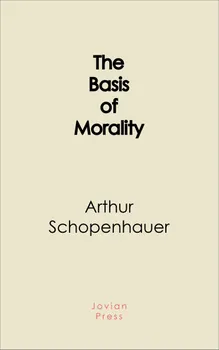
In 1837 the Danish Royal Society of Sciences propounded, as subject for a prize competition, the question with which this treatise opens; and Schopenhauer, who was glad to seize the opportunity of becoming better known, prepared, and sent to Copenhagen, the earliest form of "The Basis of Morality." In January, 1840, the work was pronounced unsuccessful, though there was no other candidate. In September of the same year it was published by the author, with only a few unimportant additions, but preceded by a long introduction, which, cast in the form of an exceedingly caustic philippic, is, in its way, a masterpiece.
The Basis of Morality
Commencez ce livre dès aujourd’hui pour 0 €
- Accédez à tous les livres de l'app pendant la période d'essai
- Sans engagement, annulez à tout moment
Auteur(e) :
Langue :
anglais
Format :

The History of England Volume 2 : King Henry III to King Richard III
David Hume
audiobook
Mansa Musa and The Empire of Mali : A True Story of Gold and Greatness from Africa
P. James Oliver
audiobook
An Enquiry Concerning the Principles of Morals and Other Works
David Hume
audiobook
The English Constitution
Walter Bagehot
audiobookbook
Living Buddha, Living Christ
Thich Nhat Hanh
audiobook
The Impeachment and Trial of Andrew Johnson: Seventeenth President of the United States
David Miller DeWitt
audiobook
The Buddha
audiobook
Democracy in America
Alexis Tocqueville
audiobook
The War Memoirs
Charles de Gaulle
audiobookbook
The Debate That Made the Constitution of the United States
James Madison
book
Decoding Schopenhauer’s Metaphysics
Bernardo Kastrup
audiobook
The Philosophy Collection
Marcus Aurelius, Miyamoto Musashi, Ralph Waldo Emerson, Friedrich Nietzsche, Søren Kierkegaard, Sun Tzu, Epictetus, Confucius, Plato, Lucretius, Seneca
audiobook
L'Art d'avoir toujours raison
Arthur Schopenhauer
audiobook
L'Art d'avoir toujours raison (L'édition intégrale) : Édition enrichie. Les stratégies de persuasion et de débat selon Schopenhauer
Arthur Schopenhauer
book
L'Art d'avoir toujours raison : une oeuvre du philosophe allemand Arthur Schopenhauer qui traite de l'art de la controverse
Arthur Schopenhauer
book
L'art d'avoir toujours raison
Arthur Schopenhauer
audiobook
1800 Citations de philosophes
Aristote, Épicure, Platon, Thalès de Milet, – Socrate, Protagoras, Anaximandre, Épictète, Héraclite, Marc Aurèle, René Descartes, Michel de Montaigne, Alexis de Tocqueville, Voltaire, Charles De Montesquieu, Jean-Jacques Rousseau, Emmanuel Kant, Hannah Arendt, Gottfried Wilhelm Leibniz, Georg Wilhelm Friedrich Hegel, Friedrich Nietzsche, Arthur Schopenhauer, David Hume, John Locke, Francis Bacon, Thomas Hobbes, Thomas More, Confucius, Érasme, Lao Tseu, Baruch Spinoza, Søren Kierkegaard, Nicolas Machiavel, Thomas d'Aquin, Henry David Thoreau
audiobook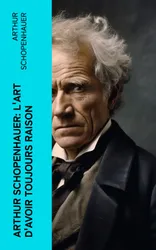
Arthur Schopenhauer: L'Art d'avoir toujours raison : La dialectique éristique
Arthur Schopenhauer
book
3500 citations ultimes
Marc Aurèle, Jane Austen, Beaumarchais, Napoléon Bonaparte, Bouddha, Winston Churchill, Cicéron, Confucius, Nicolas de Chamfort, Charles de Gaulle, Antoine de Saint-Exupéry, Léonard de Vinci, Denis Diderot, Fiodor Dostoïevski, Albert Einstein, Ralph Waldo Emerson, Anne Frank, Mahatma Gandhi, Emmanuel Kant, Søren Kierkegaard, Martin Luther King, Georg Christoph Lichtenberg, Abraham Lincoln, Montesquieu, Friedrich Nietzsche, Platon, Marcel Proust, Arthur Schopenhauer, William Shakespeare, – Socrate, Baruch Spinoza, Henry David Thoreau, Lao Tseu, Voltaire, Oscar Wilde
audiobook
50 citations de Schopenhauer
Arthur Schopenhauer
audiobook
Métaphysique de l'amour (L'édition intégrale) : Psychologie des désirs
Arthur Schopenhauer
book
The Essays of Arthur Schopenhauer; the Art of Controversy
Arthur Schopenhauer
book
2000 citations ultimes
Marc Aurèle, Jane Austen, Bouddha, Cicéron, Emil Cioran, Confucius, Léonard de Vinci, Albert Einstein, Anne Frank, Mahatma Gandhi, Johann Wolfgang Goethe, Carl Jung, Emmanuel Kant, Friedrich Nietzsche, Marcel Proust, Arthur Schopenhauer, William Shakespeare, Baruch Spinoza, Anton Tchekhov, Lao Tseu
audiobook
400 citations des grands philosophes du XIXème siècle
Georg Wilhelm Hegel, Søren Kierkegaard, Friedrich Nietzsche, Arthur Schopenhauer
audiobook