A Treatise of Human Nature : Enriched edition.

David Hume's "A Treatise of Human Nature," originally published in 1739, stands as a seminal work in the fields of philosophy and psychology. Crafted in a systematic and empirical literary style, Hume seeks to explore the foundations of human understanding, arguing that reason is often the slave of the passions. The text is structured around a rigorous examination of human psychology, encompassing topics such as perception, emotion, and morality, thereby situating itself within the broader context of Enlightenment thought. Hume's inquiry into the nature of knowledge and belief questions the conventional wisdom of his time, marking his work as a precursor to modern philosophical thought. David Hume (1711-1776) was a Scottish philosopher and historian, known for his empirical approach to human inquiry. His interest in human nature was deeply influenced by his own experiences of skepticism, coupled with the intellectual milieu of the Scottish Enlightenment. Hume's dedication to reason, ethics, and human behavior shaped his perspective, leading him to challenge dogmatic views and propose a new understanding of human actions and social interactions. "A Treatise of Human Nature" is an essential read for anyone interested in the evolution of philosophical thought and the dynamics of human behavior. Hume's profound insights and eloquent prose make the work not only crucial for students of philosophy but also accessible to general readers seeking to understand the complexities of human nature.

In this enriched edition, we have carefully created added value for your reading experience:

- A succinct Introduction situates the work's timeless appeal and themes.

- The Synopsis outlines the central plot, highlighting key developments without spoiling critical twists.

- A detailed Historical Context immerses you in the era's events and influences that shaped the writing.

- An Author Biography reveals milestones in the author's life, illuminating the personal insights behind the text.

- A thorough Analysis dissects symbols, motifs, and character arcs to unearth underlying meanings.

- Reflection questions prompt you to engage personally with the work's messages, connecting them to modern life.

- Hand‐picked Memorable Quotes shine a spotlight on moments of literary brilliance.

- Interactive footnotes clarify unusual references, historical allusions, and archaic phrases for an effortless, more informed read.
À propos de ce livre

David Hume's "A Treatise of Human Nature," originally published in 1739, stands as a seminal work in the fields of philosophy and psychology. Crafted in a systematic and empirical literary style, Hume seeks to explore the foundations of human understanding, arguing that reason is often the slave of the passions. The text is structured around a rigorous examination of human psychology, encompassing topics such as perception, emotion, and morality, thereby situating itself within the broader context of Enlightenment thought. Hume's inquiry into the nature of knowledge and belief questions the conventional wisdom of his time, marking his work as a precursor to modern philosophical thought. David Hume (1711-1776) was a Scottish philosopher and historian, known for his empirical approach to human inquiry. His interest in human nature was deeply influenced by his own experiences of skepticism, coupled with the intellectual milieu of the Scottish Enlightenment. Hume's dedication to reason, ethics, and human behavior shaped his perspective, leading him to challenge dogmatic views and propose a new understanding of human actions and social interactions. "A Treatise of Human Nature" is an essential read for anyone interested in the evolution of philosophical thought and the dynamics of human behavior. Hume's profound insights and eloquent prose make the work not only crucial for students of philosophy but also accessible to general readers seeking to understand the complexities of human nature.

In this enriched edition, we have carefully created added value for your reading experience:

- A succinct Introduction situates the work's timeless appeal and themes.

- The Synopsis outlines the central plot, highlighting key developments without spoiling critical twists.

- A detailed Historical Context immerses you in the era's events and influences that shaped the writing.

- An Author Biography reveals milestones in the author's life, illuminating the personal insights behind the text.

- A thorough Analysis dissects symbols, motifs, and character arcs to unearth underlying meanings.

- Reflection questions prompt you to engage personally with the work's messages, connecting them to modern life.

- Hand‐picked Memorable Quotes shine a spotlight on moments of literary brilliance.

- Interactive footnotes clarify unusual references, historical allusions, and archaic phrases for an effortless, more informed read.
Commencez ce livre dès aujourd'hui pour 0 €

  • Accédez à tous les livres de l'app pendant la période d'essai
  • Sans engagement, annulez à tout moment
Essayer gratuitement
Plus de 52 000 personnes ont noté Nextory 5 étoiles sur l'App Store et Google Play.

  1. 4.0

    Comprendre David Hume

    David Hume

  2. 1800 Citations de philosophes

    Aristote, Épicure, Platon, Thalès de Milet, – Socrate, Protagoras, Anaximandre, Épictète, Héraclite, Marc Aurèle, René Descartes, Michel de Montaigne, Alexis de Tocqueville, Voltaire, Charles De Montesquieu, Jean-Jacques Rousseau, Emmanuel Kant, Hannah Arendt, Gottfried Wilhelm Leibniz, Georg Wilhelm Friedrich Hegel, Friedrich Nietzsche, Arthur Schopenhauer, David Hume, John Locke, Francis Bacon, Thomas Hobbes, Thomas More, Confucius, Érasme, Lao Tseu, Baruch Spinoza, Søren Kierkegaard, Nicolas Machiavel, Thomas d'Aquin, Henry David Thoreau

  3. Du luxe dans la société moderne

    Henri Baudrillart, David Hume, E. de Laveleye

  4. 250 citations de philosophes anglais

    David Hume, John Locke, Francis Bacon, Thomas Hobbes, Thomas More

  5. 4.0

    50 citations de David Hume

    David Hume

  6. An Enquiry Concerning Human Understanding : with A Letter from a Gentleman to his friend in Edinburgh and Hume’s Abstract of A Treatise of Human Nature

    David Hume

  7. 33 Masterpieces of Philosophy and Science to Read Before You Die (Illustrated) : Utopia, The Meditations, The Art of War, The Kama Sutra, Candide

    Thomas More, Marcus Aurelius Antoninus, Sun Tzu, Vatsyayana, Voltaire, Edwin A. Abbott, Aristotle, Dale Carnegie, Gilbert Keith Chesterton, René Descartes, Epictetus, Sigmund Freud, Hermann Hesse, David Hume, Lao Tzu, David Herbert Lawrence, Niccolò Machiavelli, John Mill, Prentice Mulford, Friedrich Nietzsche, Plato, Bertrand Russell, H.G. Wells, Frances Bacon

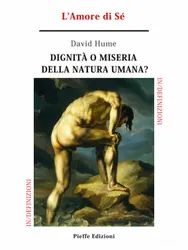
  8. Dignità o miseria della natura umana? L'Amore di Sé

    David Hume

  9. Nouveau

    The Dark Ages Collection

    J. B. Bury, Edward Creasy, Henry Bradley, Edward Gibbon, David Hume, Charles Oman

  10. The Dark Ages Collection

    J. B. Bury, Edward Creasy, Henry Bradley, Edward Gibbon, David Hume, Charles Oman

  11. Ensayos morales [Selección]

    David Hume

  12. #6

    The History of England Volume 6 : Containing the Commonwealth, Charles II and James II

    David Hume