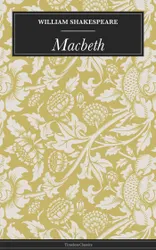
Macbeth

William Shakespeare's "Macbeth" is a haunting tragedy that delves into the dark realms of ambition, power, and moral corruption. Set in Scotland amidst a backdrop of supernatural prophecies and political intrigue, the play masterfully employs rich poetic language and tight dramatic structure to explore the psychological descent of its titular character. Shakespeare's use of soliloquies reveals the inner turmoil of Macbeth and Lady Macbeth, illuminating their complex motivations and moral dilemmas. The interplay of fate and free will, coupled with themes of guilt and paranoia, situates "Macbeth" within the broader context of Renaissance drama while also addressing timeless human concerns. William Shakespeare, widely regarded as the greatest playwright in the English language, wrote "Macbeth" around 1606, possibly during a period of political instability in England. His own experiences with power dynamics, societal expectations, and the supernatural likely influenced this poignant exploration of unchecked ambition and its dire consequences. Shakespeare's keen understanding of human psychology and the socio-political landscape of his time resonated in his works, with "Macbeth" serving as a powerful commentary on the human condition. "Macbeth" is an essential read for anyone interested in the complexities of human ambition and moral ambiguity. It captivates with its vivid imagery and profound themes, inviting readers to reflect on their own ambitions and the lengths to which they might go to achieve them. This timeless tragedy remains relevant, fostering discussions about ethics, power, and the psychological repercussions of our choices.

À propos de ce livre

William Shakespeare's "Macbeth" is a haunting tragedy that delves into the dark realms of ambition, power, and moral corruption. Set in Scotland amidst a backdrop of supernatural prophecies and political intrigue, the play masterfully employs rich poetic language and tight dramatic structure to explore the psychological descent of its titular character. Shakespeare's use of soliloquies reveals the inner turmoil of Macbeth and Lady Macbeth, illuminating their complex motivations and moral dilemmas. The interplay of fate and free will, coupled with themes of guilt and paranoia, situates "Macbeth" within the broader context of Renaissance drama while also addressing timeless human concerns. William Shakespeare, widely regarded as the greatest playwright in the English language, wrote "Macbeth" around 1606, possibly during a period of political instability in England. His own experiences with power dynamics, societal expectations, and the supernatural likely influenced this poignant exploration of unchecked ambition and its dire consequences. Shakespeare's keen understanding of human psychology and the socio-political landscape of his time resonated in his works, with "Macbeth" serving as a powerful commentary on the human condition. "Macbeth" is an essential read for anyone interested in the complexities of human ambition and moral ambiguity. It captivates with its vivid imagery and profound themes, inviting readers to reflect on their own ambitions and the lengths to which they might go to achieve them. This timeless tragedy remains relevant, fostering discussions about ethics, power, and the psychological repercussions of our choices.
Commencez ce livre dès aujourd'hui pour 0 €

  • Accédez à tous les livres de l'app pendant la période d'essai
  • Sans engagement, annulez à tout moment
Essayer gratuitement
Plus de 52 000 personnes ont noté Nextory 5 étoiles sur l'App Store et Google Play.

  1. 3500 citations ultimes

    Marc Aurèle, Jane Austen, Beaumarchais, Napoléon Bonaparte, Bouddha, Winston Churchill, Cicéron, Confucius, Nicolas de Chamfort, Charles de Gaulle, Antoine de Saint-Exupéry, Léonard de Vinci, Denis Diderot, Fiodor Dostoïevski, Albert Einstein, Ralph Waldo Emerson, Anne Frank, Mahatma Gandhi, Emmanuel Kant, Søren Kierkegaard, Martin Luther King, Georg Christoph Lichtenberg, Abraham Lincoln, Montesquieu, Friedrich Nietzsche, Platon, Marcel Proust, Arthur Schopenhauer, William Shakespeare, – Socrate, Baruch Spinoza, Henry David Thoreau, Lao Tseu, Voltaire, Oscar Wilde

  2. 5.0

    Romeo and Juliet (lättläst)

    William Shakespeare

  3. 3.8

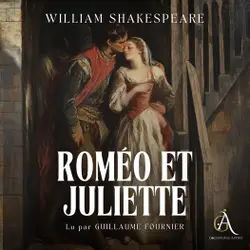
    Roméo et Juliette - Livre Audio

    William Shakespeare, Livres audio en français

  4. 5.0

    Hamlet

    William Shakespeare

  5. 4.7

    Le Songe d'une Nuit d'Eté

    William Shakespeare

  6. 3.0

    Hamlet - Livre Audio

    William Shakespeare, Livres audio en français

  7. Développez votre culture générale en 1000 citations

    Napoléon Bonaparte, Winston Churchill, Confucius, Albert Einstein, Friedrich Nietzsche, Platon, William Shakespeare, Lao Tseu, Sun Tzu

  8. 5.0

    Hamlet (lättläst)

    William Shakespeare

  9. 300 citations d'écrivains anglais

    Jane Austen, Georg Christoph Lichtenberg, William Shakespeare

  10. 4.7

    Hamlet

    William Shakespeare

  11. The Big Book of Christmas: 140+ authors and 400+ novels, novellas, stories, poems & carols

    Hans Christian Andersen, Charles Dickens, Louisa May Alcott, Lucy Maud Montgomery, Anne Brontë, Willa Cather, G.K. Chesterton, F. Marion Crawford, Fyodor Dostoyevsky, Arthur Conan Doyle, Mary E. Wilkins Freeman, The Brothers Grimm, Thomas Hardy, Nathaniel Hawthorne, O.Henry, E T A Hoffmann, Washington Irving, James Joyce, Rudyard Kipling, H.P. Lovecraft, John Milton, Beatrix Potter, Arthur Quiller-Couch, Walter Scott, Robert Louis Stevenson, Harriet Beecher Stowe, Leo Tolstoy, Anthony Trollope, Mark Twain, Oscar Wilde, Anton Chekhov, L. Frank Baum, William Blake, Samuel Taylor Coleridge, Emily Dickinson, Henry Wadsworth Longfellow, Clement C. Moore, William Shakespeare, Andrew Lang

  12. 3.0

    50 Masterpieces you have to read before you die vol: 2

    Lewis Carroll, Mark Twain, Jules Verne, Oscar Wilde, Arthur Conan Doyle, Louisa May Alcott, Jane Austen, G.K. Chesterton, Wilkie Collins, Charles Dickens, Fyodor Dostoyevsky, Alexandre Dumas, F. Scott Fitzgerald, E. M. Forster, Thomas Hardy, Hermann Hesse, James Joyce, Jack London, H.P. Lovecraft, Lucy Maud Montgomery, Edgar Allan Poe, Marcel Proust, William Shakespeare, Robert Louis Stevenson, H.G. Wells, Virginia Woolf, Rudyard Kipling, D. H. Lawrence, Thomas Mann, William Somerset Maugham, Herman Melville, George Sand, Mary Shelley, Walter Scott, Leo Tolstoy, Bram Stoker