Mark Twain: On Masturbation : Enriched edition. Some Thoughts on the Science of Onanism

Mark Twain's "On Masturbation" presents a provocative exploration of human sexuality, embodying the author's characteristic wit and incisive social commentary. Written with a blend of humor and pathos, Twain delves into the religious and cultural stigmas surrounding masturbation during the late 19th century, reflecting the Victorian moral landscape. Utilitarian in style, the text serves as both a critique of contemporary attitudes and a candid admission of natural human impulses, offering readers a glimpse into the complexity of personal and societal views on sexual health and self-pleasure. Mark Twain, born Samuel Langhorne Clemens, was a keen observer of American society, using his razor-sharp intellect to dissect the contradictions inherent in human behavior. Twain's own experiences and the societal norms of his time undoubtedly influenced his foray into this contentious topic, as his diverse body of work consistently sought to challenge hypocrisy, encourage open discourse, and promote a deeper understanding of humanity's follies. His unique blend of humor and earnestness positions him as a quintessential figure in American literature. "On Masturbation" is essential reading for anyone interested in the intersections of sexuality, morality, and cultural critique. Twain's audacious, yet thoughtful exploration of a taboo subject invites readers to consider the broader implications of sexual self-expression within the constraints of societal expectations. This book is both a curiously entertaining and enlightening addition to the pantheon of literary works addressing the complexities of human nature.

In this enriched edition, we have carefully created added value for your reading experience:

- A succinct Introduction situates the work's timeless appeal and themes.

- The Synopsis outlines the central plot, highlighting key developments without spoiling critical twists.

- A detailed Historical Context immerses you in the era's events and influences that shaped the writing.

- An Author Biography reveals milestones in the author's life, illuminating the personal insights behind the text.

- A thorough Analysis dissects symbols, motifs, and character arcs to unearth underlying meanings.

- Reflection questions prompt you to engage personally with the work's messages, connecting them to modern life.

- Hand‐picked Memorable Quotes shine a spotlight on moments of literary brilliance.

- Interactive footnotes clarify unusual references, historical allusions, and archaic phrases for an effortless, more informed read.

À propos de ce livre

Mark Twain's "On Masturbation" presents a provocative exploration of human sexuality, embodying the author's characteristic wit and incisive social commentary. Written with a blend of humor and pathos, Twain delves into the religious and cultural stigmas surrounding masturbation during the late 19th century, reflecting the Victorian moral landscape. Utilitarian in style, the text serves as both a critique of contemporary attitudes and a candid admission of natural human impulses, offering readers a glimpse into the complexity of personal and societal views on sexual health and self-pleasure. Mark Twain, born Samuel Langhorne Clemens, was a keen observer of American society, using his razor-sharp intellect to dissect the contradictions inherent in human behavior. Twain's own experiences and the societal norms of his time undoubtedly influenced his foray into this contentious topic, as his diverse body of work consistently sought to challenge hypocrisy, encourage open discourse, and promote a deeper understanding of humanity's follies. His unique blend of humor and earnestness positions him as a quintessential figure in American literature. "On Masturbation" is essential reading for anyone interested in the intersections of sexuality, morality, and cultural critique. Twain's audacious, yet thoughtful exploration of a taboo subject invites readers to consider the broader implications of sexual self-expression within the constraints of societal expectations. This book is both a curiously entertaining and enlightening addition to the pantheon of literary works addressing the complexities of human nature.

In this enriched edition, we have carefully created added value for your reading experience:

- A succinct Introduction situates the work's timeless appeal and themes.

- The Synopsis outlines the central plot, highlighting key developments without spoiling critical twists.

- A detailed Historical Context immerses you in the era's events and influences that shaped the writing.

- An Author Biography reveals milestones in the author's life, illuminating the personal insights behind the text.

- A thorough Analysis dissects symbols, motifs, and character arcs to unearth underlying meanings.

- Reflection questions prompt you to engage personally with the work's messages, connecting them to modern life.

- Hand‐picked Memorable Quotes shine a spotlight on moments of literary brilliance.

- Interactive footnotes clarify unusual references, historical allusions, and archaic phrases for an effortless, more informed read.
Commencez ce livre dès aujourd'hui pour 0 €

  • Accédez à tous les livres de l'app pendant la période d'essai
  • Sans engagement, annulez à tout moment
Essayer gratuitement
Plus de 52 000 personnes ont noté Nextory 5 étoiles sur l'App Store et Google Play.

  1. 50 Chefs-D'œuvre Que Vous Devez Lire Avant De Mourir : Vol 1 (Golden Deer Classics)

    Mark Twain, Stendhal, Edgar Allan Poe, Victor Hugo, Gustave Flaubert, Alexandre Dumas, Arthur Conan Doyle, René Descartes, Lewis Carroll, Charles Baudelaire, Guillaume Apollinaire, Golden Deer, Alain-Fournier, Jules Amédée d'Aurevilly, Paul Bourget, Charlotte Brontë, Emily Brontë, Pierre Corneille, Nikolai Gogol, Gustave Leroux, Marquis De Sade, Jack London, Sinclair Lewis, Daniel Lesueur, Marcel Proust, Edmond Rostand, Jean-Jacques Rousseau, Mary Shelley, Bram Stoker, Sun Tzu, Rodolphe Töpffer, Vatsyayana, Jules Verne, Voltaire, H.G. Wells, Oscar Wilde, Emile Zola

  2. Nouveau

    Les Aventures de Huckleberry Finn - Livre Audio

    Mark Twain, Livres audio en français

  3. Les Aventures de Tom Sawyer (Version 2)

    Mark Twain

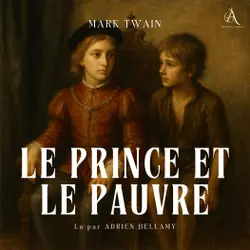
  4. Le Prince et le Pauvre - Livre Audio

    Mark Twain, Livres audio en français

  5. Les aventures de Tom Sawyer

    Mark Twain

  6. Nouveau

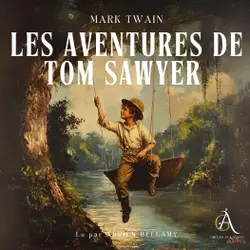
    Les Aventures de Tom Sawyer - Livre Audio

    Mark Twain, Livres audio en français

  7. 5.0

    Les Aventures de Huckleberry Finn

    Mark Twain

  8. 4.0

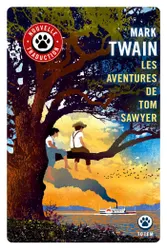
    Les Aventures de Tom Sawyer

    Mark Twain

  9. 4.8

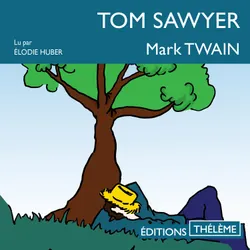
    Tom Sawyer

    Mark Twain

  10. Les aventures de Tom Sawyer

    Mark Twain

  11. Nouveau

    The Big Book of Christmas: 140+ authors and 400+ novels, novellas, stories, poems & carols

    Hans Christian Andersen, Charles Dickens, Louisa May Alcott, Lucy Maud Montgomery, Anne Brontë, Willa Cather, G.K. Chesterton, F. Marion Crawford, Fyodor Dostoyevsky, Arthur Conan Doyle, Mary E. Wilkins Freeman, The Brothers Grimm, Thomas Hardy, Nathaniel Hawthorne, O.Henry, E T A Hoffmann, Washington Irving, James Joyce, Rudyard Kipling, H.P. Lovecraft, John Milton, Beatrix Potter, Arthur Quiller-Couch, Walter Scott, Robert Louis Stevenson, Harriet Beecher Stowe, Leo Tolstoy, Anthony Trollope, Mark Twain, Oscar Wilde, Anton Chekhov, L. Frank Baum, William Blake, Samuel Taylor Coleridge, Emily Dickinson, Henry Wadsworth Longfellow, Clement C. Moore, William Shakespeare, Andrew Lang

  12. Nouveau
    3.0

    50 Masterpieces you have to read before you die vol: 2

    Lewis Carroll, Mark Twain, Jules Verne, Oscar Wilde, Arthur Conan Doyle, Louisa May Alcott, Jane Austen, G.K. Chesterton, Wilkie Collins, Charles Dickens, Fyodor Dostoyevsky, Alexandre Dumas, F. Scott Fitzgerald, E. M. Forster, Thomas Hardy, Hermann Hesse, James Joyce, Jack London, H.P. Lovecraft, Lucy Maud Montgomery, Edgar Allan Poe, Marcel Proust, William Shakespeare, Robert Louis Stevenson, H.G. Wells, Virginia Woolf, Rudyard Kipling, D. H. Lawrence, Thomas Mann, William Somerset Maugham, Herman Melville, George Sand, Mary Shelley, Walter Scott, Leo Tolstoy, Bram Stoker