3.6(5)

THE ART OF WAR : Enriched edition. Timeless Wisdom for Strategic Leadership and Military Tactics

In "The Art of War," Sun Tzu presents a timeless treatise on military strategy and tactics, blending philosophy with practical guidance on warfare. The text is notable for its profound insights into the nature of conflict, with principles that extend beyond the battlefield to encompass various aspects of life and leadership. Written in a succinct and aphoristic style, each chapter elucidates strategies relevant to deception, planning, and the importance of adaptability, all while emphasizing the psychological dimensions of warfare. As a foundational work in the genre of military strategy, it retains relevance in contemporary contexts, such as business, sports, and personal development. Sun Tzu, an ancient Chinese general and military strategist during the Eastern Zhou period, drew upon his extensive knowledge of warfare, philosophy, and governance to compose this influential work. Historians suggest that his experiences on the battlefield and profound understanding of human nature imbue the text with its enduring wisdom. The philosophical underpinnings of Daoism and Confucianism resonate throughout his teachings, advocating for strategic foresight and moral justification in the pursuit of success. "The Art of War" is essential reading for anyone interested in strategic thought, leadership, and conflict resolution. Its concise yet impactful insights challenge readers to reconsider their approaches to competition and conflict in all areas of life. This book not only serves as a strategic guide but also offers rich philosophical reflections that continue to inspire leaders and thinkers across disciplines.

In this enriched edition, we have carefully created added value for your reading experience:

- A succinct Introduction situates the work's timeless appeal and themes.

- The Synopsis outlines the central plot, highlighting key developments without spoiling critical twists.

- A detailed Historical Context immerses you in the era's events and influences that shaped the writing.

- An Author Biography reveals milestones in the author's life, illuminating the personal insights behind the text.

- A thorough Analysis dissects symbols, motifs, and character arcs to unearth underlying meanings.

- Reflection questions prompt you to engage personally with the work's messages, connecting them to modern life.

- Hand‐picked Memorable Quotes shine a spotlight on moments of literary brilliance.

- Interactive footnotes clarify unusual references, historical allusions, and archaic phrases for an effortless, more informed read.
À propos de ce livre

In "The Art of War," Sun Tzu presents a timeless treatise on military strategy and tactics, blending philosophy with practical guidance on warfare. The text is notable for its profound insights into the nature of conflict, with principles that extend beyond the battlefield to encompass various aspects of life and leadership. Written in a succinct and aphoristic style, each chapter elucidates strategies relevant to deception, planning, and the importance of adaptability, all while emphasizing the psychological dimensions of warfare. As a foundational work in the genre of military strategy, it retains relevance in contemporary contexts, such as business, sports, and personal development. Sun Tzu, an ancient Chinese general and military strategist during the Eastern Zhou period, drew upon his extensive knowledge of warfare, philosophy, and governance to compose this influential work. Historians suggest that his experiences on the battlefield and profound understanding of human nature imbue the text with its enduring wisdom. The philosophical underpinnings of Daoism and Confucianism resonate throughout his teachings, advocating for strategic foresight and moral justification in the pursuit of success. "The Art of War" is essential reading for anyone interested in strategic thought, leadership, and conflict resolution. Its concise yet impactful insights challenge readers to reconsider their approaches to competition and conflict in all areas of life. This book not only serves as a strategic guide but also offers rich philosophical reflections that continue to inspire leaders and thinkers across disciplines.

In this enriched edition, we have carefully created added value for your reading experience:

- A succinct Introduction situates the work's timeless appeal and themes.

- The Synopsis outlines the central plot, highlighting key developments without spoiling critical twists.

- A detailed Historical Context immerses you in the era's events and influences that shaped the writing.

- An Author Biography reveals milestones in the author's life, illuminating the personal insights behind the text.

- A thorough Analysis dissects symbols, motifs, and character arcs to unearth underlying meanings.

- Reflection questions prompt you to engage personally with the work's messages, connecting them to modern life.

- Hand‐picked Memorable Quotes shine a spotlight on moments of literary brilliance.

- Interactive footnotes clarify unusual references, historical allusions, and archaic phrases for an effortless, more informed read.
Commencez ce livre dès aujourd'hui pour 0 €

  • Accédez à tous les livres de l'app pendant la période d'essai
  • Sans engagement, annulez à tout moment
Essayer gratuitement
Plus de 52 000 personnes ont noté Nextory 5 étoiles sur l'App Store et Google Play.

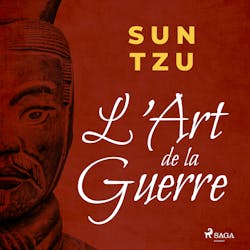
  1. L'Art de la guerre

    Sun Tzu

  2. 50 Chefs-D'œuvre Que Vous Devez Lire Avant De Mourir : Vol 1 (Golden Deer Classics)

    Mark Twain, Stendhal, Edgar Allan Poe, Victor Hugo, Gustave Flaubert, Alexandre Dumas, Arthur Conan Doyle, René Descartes, Lewis Carroll, Charles Baudelaire, Guillaume Apollinaire, Golden Deer, Alain-Fournier, Jules Amédée d'Aurevilly, Paul Bourget, Charlotte Brontë, Emily Brontë, Pierre Corneille, Nikolai Gogol, Gustave Leroux, Marquis De Sade, Jack London, Sinclair Lewis, Daniel Lesueur, Marcel Proust, Edmond Rostand, Jean-Jacques Rousseau, Mary Shelley, Bram Stoker, Sun Tzu, Rodolphe Töpffer, Vatsyayana, Jules Verne, Voltaire, H.G. Wells, Oscar Wilde, Emile Zola

  3. 3.9

    L'Art de la Guerre

    Sun Tzu

  4. 4.4

    L’art de la guerre

    Sun Tzu

  5. 4.1

    The Art of War

    Sun Tzu

  6. 300 citations pour apprendre la stratégie avec Sun Tzu, Machiavel, Napoléon

    Napoléon Bonaparte, Nicolas Machiavel, Sun Tzu

  7. 4.0

    L’Art de la Guerre

    Sun Tzu

  8. Développez votre culture générale en 1000 citations

    Napoléon Bonaparte, Winston Churchill, Confucius, Albert Einstein, Friedrich Nietzsche, Platon, William Shakespeare, Lao Tseu, Sun Tzu

  9. 4.7

    L'art de la guerre

    Sun Tzu

  10. The Prosperity Bible: The Greatest Writings of All Time on the Secrets to Wealth and Prosperity

    Wallace D. Wattles, Napoleon Hill, James Allen, P.T. Barnum, Benjamin Franklin, Charles F. Haanel, Robert Collier, Florence Scovel Shinn, Elbert Hubbard, Russell H. Conwell, Charles Fillmore, Ralph Waldo Trine, William Walker Atkinson, F.W. Sears, Orson Swett Marden, Emmett Fox, Lao Tzu, Sun Tzu, Kahlil Gibran, Neville Goddard, Niccolò Machiavelli, Joseph Murphy, Miyamoto Musashi

  11. The Definitive Strategy Collection: 6 Works From Sun Tzu, Homer, Machiavelli, and Miyamoto Musashi : The Art of War; The Prince; The Book of Five Rings; On War; The Iliad; & The Odyssey

    Sun Tzu, Niccolo Machiavelli, Miyamoto Musashi, Carl von Clausewitz, Homer

  12. The Art of War by Sun Tzu Illustrated

    Sun Tzu