The Coming Race (Annotated) : Enriched Edition. Dystopian Sci-Fi Novel

Edward Bulwer-Lytton's The Coming Race is a seminal work of Victorian speculative fiction, framing a traveler's discovery of the subterranean Vril-ya, a technologically and spiritually advanced people whose mastery of the mysterious force "Vril" has transformed society. Written in a lucid, ironic, and pseudo-ethnographic style, the novel blends utopian romance, satirical anthropology, occult speculation, and early science fiction, reflecting nineteenth-century debates over evolution, empire, gender, and social progress. Bulwer-Lytton, already celebrated as a novelist, politician, and man of letters, brought to the book his fascination with esotericism, classical learning, and the anxieties of modernity. His career ranged from fashionable society novels to historical romance, and his engagement with political power and intellectual currents helped shape this ambivalent vision of a civilization more orderly and potent than Britain, yet profoundly unsettling to human individuality. This book is highly recommended for readers interested in the origins of science fiction and utopian thought. Its imaginative boldness, philosophical ambiguity, and cultural afterlife make it indispensable for understanding how Victorian literature imagined the future—and feared it.

This enriched edition has been carefully crafted to add value to your reading experience.

- A succinct Introduction situates the work's timeless appeal and themes.

- The Synopsis outlines the central plot, highlighting key developments without spoiling critical twists.

- A detailed Historical Context immerses you in the era's events and influences that shaped the writing.

- A thorough Analysis dissects symbols, motifs, and character arcs to unearth underlying meanings.

- Reflection questions prompt you to engage personally with the work's messages, connecting them to modern life.

- Hand‐picked Memorable Quotes shine a spotlight on moments of literary brilliance.

- Interactive footnotes clarify unusual references, historical allusions, and archaic phrases for an effortless, more informed read.
À propos de ce livre

Edward Bulwer-Lytton's The Coming Race is a seminal work of Victorian speculative fiction, framing a traveler's discovery of the subterranean Vril-ya, a technologically and spiritually advanced people whose mastery of the mysterious force "Vril" has transformed society. Written in a lucid, ironic, and pseudo-ethnographic style, the novel blends utopian romance, satirical anthropology, occult speculation, and early science fiction, reflecting nineteenth-century debates over evolution, empire, gender, and social progress. Bulwer-Lytton, already celebrated as a novelist, politician, and man of letters, brought to the book his fascination with esotericism, classical learning, and the anxieties of modernity. His career ranged from fashionable society novels to historical romance, and his engagement with political power and intellectual currents helped shape this ambivalent vision of a civilization more orderly and potent than Britain, yet profoundly unsettling to human individuality. This book is highly recommended for readers interested in the origins of science fiction and utopian thought. Its imaginative boldness, philosophical ambiguity, and cultural afterlife make it indispensable for understanding how Victorian literature imagined the future—and feared it.

This enriched edition has been carefully crafted to add value to your reading experience.

- A succinct Introduction situates the work's timeless appeal and themes.

- The Synopsis outlines the central plot, highlighting key developments without spoiling critical twists.

- A detailed Historical Context immerses you in the era's events and influences that shaped the writing.

- A thorough Analysis dissects symbols, motifs, and character arcs to unearth underlying meanings.

- Reflection questions prompt you to engage personally with the work's messages, connecting them to modern life.

- Hand‐picked Memorable Quotes shine a spotlight on moments of literary brilliance.

- Interactive footnotes clarify unusual references, historical allusions, and archaic phrases for an effortless, more informed read.

Commencez ce livre dès aujourd'hui pour 0 €

  • Accédez à tous les livres de l'app pendant la période d'essai
  • Sans engagement, annulez à tout moment
Essayer gratuitement
Plus de 52 000 personnes ont noté Nextory 5 étoiles sur l'App Store et Google Play.

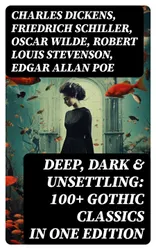
  1. DEEP, DARK & UNSETTLING: 100+ Gothic Classics in One Edition

    Charles Dickens, Friedrich Schiller, Oscar Wilde, Robert Louis Stevenson, Edgar Allan Poe, William Hope Hodgson, Joseph Sheridan Fanu, George MacDonald, Percy Bysshe Shelley, Bram Stoker, Charlotte Brontë, Emily Brontë, William Godwin, Henry James, Victor Hugo, Théophile Gautier, Arthur Conan Doyle, Joseph Conrad, Guy Boothby, Jane Austen, Mayne Reid, John Meade Falkner, Guy De Maupassant, George Eliot, Samuel Taylor Coleridge, Robert Hugh Benson, Horace Walpole, Frederick Marryat, Thomas love Peacock, Washington Irving, Nathaniel Hawthorne, Gaston Leroux, Grant Allen, Arthur Machen, Wilkie Collins, Thomas Peckett Prest, James Malcolm Rymer, Robert Browning, Walter Hubbell, Marie Corelli, Charles Brockden Brown, James Hogg, William Blake, Charlotte Perkins Gilman, John Keats, Richard Marsh, Clara Reeve, Charles Robert Maturin, John William Polidori, Lord Byron, W. W. Jacobs, E F Benson, M. R. James, E. T. Hoffmann, George W. Reynolds, William Thomas Beckford, Christina Rossetti, Tobias Smollett, Nikolai Gogol, Mary Shelley, Edward Bulwer-Lytton, Ann Radcliffe, Matthew Gregory Lewis, Eliza Parsons, Eleanor Sleath, Émile Erckmann, Alexandre Chatrian

  2. Les Derniers Jours de Pompéi

    Edward Bulwer-Lytton

  3. Les derniers jours de Pompéi : le célère roman porté au cinéma par Mario Bonnard et Sergio Leone

    Edward Bulwer-Lytton

  4. 3.0

    Le Dernier Jour de Pompéi

    Edward Bulwer-Lytton

  5. Les Derniers Jours de Pompéi

    Edward Bulwer-Lytton

  6. Sci-Fi Box Set : Epic Dystopias & Timeless Sci-Fi Adventures

    H.G. Wells, Abraham Merritt, Edgar Wallace, Jules Verne, Edgar Allan Poe, Mary Shelley, Edwin A. Abbott, Jack London, Robert Louis Stevenson, George MacDonald, Henry Rider Haggard, William Hope Hodgson, H.P. Lovecraft, Edward Bellamy, Mark Twain, Arthur Conan Doyle, Francis Bacon, C.J. Hyne, Lewis Grassic Gibbon, Margaret Cavendish, Jonathan Swift, William Morris, Samuel Butler, Edward Bulwer-Lytton, James Fenimore Cooper, Charlotte Perkins Gilman, Owen Gregory, Hugh Benson, Fred M. White, Ignatius Donnelly, Ernest Bramah, Arthur Dudley Vinton, Robert Cromie, Anthony Trollope, Cleveland Moffett, Richard Jefferies, Percy Greg, David Lindsay, Edward Everett Hale, Stanley G. Weinbaum, Otis Adelbert Kline, Malcolm Jameson, Garrett P. Serviss, Gertrude Barrows Bennett

  7. 100 Klassiker der Geschichtsschreibung : Die Geschichte des Alten Ägypten, Der Alexanderzug, Römische Geschichte, Herbst des Mittelalters, Die russische Revolution, Der Kampf um Europa

    Edward Gibbon, Leopold von Ranke, J. B. Bury, Theodor Mommsen, Herodot, Thukydides, Xenophon, Arrian, Titus Livius, Tacitus, Gaius Iulius Caesar, Sueton, Polybios, Ammianus Marcellinus, Plutarch, Diogenes Laërtios, Eusebius, Prokop von Cäsarea, Anna Komnena, Agathias, Marc Bloch, L. W. King, George Rawlinson, Edward Bulwer-Lytton, Jacob Burckhardt, Joseph François Michaud, Johan Huizinga, Arthur Middleton Reeves, Niccolò Machiavelli, G.K. Chesterton, Voltaire, Friedrich Schiller, Ricarda Huch, Thomas Carlyle, Charles Downer Hazen, Egon Friedell, Walter Benjamin

  8. 100 Große Geschichtsbücher - Klassiker, die man kennen muss : Der Peloponnesische Krieg, Der Alexanderzug, Ab Urbe Condita, Napoleonische Kriege, Geschichte des Ersten und Zweiten Weltkriegs

    Tacitus, Thukydides, Plutarch, Theodor Mommsen, Edward Gibbon, Leopold von Ranke, Ricarda Huch, Helmuth von Moltke, Xenophon, Arrian, Titus Livius, Gaius Iulius Caesar, Sueton, Polybios, Ammianus Marcellinus, Diogenes Laërtios, Eusebius, Prokop von Cäsarea, Anna Komnena, Agathias, Marc Bloch, George Rawlinson, Edward Bulwer-Lytton, Jacob Burckhardt, Joseph François Michaud, Johan Huizinga, Niccolò Machiavelli, G.K. Chesterton, Voltaire, Friedrich Schiller, Thomas Carlyle, Charles Downer Hazen, Egon Friedell, Walter Benjamin

  9. VRIL - Das Geschlecht der Zukunft

    Edward Bulwer-Lytton

  10. VRIL : The Power of the Coming Race

    Edward Bulwer-Lytton

  11. Die letzten Tage von Pompeji: Historischer Roman

    Edward Bulwer-Lytton

  12. 100 Meisterwerke der englischen Literatur - Klassiker, die man kennen muss : Hamlet, 1984, Ulysses...

    George Orwell, Charles Dickens, Jane Austen, Katherine Mansfield, H.P. Lovecraft, William Wordsworth, John Keats, Percy Bysshe Shelley, Robert Burns, John Milton, William Shakespeare, Christopher Marlowe, Geoffrey Chaucer, Laurence Sterne, Henry Fielding, Mary Shelley, Emily Brontë, Charlotte Brontë, Anne Brontë, William Makepeace Thackeray, George Eliot, D. H. Lawrence, Herman Melville, Thomas Wolfe, Virginia Woolf, Joseph Conrad, Sinclair Lewis, Walt Whitman, Edgar Allan Poe, Oscar Wilde, Jerome K Jerome, Washington Irving, Bram Stoker, H.G. Wells, Daniel Defoe, Lew Wallace, James Fenimore Cooper, Jonathan Swift, Robert Louis Stevenson, Mark Twain, Lewis Carrol, Edward Bulwer-Lytton, F. Scott Fitzgerald, Arthur Conan Doyle, Jack London, Henry David Thoreau, G.K. Chesterton, Edith Wharton, Henry James, Thomas Hardy, Margaret Mitchell, Kate Chopin, Willa Cather, Charlotte Perkins Gilman, James Joyce, John Galsworthy, Francis Hodgson Burnett, Lucy Maud Montgomery, Louisa May Alcott, Rudyard Kipling