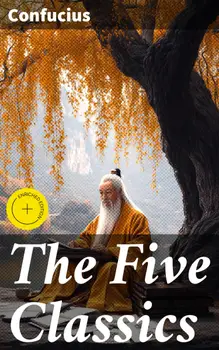
The Five Classics : Enriched edition. Premium Collection – The Books of the Traditional Confucian Canon

The Five Classics, a foundational text within the Confucian canon, comprises essential works that shaped Chinese thought and cultural values. These texts'—including the Yijing (Book of Changes), Shijing (Book of Songs), Shangshu (Book of Documents), Liji (Book of Rites), and Chunqiu (Spring and Autumn Annals)'—demonstrate a distinctive literary style characterized by aphorisms, poetry, and historical narrative. Set against the backdrop of the tumultuous Spring and Autumn period, these classics reflect not only the philosophical inquiries of Confucius but also the socio-political realities of his time, advocating for moral integrity and virtuous governance within a hierarchical society. Confucius (Kong Fuzi), an influential philosopher and educator, dedicated his life to elucidating ethical leadership and the importance of harmonious social relations. His teachings emphasize the cultivation of virtue through education and the reverence for tradition, features starkly present in The Five Classics. The compilation of these texts represents his commitment to preserving and transmitting wisdom from prior generations while adapting it to address contemporary societal issues. The Five Classics is essential reading for anyone interested in East Asian philosophy, cultural history, or political ethics. Its timeless principles offer profound insights into governance and human relationships, making it a relevant work for both scholars and general readers alike who seek to understand the origins of moral thought in Chinese civilization.

In this enriched edition, we have carefully created added value for your reading experience:

- A succinct Introduction situates the work's timeless appeal and themes.

- The Synopsis outlines the central plot, highlighting key developments without spoiling critical twists.

- A detailed Historical Context immerses you in the era's events and influences that shaped the writing.

- An Author Biography reveals milestones in the author's life, illuminating the personal insights behind the text.

- A thorough Analysis dissects symbols, motifs, and character arcs to unearth underlying meanings.

- Reflection questions prompt you to engage personally with the work's messages, connecting them to modern life.

- Hand‐picked Memorable Quotes shine a spotlight on moments of literary brilliance.

- Interactive footnotes clarify unusual references, historical allusions, and archaic phrases for an effortless, more informed read.
À propos de ce livre

The Five Classics, a foundational text within the Confucian canon, comprises essential works that shaped Chinese thought and cultural values. These texts'—including the Yijing (Book of Changes), Shijing (Book of Songs), Shangshu (Book of Documents), Liji (Book of Rites), and Chunqiu (Spring and Autumn Annals)'—demonstrate a distinctive literary style characterized by aphorisms, poetry, and historical narrative. Set against the backdrop of the tumultuous Spring and Autumn period, these classics reflect not only the philosophical inquiries of Confucius but also the socio-political realities of his time, advocating for moral integrity and virtuous governance within a hierarchical society. Confucius (Kong Fuzi), an influential philosopher and educator, dedicated his life to elucidating ethical leadership and the importance of harmonious social relations. His teachings emphasize the cultivation of virtue through education and the reverence for tradition, features starkly present in The Five Classics. The compilation of these texts represents his commitment to preserving and transmitting wisdom from prior generations while adapting it to address contemporary societal issues. The Five Classics is essential reading for anyone interested in East Asian philosophy, cultural history, or political ethics. Its timeless principles offer profound insights into governance and human relationships, making it a relevant work for both scholars and general readers alike who seek to understand the origins of moral thought in Chinese civilization.

In this enriched edition, we have carefully created added value for your reading experience:

- A succinct Introduction situates the work's timeless appeal and themes.

- The Synopsis outlines the central plot, highlighting key developments without spoiling critical twists.

- A detailed Historical Context immerses you in the era's events and influences that shaped the writing.

- An Author Biography reveals milestones in the author's life, illuminating the personal insights behind the text.

- A thorough Analysis dissects symbols, motifs, and character arcs to unearth underlying meanings.

- Reflection questions prompt you to engage personally with the work's messages, connecting them to modern life.

- Hand‐picked Memorable Quotes shine a spotlight on moments of literary brilliance.

- Interactive footnotes clarify unusual references, historical allusions, and archaic phrases for an effortless, more informed read.
Commencez ce livre dès aujourd'hui pour 0 €

  • Accédez à tous les livres de l'app pendant la période d'essai
  • Sans engagement, annulez à tout moment
Essayer gratuitement
Plus de 52 000 personnes ont noté Nextory 5 étoiles sur l'App Store et Google Play.

  1. 5.0

    Comprendre Confucius

    Confucius

  2. 1800 Citations de philosophes

    Aristote, Épicure, Platon, Thalès de Milet, – Socrate, Protagoras, Anaximandre, Épictète, Héraclite, Marc Aurèle, René Descartes, Michel de Montaigne, Alexis de Tocqueville, Voltaire, Charles De Montesquieu, Jean-Jacques Rousseau, Emmanuel Kant, Hannah Arendt, Gottfried Wilhelm Leibniz, Georg Wilhelm Friedrich Hegel, Friedrich Nietzsche, Arthur Schopenhauer, David Hume, John Locke, Francis Bacon, Thomas Hobbes, Thomas More, Confucius, Érasme, Lao Tseu, Baruch Spinoza, Søren Kierkegaard, Nicolas Machiavel, Thomas d'Aquin, Henry David Thoreau

  3. 4.0

    Les trois sagesses chinoises : Confucius, Lao Tseu, Bouddha

    Bouddha, Confucius, Lao Tseu

  4. 3500 citations ultimes

    Marc Aurèle, Jane Austen, Beaumarchais, Napoléon Bonaparte, Bouddha, Winston Churchill, Cicéron, Confucius, Nicolas de Chamfort, Charles de Gaulle, Antoine de Saint-Exupéry, Léonard de Vinci, Denis Diderot, Fiodor Dostoïevski, Albert Einstein, Ralph Waldo Emerson, Anne Frank, Mahatma Gandhi, Emmanuel Kant, Søren Kierkegaard, Martin Luther King, Georg Christoph Lichtenberg, Abraham Lincoln, Montesquieu, Friedrich Nietzsche, Platon, Marcel Proust, Arthur Schopenhauer, William Shakespeare, – Socrate, Baruch Spinoza, Henry David Thoreau, Lao Tseu, Voltaire, Oscar Wilde

  5. 1.0

    Confucius, 365 citations pour 365 jours de sagesse

    Confucius

  6. Les Entretiens de Confucius

    Confucius

  7. 50 citations de Confucius

    Confucius

  8. 400 citations de philosophes essentiels

    Confucius, Érasme, Lao Tseu, Baruch Spinoza, Søren Kierkegaard, Nicolas Machiavel, Thomas d'Aquin, Henry David Thoreau

  9. Cheu King : l'un des cinq livres canoniques de la philosophie chinoise

    Confucius, Sun Tzu, Séraphin Couvreur, Zhu Xi

  10. 600 citations de la philosophie politique

    Cicéron, Confucius, Alexis de Tocqueville, Karl Marx, Friedrich Nietzsche, Henry David Thoreau

  11. Développez votre culture générale en 500 citations

    Winston Churchill, Confucius, Albert Einstein, William Shakespeare, Sun Tzu

  12. 600 citations mystiques et spirituelles

    Bouddha, Confucius, Dalaï Lama, Mahatma Gandhi, Martin Luther King, Mère Teresa