3.0(1)

The Gran Sasso Raid: The History of the Nazi Operation to Rescue Benito Mussolini from Captivity during World War II

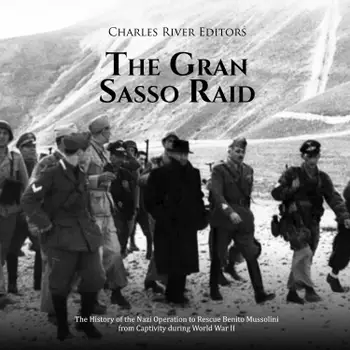
As Sicily fell and the Allies prepared to press on, Italy’s fascist dictator, Benito Mussolini, was actually arrested to prevent him from doing further damage. Il Duce still held considerable power in the eyes of many ground-level activists, and if left unchecked, the possibility of violence in the streets was genuine. He was jailed in Campo Imperatore on August 28, 1943, on one of the largest mountains in Central Italy, but when the new Italian government surrendered to the Allies, most of the Italian mainland was still controlled by the Germans, who now pushed out to oppose not just the Western Allies but the Italians. In one tragic move, the Germans attacked the Italians without mercy on all fronts, slaughtering their former allies and taking no prisoners, while the remnants of the Italian military, located on national soil, fought to stop their former allies from the far-reaching south to the last man to allow easy access to British and American troops. Immediately, all dormant anti-Fascist resistance cells sprung up around Italy, organizing a massive movement of armed resistance against the German invaders.

During his dictatorship and World War II, Hitler routinely betrayed alliances, repudiated solemn pacts when it suited him and generally acted without consideration for others, but Mussolini seemed to be the one exception. Hitler seems to have formed few close personal relationships in his life, but his friendship with Mussolini appears to have been genuine, and it would survive military catastrophe and the destruction of the Nazi empire. Thus, when Mussolini finally found himself imprisoned by the Italian authorities and threatened with execution or being handed over to the Allies, Hitler personally authorized a daring mission to rescue the Italian dictator.

À propos de ce livre

As Sicily fell and the Allies prepared to press on, Italy’s fascist dictator, Benito Mussolini, was actually arrested to prevent him from doing further damage. Il Duce still held considerable power in the eyes of many ground-level activists, and if left unchecked, the possibility of violence in the streets was genuine. He was jailed in Campo Imperatore on August 28, 1943, on one of the largest mountains in Central Italy, but when the new Italian government surrendered to the Allies, most of the Italian mainland was still controlled by the Germans, who now pushed out to oppose not just the Western Allies but the Italians. In one tragic move, the Germans attacked the Italians without mercy on all fronts, slaughtering their former allies and taking no prisoners, while the remnants of the Italian military, located on national soil, fought to stop their former allies from the far-reaching south to the last man to allow easy access to British and American troops. Immediately, all dormant anti-Fascist resistance cells sprung up around Italy, organizing a massive movement of armed resistance against the German invaders.

During his dictatorship and World War II, Hitler routinely betrayed alliances, repudiated solemn pacts when it suited him and generally acted without consideration for others, but Mussolini seemed to be the one exception. Hitler seems to have formed few close personal relationships in his life, but his friendship with Mussolini appears to have been genuine, and it would survive military catastrophe and the destruction of the Nazi empire. Thus, when Mussolini finally found himself imprisoned by the Italian authorities and threatened with execution or being handed over to the Allies, Hitler personally authorized a daring mission to rescue the Italian dictator.
Commencez ce livre dès aujourd'hui pour 0 €

  • Accédez à tous les livres de l'app pendant la période d'essai
  • Sans engagement, annulez à tout moment
Essayer gratuitement
Plus de 52 000 personnes ont noté Nextory 5 étoiles sur l'App Store et Google Play.

  1. 4.0

    The French Mandate for Syria and the Lebanon: The History and Legacy of France’s Administration of the Levant after World War I

    Charles River Editors

  2. 3.5

    Sigmund Freud and Carl Jung: The Pioneering Lives and Works of History’s Most Influential Psychologists

    Charles River Editors

  3. Starting a World War: The History of the Events and Battles that Began World War I and World War II

    Charles River Editors

  4. The Spanish Empire in the Americas: The History of Spain’s Colonization across Central America and South America

    Charles River Editors

  5. The Ottomans and Christians: The History and Legacy of the Ottomans’ Conflicts with Catholic and Orthodox Nations

    Charles River Editors

  6. America’s Most Notorious Natural Disasters

    Charles River Editors

  7. Douglas Bader: The Life and Legacy of One of the Royal Air Force’s Most Famous Fighter Aces

    Charles River Editors

  8. The World’s Most Famous Physicists: The Lives and Legacies of the Scientists Who Pioneered Physics

    Charles River Editors

  9. La Capilla Sixtina: Historia y legado de la capilla más famosa del mundo

    Charles River Editors

  10. The Ottoman Empire’s Worst Defeats: The History and Legacy of the Decisive Battles that Checked the Ottomans’ Expansion into Europe

    Charles River Editors

  11. 5.0

    The Evolution of Modern Mathematics: The Lives of Influential Mathematicians Who Helped Bring Math into the Computer Age Kindle

    Charles River Editors

  12. The Making of Modern China: The History of the World’s Most Populous Country from the Qing Dynasty to Today

    Charles River Editors