The Invisible Girl : She Vanished into Legend—Until Love Brought Her Back

The Invisible Girl by Mary Shelley

Mary Shelley is widely considered the mother of science fiction, and with good reason.

Her 1818 novel Frankenstein; or, The Modern Prometheus is often cited as the first true science fiction story. It blends science, imagination, and moral inquiry in a way that was unprecedented at the time.

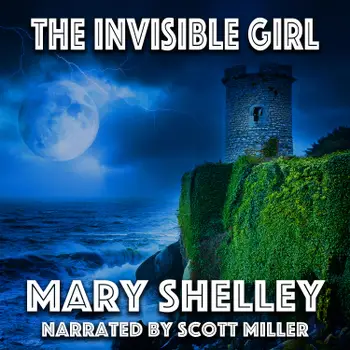
Set on the Welsh coast, The Invisible Girl is a Gothic romantic tale framed by a story-within-a-story structure. The narrator recounts a mysterious legend told by a local nobleman about a seemingly haunted tower on the cliffs. According to the tale, a young woman named Rosina, once believed to have disappeared or died, had lived secretly in the tower and become known to locals as “the invisible girl.”

Rosina had been in love with Henry, the son of the nobleman, but due to class differences and misunderstandings, she was cast out and presumed lost. Rather than leaving the area, she secretly took refuge in the abandoned tower, living in solitude and becoming a figure of myth. Eventually, her true identity was discovered, and the lovers were joyfully reunited.


Commencez ce livre dès aujourd'hui pour 0 €

  • Accédez à tous les livres de l'app pendant la période d'essai
  • Sans engagement, annulez à tout moment
Essayer gratuitement
Plus de 52 000 personnes ont noté Nextory 5 étoiles sur l'App Store et Google Play.

  1. Frankenstein

    Mary Shelley

  2. 50 Chefs-D'œuvre Que Vous Devez Lire Avant De Mourir : Vol 1 (Golden Deer Classics)

    Mark Twain, Stendhal, Edgar Allan Poe, Victor Hugo, Gustave Flaubert, Alexandre Dumas, Arthur Conan Doyle, René Descartes, Lewis Carroll, Charles Baudelaire, Guillaume Apollinaire, Golden Deer, Alain-Fournier, Jules Amédée d'Aurevilly, Paul Bourget, Charlotte Brontë, Emily Brontë, Pierre Corneille, Nikolai Gogol, Gustave Leroux, Marquis De Sade, Jack London, Sinclair Lewis, Daniel Lesueur, Marcel Proust, Edmond Rostand, Jean-Jacques Rousseau, Mary Shelley, Bram Stoker, Sun Tzu, Rodolphe Töpffer, Vatsyayana, Jules Verne, Voltaire, H.G. Wells, Oscar Wilde, Emile Zola

  3. 3.9

    Frankenstein ou le Prométhée moderne

    Mary Shelley

  4. Frankenstein ou le Prométhée Moderne

    Mary Shelley

  5. 3.0

    Monstrueuses créatures

    William Chambers Morrow, Mary Shelley, Marc Donat, Edgar Allan Poe

  6. 4.5

    Frankenstein ou le Prométhée moderne

    Mary Shelley

  7. World's Greatest Short Stories

    Daniel Defoe, Benjamin Franklin, Washington Irving, Mateo Falcone, Charlotte Bronte, Mary Shelley, Nathaniel Hawthorne, Nikolai Gogol, Edgar Allan Poe, Fyodor Dostoyevsky, Charles Dickens, Herman Melville, Mark Twain, Guy De Maupassant, Oscar Wilde, Leo Tolstoy, H.G. Wells, Ambrose Bierce, Stephen Crane, Kate Chopin, Jack London, E. M. Forster

  8. 4.3

    Frankenstein ou Le Prométhée moderne (nouvelle traduction)

    Mary Shelley

  9. Nouveau

    Frankenstein ; ou, le Prométhée moderne (Version originale de 1818) : Edition Bilingue

    Mary Shelley

  10. Women of Science Fiction - 18 Classic Stories by the Pioneering Women Who Shaped the Future of Science Fiction

    Leigh Brackett, Evelyn E. Smith, Mary Shelley, Andre Norton, Margaret St. Clair, Lynn Venable, Miriam Allen deFord, Francis Stevens, Katherine MacLean, Dorothy Quick, Mary Carlson, Gerda Rhoads

  11. 5.0

    Frankenstein

    Mary Shelley

  12. Frankenstein : Ou le Prométhée moderne

    Mary Shelley