À propos de ce livre

How far can science go before it crosses the boundaries of nature and morality?

In The Island of Doctor Moreau, H. G. Wells presents a dark and unforgettable vision of scientific ambition and its consequences. Set against an isolated and mysterious environment, this classic novel explores the unsettling possibilities of experimentation while raising profound questions about humanity, morality, identity, and the limits of scientific power.

Blending science fiction with Gothic horror and speculative fiction, Wells creates an atmosphere of mystery, tension, and unease. His imaginative storytelling invites readers to consider the responsibilities that come with scientific discovery and the difficult boundaries between human nature and the natural world.

More than a century after its publication, The Island of Doctor Moreau remains remarkably relevant. Its exploration of ethics, scientific experimentation, civilization, and the meaning of humanity continues to provoke discussion and inspire modern science fiction, horror, film, and popular culture.

Widely regarded as one of H. G. Wells's most influential works, The Island of Doctor Moreau stands alongside his greatest science fiction classics. Its haunting atmosphere, provocative ideas, and enduring literary influence make it an essential read for fans of speculative fiction and Gothic literature.

Enter a world where science challenges the boundaries of nature and humanity. Download The Island of Doctor Moreau today and experience one of the most haunting classics of science fiction and speculative literature.

Commencez ce livre dès aujourd'hui pour 0 €

  • Accédez à tous les livres de l'app pendant la période d'essai
  • Sans engagement, annulez à tout moment
Essayer gratuitement
Plus de 52 000 personnes ont noté Nextory 5 étoiles sur l'App Store et Google Play.

  1. 50 Chefs-D'œuvre Que Vous Devez Lire Avant De Mourir : Vol 1 (Golden Deer Classics)

    Mark Twain, Stendhal, Edgar Allan Poe, Victor Hugo, Gustave Flaubert, Alexandre Dumas, Arthur Conan Doyle, René Descartes, Lewis Carroll, Charles Baudelaire, Guillaume Apollinaire, Golden Deer, Alain-Fournier, Jules Amédée d'Aurevilly, Paul Bourget, Charlotte Brontë, Emily Brontë, Pierre Corneille, Nikolai Gogol, Gustave Leroux, Marquis De Sade, Jack London, Sinclair Lewis, Daniel Lesueur, Marcel Proust, Edmond Rostand, Jean-Jacques Rousseau, Mary Shelley, Bram Stoker, Sun Tzu, Rodolphe Töpffer, Vatsyayana, Jules Verne, Voltaire, H.G. Wells, Oscar Wilde, Emile Zola

  2. 50 Chefs-D'œuvre Que Vous Devez Lire Avant De Mourir: Vol 2

    Honoré de Balzac, Alphonse Daudet, Arthur Conan Doyle, Alexandre Dumas, Gustave Flaubert, Francis Scott Fitzgerald, Nikolai Gogol, Victor Hugo, Maurice Leblanc, Jack London, Madame de La Fayette, Guy De Maupassant, Friedrich Nietzsche, Jean-Jacques Rousseau, Robert Louis Stevenson, Jules Verne, H.G. Wells, Michel de Montaigne, Golden Deer Classics

  3. 3.5

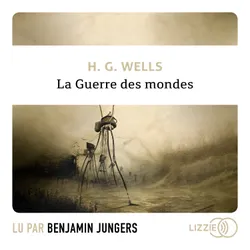
    La Guerre des mondes - Livre Audio

    H.G. Wells

  4. Les nouvelles fantastiques de H.G. WELLS : 26 nouvelles en texte intégral par le père de la science-fiction contemporaine

    H.G. Wells, Herbert George Wells

  5. 5.0

    La guerre des Mondes

    H.G. Wells

  6. 4.5

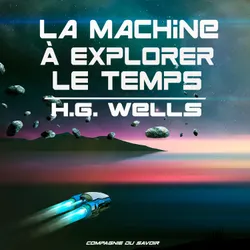
    La Machine à explorer le temps - Livre Audio

    H.G. Wells, Livres audio en français

  7. 5.0

    La Machine à explorer le temps

    H.G. Wells

  8. 3.2
    #6

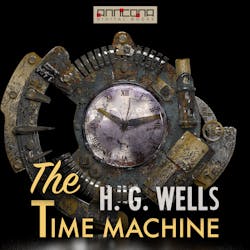
    The Time Machine

    H.G. Wells

  9. 5.0

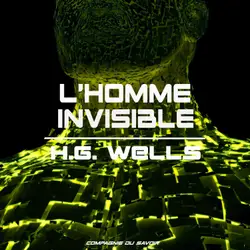
    L'Homme invisible

    H.G. Wells

  10. Nouveau

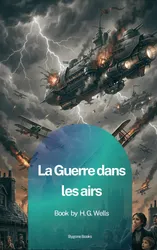
    La Guerre dans les airs

    H.G. Wells

  11. 3.8

    L'Île du Docteur Moreau

    H.G. Wells

  12. 3.0

    50 Masterpieces you have to read before you die vol: 2

    Lewis Carroll, Mark Twain, Jules Verne, Oscar Wilde, Arthur Conan Doyle, Louisa May Alcott, Jane Austen, G.K. Chesterton, Wilkie Collins, Charles Dickens, Fyodor Dostoyevsky, Alexandre Dumas, F. Scott Fitzgerald, E. M. Forster, Thomas Hardy, Hermann Hesse, James Joyce, Jack London, H.P. Lovecraft, Lucy Maud Montgomery, Edgar Allan Poe, Marcel Proust, William Shakespeare, Robert Louis Stevenson, H.G. Wells, Virginia Woolf, Rudyard Kipling, D. H. Lawrence, Thomas Mann, William Somerset Maugham, Herman Melville, George Sand, Mary Shelley, Walter Scott, Leo Tolstoy, Bram Stoker