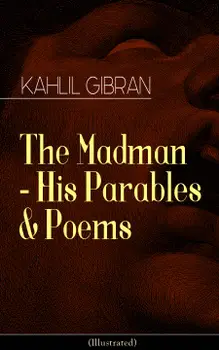
The Madman - His Parables & Poems (Illustrated) (Annotated) : Enriched Edition. Inspiring Tales from the Renowned Philosopher and Artist, Author of The Prophet, Spirits Rebellious & Jesus The Son of Man

The Madman: His Parables and Poems is Kahlil Gibran's first book written in English, a compact collection of allegorical tales, aphoristic prose-poems, and visionary meditations. Through the figure of the "madman," Gibran explores masks, freedom, solitude, hypocrisy, and spiritual awakening, often overturning conventional wisdom with the simplicity of a fable and the force of prophecy. Its illustrated form enriches the text's symbolic atmosphere, linking it to the fin-de-siècle tradition of mystical and philosophical prose while anticipating the lyrical mode that would culminate in The Prophet. Gibran, born in Lebanon and formed by both Arab literary culture and the artistic circles of Boston and New York, wrote from a position between languages, religions, and civilizations. His experience as an immigrant, painter, and member of the Mahjar literary movement sharpened his sensitivity to exile, identity, and inner liberation. The book's "madness" is therefore less pathology than a chosen estrangement from social illusion. This volume is recommended for readers drawn to spiritual literature, modern parable, and poetic philosophy. Brief yet resonant, it rewards slow reading and invites reflection on the self beneath society's disguises.

This enriched edition has been carefully crafted to add value to your reading experience.

- A comprehensive Introduction outlines these selected works' unifying features, themes, or stylistic evolutions.

- The Author Biography highlights personal milestones and literary influences that shape the entire body of writing.

- A Historical Context section situates the works in their broader era—social currents, cultural trends, and key events that underpin their creation.

- A concise Synopsis (Selection) offers an accessible overview of the included texts, helping readers navigate plotlines and main ideas without revealing critical twists.

- A unified Analysis examines recurring motifs and stylistic hallmarks across the collection, tying the stories together while spotlighting the different work's strengths.

- Reflection questions inspire deeper contemplation of the author's overarching message, inviting readers to draw connections among different texts and relate them to modern contexts.

- Lastly, our hand‐picked Memorable Quotes distill pivotal lines and turning points, serving as touchstones for the collection's central themes.

À propos de ce livre

The Madman: His Parables and Poems is Kahlil Gibran's first book written in English, a compact collection of allegorical tales, aphoristic prose-poems, and visionary meditations. Through the figure of the "madman," Gibran explores masks, freedom, solitude, hypocrisy, and spiritual awakening, often overturning conventional wisdom with the simplicity of a fable and the force of prophecy. Its illustrated form enriches the text's symbolic atmosphere, linking it to the fin-de-siècle tradition of mystical and philosophical prose while anticipating the lyrical mode that would culminate in The Prophet. Gibran, born in Lebanon and formed by both Arab literary culture and the artistic circles of Boston and New York, wrote from a position between languages, religions, and civilizations. His experience as an immigrant, painter, and member of the Mahjar literary movement sharpened his sensitivity to exile, identity, and inner liberation. The book's "madness" is therefore less pathology than a chosen estrangement from social illusion. This volume is recommended for readers drawn to spiritual literature, modern parable, and poetic philosophy. Brief yet resonant, it rewards slow reading and invites reflection on the self beneath society's disguises.

This enriched edition has been carefully crafted to add value to your reading experience.

- A comprehensive Introduction outlines these selected works' unifying features, themes, or stylistic evolutions.

- The Author Biography highlights personal milestones and literary influences that shape the entire body of writing.

- A Historical Context section situates the works in their broader era—social currents, cultural trends, and key events that underpin their creation.

- A concise Synopsis (Selection) offers an accessible overview of the included texts, helping readers navigate plotlines and main ideas without revealing critical twists.

- A unified Analysis examines recurring motifs and stylistic hallmarks across the collection, tying the stories together while spotlighting the different work's strengths.

- Reflection questions inspire deeper contemplation of the author's overarching message, inviting readers to draw connections among different texts and relate them to modern contexts.

- Lastly, our hand‐picked Memorable Quotes distill pivotal lines and turning points, serving as touchstones for the collection's central themes.

Commencez ce livre dès aujourd'hui pour 0 €

  • Accédez à tous les livres de l'app pendant la période d'essai
  • Sans engagement, annulez à tout moment
Essayer gratuitement
Plus de 52 000 personnes ont noté Nextory 5 étoiles sur l'App Store et Google Play.

  1. The Prosperity Bible: The Greatest Writings of All Time on the Secrets to Wealth and Prosperity

    Wallace D. Wattles, Napoleon Hill, James Allen, P.T. Barnum, Benjamin Franklin, Charles F. Haanel, Robert Collier, Florence Scovel Shinn, Elbert Hubbard, Russell H. Conwell, Charles Fillmore, Ralph Waldo Trine, William Walker Atkinson, F.W. Sears, Orson Swett Marden, Emmett Fox, Lao Tzu, Sun Tzu, Kahlil Gibran, Neville Goddard, Niccolò Machiavelli, Joseph Murphy, Miyamoto Musashi

  2. 5.0

    Prophet

    Kahlil Gibran

  3. SELF-MASTERY : The Collected Wisdom from the Greatest Books on Becoming Wealthy & Successful

    Niccolò Machiavelli, James Allen, William Walker Atkinson, Orison Swett Marden, Benjamin Franklin, Thorstein Veblen, Kahlil Gibran, P.T. Barnum, Marcus Aurelius, Wallace D. Wattles, Lao Tzu, Russell Conwell, Henry Harrison Brown, Émile Coué

  4. 25 août
    3.4

    The Prophet

    Kahlil Gibran

  5. Nouveau

    50 Clásicos que Debes Leer Antes de Morir : Un viaje literario por los tesoros de la literatura universal

    Dante Alighieri, Aristóteles, Jane Austen, Charles Baudelaire, Giovanni Boccaccio, Anne Brontë, C. Collodi, James Fenimore Cooper, Fedor Mikhaïlovitch Dostoïevski, Arthur Conan Doyle, Alexandre Dumas, José de Espronceda, Gustave Flaubert, Sigmund Freud, Benito Pérez Galdós, Kahlil Gibran, Johann Wolfgang Goethe, Victor Hugo, Thomas Hardy, Nathaniel Hawthorne, Vicente Blasco Ibáñez, Washington Irving, James Joyce, Mariano José Larra, Jack London, Federico García Lorca, H.P. Lovecraft, Antonio Machado, Gustav Meyrink, John Stuart Mill, Amado Nervo, Friedrich Nietzsche, Solomon Northup, Alexander Sergeyevich Pushkin, Francisco de Quevedo, Walter Scott, William Shakespeare, Robert Louis Stevenson, Harriet Beecher Stowe, Jonathan Swift, Mark Twain, Miguel De Unamuno, Ramón María Valle-Inclán, Julio Verne, Virginia Woolf

  6. Nouveau
    4.3

    El profeta

    Kahlil Gibran

  7. Nouveau
    4.5

    The Prophet

    Kahlil Gibran

  8. 4.5

    The Prophet

    Kahlil Gibran

  9. 50 Clásicos que Debes Leer Antes de Morir : Un viaje literario por los tesoros de la literatura universal

    Dante Alighieri, Aristóteles, Jane Austen, Charles Baudelaire, Giovanni Boccaccio, Anne Brontë, C. Collodi, James Fenimore Cooper, Fedor Mikhaïlovitch Dostoïevski, Arthur Conan Doyle, Alexandre Dumas, José de Espronceda, Gustave Flaubert, Sigmund Freud, Benito Pérez Galdós, Kahlil Gibran, Johann Wolfgang Goethe, Johann Wolfgang von Goethe, Victor Hugo, Thomas Hardy, Nathaniel Hawthorne, Vicente Blasco Ibáñez, Washington Irving, James Joyce, Mariano José de Larra, Jack London, Federico García Lorca, H.P. Lovecraft, Antonio Machado, Gustav Meyrink, John Stuart Mill, Amado Nervo, Friedrich Nietzsche, Solomon Northup, Alexander Sergeyevich Pushkin, Francisco de Quevedo, Walter Scott, William Shakespeare, Robert Louis Stevenson, Harriet Beecher Stowe, Jonathan Swift, Mark Twain, Miguel De Unamuno, Ramón María del Valle-Inclán, Julio Verne, Virginia Woolf

  10. 4.3

    El Profeta

    Kahlil Gibran

  11. 4.3

    El profeta

    Kahlil Gibran

  12. 3.4

    The Prophet

    Kahlil Gibran