The Sorrows of Satan

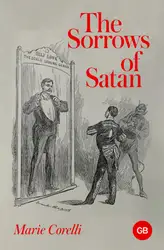
On the surface the plot follows the story of a penniless, starving author called Geoffrey Tempest. So poor that he is behind on his rent and can barely afford light in his room, he receives three letters. The first is from a friend in Australia who has made his fortune and offers to introduce him to a good friend who might be able to lift him from poverty. The second is a note from a solicitor detailing that he has inherited a fortune from a deceased relative. The third is a letter of introduction from a foreign aristocrat called Lucio, who befriends him and proceeds to be his guide in how best to use his newfound wealth.

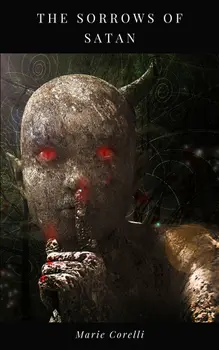
Tempest remains blissfully unaware throughout the novel, despite warnings from people he meets, that Lucio is the earthly incarnation of the Devil. Over the course of the book, his wealth leads to misery. Eventually, when confronted with the true nature of his companion, he renounces evil and returns to society penniless but content with the chance to purify his soul.

Although the plot follows Tempest's fall from grace and subsequent redemption, he is in many regards a secondary character to Lucio. Both the title of the work and much of its philosophical content relate to the supreme yearning within Satan to achieve salvation. The book's main contribution to Faustian literature is the introduction of the concept that above all other people it is Satan who most truly believes in the Gospel, and yet he is forbidden ever to partake of it.

À propos de ce livre

On the surface the plot follows the story of a penniless, starving author called Geoffrey Tempest. So poor that he is behind on his rent and can barely afford light in his room, he receives three letters. The first is from a friend in Australia who has made his fortune and offers to introduce him to a good friend who might be able to lift him from poverty. The second is a note from a solicitor detailing that he has inherited a fortune from a deceased relative. The third is a letter of introduction from a foreign aristocrat called Lucio, who befriends him and proceeds to be his guide in how best to use his newfound wealth.

Tempest remains blissfully unaware throughout the novel, despite warnings from people he meets, that Lucio is the earthly incarnation of the Devil. Over the course of the book, his wealth leads to misery. Eventually, when confronted with the true nature of his companion, he renounces evil and returns to society penniless but content with the chance to purify his soul.

Although the plot follows Tempest's fall from grace and subsequent redemption, he is in many regards a secondary character to Lucio. Both the title of the work and much of its philosophical content relate to the supreme yearning within Satan to achieve salvation. The book's main contribution to Faustian literature is the introduction of the concept that above all other people it is Satan who most truly believes in the Gospel, and yet he is forbidden ever to partake of it.
Commencez ce livre dès aujourd'hui pour 0 €

  • Accédez à tous les livres de l'app pendant la période d'essai
  • Sans engagement, annulez à tout moment
Essayer gratuitement
Plus de 52 000 personnes ont noté Nextory 5 étoiles sur l'App Store et Google Play.

  1. Into Eternal Darkness: 100+ Gothic Classics in One Edition : Novels, Tales and Poems: The Mysteries of Udolpho, The Tell-Tale Heart, Sweeney Todd…

    Charles Dickens, Friedrich Schiller, Oscar Wilde, Robert Louis Stevenson, Edgar Allan Poe, William Hope Hodgson, Joseph Sheridan Le Fanu, George MacDonald, Percy Bysshe Shelley, Bram Stoker, Charlotte Brontë, Emily Brontë, William Godwin, Henry James, Victor Hugo, Théophile Gautier, Arthur Conan Doyle, Joseph Conrad, Guy Boothby, Jane Austen, Mayne Reid, John Meade Falkner, Guy De Maupassant, George Eliot, Samuel Taylor Coleridge, Robert Hugh Benson, Horace Walpole, Frederick Marryat, Thomas love Peacock, Washington Irving, Nathaniel Hawthorne, Gaston Leroux, Grant Allen, Arthur Machen, Wilkie Collins, Thomas Peckett Prest, James Malcolm Rymer, Robert Browning, Walter Hubbell, Marie Corelli, Charles Brockden Brown, James Hogg, William Blake, Charlotte Perkins Gilman, John Keats, Richard Marsh, Clara Reeve, Charles Robert Maturin, John William Polidori, Lord Byron, W. Jacobs, E F Benson, M. R. James, E T A Hoffmann, George W. M. Reynolds, William Thomas Beckford, Christina Rossetti, Tobias Smollett, Nikolai Gogol, Mary Shelley, Edward Bulwer-Lytton, Ann Radcliffe, Matthew Gregory Lewis, Eliza Parsons, Eleanor Sleath, Émile Erckmann, Alexandre Chatrian

  2. Der Schatz des Himmels : Spirituelle Reise

    Marie Corelli

  3. Love- And the Philosopher : A Tale of Sentiment on the Eve of War

    Marie Corelli

  4. Cameos : The Essential Introduction to Bestselling Victorian Tales of Gothic Passion, Feminist Revenge, and Supernatural Suspense

    Marie Corelli

  5. The Love Of Long Ago & Other Stories : Beautiful, thoughful and spiritual tales from the Victorian era's greatest romanticist

    Marie Corelli

  6. The Murder Of Delicia : A true tale of pure love sullied by a cad

    Marie Corelli

  7. The Sorrows of Satan

    Marie Corelli

  8. #6

    Jane: A Social Incident : a 57-year old country maid gains a fortune and debuts in high society

    Marie Corelli

  9. Ziska: The Problem Of A Wicked Soul : A supernatural tale of reincarnation, seduction, and revenge.

    Marie Corelli

  10. #4

    The Strange Visitation of Josiah McNasson: A Ghost Story : A terrifying take on A Christmas Carol from 1904

    Marie Corelli

  11. #2

    Marie Corelli's Collected Poems :

    Marie Corelli

  12. #3

    Angel's Wickedness :

    Marie Corelli