3.3(3)

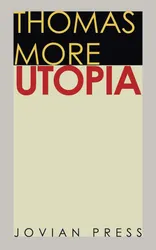
Utopia : Of a Republic's Best State and of the New Island Utopia

Thomas More's "Utopia" is a profound exploration of political philosophy and social idealism, presenting a fictional dialogue that critiques contemporary European society of the early 16th century. The text, written in Latin and later translated into various languages, employs a satirical and allegorical literary style, interweaving humor, irony, and sharp socio-political analysis. More's narrative unfolds an imaginary island society, drawing contrasts with European norms regarding property, governance, and morality, thus prompting readers to reflect critically on issues like justice, freedom, and the human condition. Thomas More, a lawyer, statesman, and humanist, was deeply embedded in the tumultuous landscape of Renaissance England. His experiences in the court of Henry VIII and his commitment to Catholicism significantly shaped his perspectives on governance and ethics. These influences culminated in More's desire to envision an alternative society where reason, equity, and communal well-being triumphed over greed and corruption, making "Utopia" not merely a work of fiction but a compelling call to reform. Recommended for scholars, students, and general readers alike, "Utopia" challenges us to envision and engage with the fundamental structures of society. More's thought-provoking assertions continue to resonate, urging us to contemplate the balance between idealism and practicality in our pursuits of justice and equity in the modern world.
À propos de ce livre

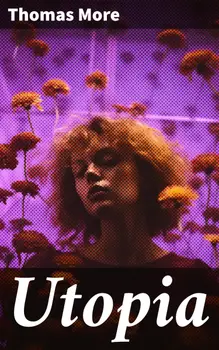
Thomas More's "Utopia" is a profound exploration of political philosophy and social idealism, presenting a fictional dialogue that critiques contemporary European society of the early 16th century. The text, written in Latin and later translated into various languages, employs a satirical and allegorical literary style, interweaving humor, irony, and sharp socio-political analysis. More's narrative unfolds an imaginary island society, drawing contrasts with European norms regarding property, governance, and morality, thus prompting readers to reflect critically on issues like justice, freedom, and the human condition. Thomas More, a lawyer, statesman, and humanist, was deeply embedded in the tumultuous landscape of Renaissance England. His experiences in the court of Henry VIII and his commitment to Catholicism significantly shaped his perspectives on governance and ethics. These influences culminated in More's desire to envision an alternative society where reason, equity, and communal well-being triumphed over greed and corruption, making "Utopia" not merely a work of fiction but a compelling call to reform. Recommended for scholars, students, and general readers alike, "Utopia" challenges us to envision and engage with the fundamental structures of society. More's thought-provoking assertions continue to resonate, urging us to contemplate the balance between idealism and practicality in our pursuits of justice and equity in the modern world.
Commencez ce livre dès aujourd'hui pour 0 €

  • Accédez à tous les livres de l'app pendant la période d'essai
  • Sans engagement, annulez à tout moment
Essayer gratuitement
Plus de 52 000 personnes ont noté Nextory 5 étoiles sur l'App Store et Google Play.

  1. 1800 Citations de philosophes

    Aristote, Épicure, Platon, Thalès de Milet, – Socrate, Protagoras, Anaximandre, Épictète, Héraclite, Marc Aurèle, René Descartes, Michel de Montaigne, Alexis de Tocqueville, Voltaire, Charles De Montesquieu, Jean-Jacques Rousseau, Emmanuel Kant, Hannah Arendt, Gottfried Wilhelm Leibniz, Georg Wilhelm Friedrich Hegel, Friedrich Nietzsche, Arthur Schopenhauer, David Hume, John Locke, Francis Bacon, Thomas Hobbes, Thomas More, Confucius, Érasme, Lao Tseu, Baruch Spinoza, Søren Kierkegaard, Nicolas Machiavel, Thomas d'Aquin, Henry David Thoreau

  2. Comprendre Thomas More

    Thomas More

  3. 250 citations de philosophes anglais

    David Hume, John Locke, Francis Bacon, Thomas Hobbes, Thomas More

  4. 15+ Political Science. Classics Collection : The Art of War, Tao Te Ching, The Republic, Meditations, The Prince, Utopia, Utilitarianism, Anarchism and others

    Sun Tzu, Lao Tzu, Plato, Marcus Aurelius, Niccolo Machiavelli, Thomas More, Tommaso Campanella, Francis Bacon, Thomas Paine, John Stuart Mill, Karl Marx, Friedrich Engels, Vladimir Lenin, Rosa Luxemburg, Peter Kropotkin, Emma Goldman, Leon Trotsky

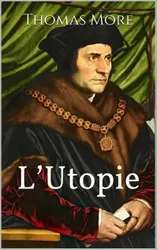
  5. L'Utopie

    Thomas More

  6. 50+ Classic collection. Political science : The Art of War, The Republic, The Athenian Constitution, The Prince, Utopia, Common Sense, Utilitarianism, Marxism, Anarchism, Socialism

    Sun Sun Tzu, Lao Lao Tzu, Plato Plato, Marcus Marcus Aurelius, Niccolo Machiavelli, Thomas More, Tommaso Campanella, Francis Bacon, Thomas Paine, Richard Henry Lee, Thomas Jefferson, James Madison, George Washington, John Stuart Mil, Karl Marx, Friedrich Engels, Vladimir Lenin, Rosa Luxemburg, Peter Kropotkin, Emma Goldman, Leon Trotsky, Aristotle Aristotle

  7. 33 Masterpieces of Philosophy and Science to Read Before You Die (Illustrated) : Utopia, The Meditations, The Art of War, The Kama Sutra, Candide

    Thomas More, Marcus Aurelius Antoninus, Sun Tzu, Vatsyayana, Voltaire, Edwin A. Abbott, Aristotle, Dale Carnegie, Gilbert Keith Chesterton, René Descartes, Epictetus, Sigmund Freud, Hermann Hesse, David Hume, Lao Tzu, David Herbert Lawrence, Niccolò Machiavelli, John Mill, Prentice Mulford, Friedrich Nietzsche, Plato, Bertrand Russell, H.G. Wells, Frances Bacon

  8. 2.0

    Utopia

    Thomas More

  9. L'Utopie : un essai de théorie politique de Thomas More (édition intégrale de 1516)

    Thomas More

  10. Utopia

    Thomas More

  11. L'Utopie

    Thomas More

  12. L'Utopie

    Thomas More