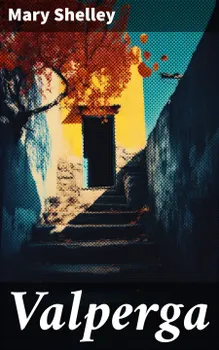
Valperga : The Life and Adventures of Castruccio, Prince of Lucca (Historical Novel)

In "Valperga," Mary Shelley explores the intertwining themes of love, power, and the moral implications of political idealism. Set in 14th-century Italy, this historical novel delves into the life of the tempestuous Castruccio Castracani, a figure torn between his ambitions and a tragic romantic entanglement. Shelley's prose is characterized by vivid imagery and a complex psychological depth, mirroring the tumultuous events of the Italian city-states while employing a gothic sensibility that highlights both the romantic and the grotesque facets of human nature. The narrative not only reflects her experiences but also engages the literary context of the Romantic period, illustrating the tensions between individual desires and societal obligations. Mary Shelley, best known for her groundbreaking work "Frankenstein," drew on her profound interest in history and politics, influenced by her remarkable family background and intellectual circles. Her personal struggles with love, loss, and rebellion against societal norms provided the emotional depth that permeates "Valperga," enhancing her exploration of personal and political conflicts. This novel serves as an extension of her philosophical inquiries into the nature of humanity and morality, showcasing her growth as a novelist. "Valperga" is a compelling read for those interested in historical fiction that challenges the norms of its time. Shelley's masterful storytelling and rich character development create an intricate tapestry of passion and conflict that resonates with contemporary readers. This novel invites an examination of the complexities of power and love while reflecting the enduring question of how personal ambition intersects with historical imperatives. A must-read for fans of Gothic literature and anyone seeking to understand the broader implications of human desire.
À propos de ce livre

In "Valperga," Mary Shelley explores the intertwining themes of love, power, and the moral implications of political idealism. Set in 14th-century Italy, this historical novel delves into the life of the tempestuous Castruccio Castracani, a figure torn between his ambitions and a tragic romantic entanglement. Shelley's prose is characterized by vivid imagery and a complex psychological depth, mirroring the tumultuous events of the Italian city-states while employing a gothic sensibility that highlights both the romantic and the grotesque facets of human nature. The narrative not only reflects her experiences but also engages the literary context of the Romantic period, illustrating the tensions between individual desires and societal obligations. Mary Shelley, best known for her groundbreaking work "Frankenstein," drew on her profound interest in history and politics, influenced by her remarkable family background and intellectual circles. Her personal struggles with love, loss, and rebellion against societal norms provided the emotional depth that permeates "Valperga," enhancing her exploration of personal and political conflicts. This novel serves as an extension of her philosophical inquiries into the nature of humanity and morality, showcasing her growth as a novelist. "Valperga" is a compelling read for those interested in historical fiction that challenges the norms of its time. Shelley's masterful storytelling and rich character development create an intricate tapestry of passion and conflict that resonates with contemporary readers. This novel invites an examination of the complexities of power and love while reflecting the enduring question of how personal ambition intersects with historical imperatives. A must-read for fans of Gothic literature and anyone seeking to understand the broader implications of human desire.

Commencez ce livre dès aujourd'hui pour 0 €

  • Accédez à tous les livres de l'app pendant la période d'essai
  • Sans engagement, annulez à tout moment
Essayer gratuitement
Plus de 52 000 personnes ont noté Nextory 5 étoiles sur l'App Store et Google Play.

  1. 50 Chefs-D'œuvre Que Vous Devez Lire Avant De Mourir : Vol 1 (Golden Deer Classics)

    Mark Twain, Stendhal, Edgar Allan Poe, Victor Hugo, Gustave Flaubert, Alexandre Dumas, Arthur Conan Doyle, René Descartes, Lewis Carroll, Charles Baudelaire, Guillaume Apollinaire, Golden Deer, Alain-Fournier, Jules Amédée d'Aurevilly, Paul Bourget, Charlotte Brontë, Emily Brontë, Pierre Corneille, Nikolai Gogol, Gustave Leroux, Marquis De Sade, Jack London, Sinclair Lewis, Daniel Lesueur, Marcel Proust, Edmond Rostand, Jean-Jacques Rousseau, Mary Shelley, Bram Stoker, Sun Tzu, Rodolphe Töpffer, Vatsyayana, Jules Verne, Voltaire, H.G. Wells, Oscar Wilde, Emile Zola

  2. Nouveau
    3.0

    50 Masterpieces you have to read before you die vol: 2

    Lewis Carroll, Mark Twain, Jules Verne, Oscar Wilde, Arthur Conan Doyle, Louisa May Alcott, Jane Austen, G.K. Chesterton, Wilkie Collins, Charles Dickens, Fyodor Dostoyevsky, Alexandre Dumas, F. Scott Fitzgerald, E. M. Forster, Thomas Hardy, Hermann Hesse, James Joyce, Jack London, H.P. Lovecraft, Lucy Maud Montgomery, Edgar Allan Poe, Marcel Proust, William Shakespeare, Robert Louis Stevenson, H.G. Wells, Virginia Woolf, Rudyard Kipling, D. H. Lawrence, Thomas Mann, William Somerset Maugham, Herman Melville, George Sand, Mary Shelley, Walter Scott, Leo Tolstoy, Bram Stoker

  3. Frankenstein : Ou le Prométhée moderne

    Mary Shelley

  4. 4.0

    Frankenstein ou le Prométhée moderne

    Mary Shelley

  5. 4.5

    Frankenstein ou le Prométhée moderne

    Mary Shelley

  6. Frankenstein

    Mary Shelley

  7. Nouveau
    3.9

    Frankenstein

    Mary Shelley

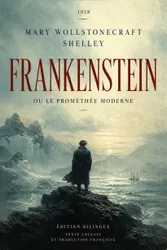
  8. Frankenstein ; ou, le Prométhée moderne (Version originale de 1818) : Edition Bilingue

    Mary Shelley

  9. #416

    Transformation : A Monster Took His Skin — and His Life

    Mary Shelley

  10. Vintage Sci-Fi 9 - 17 Classic Science Fiction Short Stories from Isaac Asimov, H. G. Wells, Arthur C. Clarke, Philip K. Dick, Mary Shelley and more

    Arthur C. Clarke, Clifford D. Simak, Isaac Asimov, Lynn Venable, Robert Silverberg, Ross Rocklynne, Philip K Dick, William Hope Hodgson, Mary Shelley, Gordon R. Dickson, Frank M. Robinson, Ambrose Bierce, Murray Leinster, Lawrence M. Jannifer, H.G. Wells, Theodore Sturgeon

  11. 3.9

    Frankenstein

    Mary Shelley

  12. Frankenstein and Other Stories

    Mary Shelley