Wuthering Heights

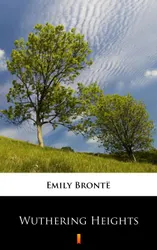
In Emily Brontë's profound novel, Wuthering Heights, the intricate interplay of passion and revenge unfolds against the backdrop of the Yorkshire moors, where the tempestuous love affair between Heathcliff and Catherine Earnshaw reveals the darker aspects of human nature. Brontë's use of a multi-layered narrative structure, conveyed through the lenses of various characters, serves to deepen the complexity of her themes, exploring social class, nature versus nurture, and the inescapable grip of the past. The novel's gothic elements, characterized by its bleak setting and tragic figures, resonate with the era's burgeoning interest in Romanticism and the exploration of emotional depth, challenging readers to confront the legacy of unbridled desire. Emily Brontë's background as a reclusive member of the Brontë literary family, alongside her profound connection to her native moors, greatly informed her writing. Growing up in a household of creativity and tragedy, and drawing from her own experiences of solitude and loss, Brontë crafted Wuthering Heights as a reflection of her inner world and social observations, ultimately channeling her experiences into a haunting narrative that stands apart from the more conventional love stories of her time. I highly recommend Wuthering Heights to readers who are drawn to complex characters and morally ambiguous narratives. Brontë's work transcends the typical boundaries of love and tragedy, inviting an exploration of the human condition that is as relevant today as it was upon its publication. Engaging with this novel is not merely a literary experience; it is an emotional journey through the tumultuous landscape of love, loss, and the pursuit of identity.
À propos de ce livre

In Emily Brontë's profound novel, Wuthering Heights, the intricate interplay of passion and revenge unfolds against the backdrop of the Yorkshire moors, where the tempestuous love affair between Heathcliff and Catherine Earnshaw reveals the darker aspects of human nature. Brontë's use of a multi-layered narrative structure, conveyed through the lenses of various characters, serves to deepen the complexity of her themes, exploring social class, nature versus nurture, and the inescapable grip of the past. The novel's gothic elements, characterized by its bleak setting and tragic figures, resonate with the era's burgeoning interest in Romanticism and the exploration of emotional depth, challenging readers to confront the legacy of unbridled desire. Emily Brontë's background as a reclusive member of the Brontë literary family, alongside her profound connection to her native moors, greatly informed her writing. Growing up in a household of creativity and tragedy, and drawing from her own experiences of solitude and loss, Brontë crafted Wuthering Heights as a reflection of her inner world and social observations, ultimately channeling her experiences into a haunting narrative that stands apart from the more conventional love stories of her time. I highly recommend Wuthering Heights to readers who are drawn to complex characters and morally ambiguous narratives. Brontë's work transcends the typical boundaries of love and tragedy, inviting an exploration of the human condition that is as relevant today as it was upon its publication. Engaging with this novel is not merely a literary experience; it is an emotional journey through the tumultuous landscape of love, loss, and the pursuit of identity.
Commencez ce livre dès aujourd'hui pour 0 €

  • Accédez à tous les livres de l'app pendant la période d'essai
  • Sans engagement, annulez à tout moment
Essayer gratuitement
Plus de 52 000 personnes ont noté Nextory 5 étoiles sur l'App Store et Google Play.

  1. 4.1

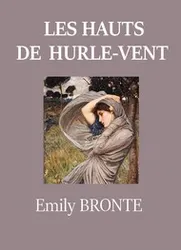
    Les Hauts de Hurlevent

    Emily Brontë

  2. 3.5

    Les Hauts de Hurlevent - Livre Audio

    Emily Brontë, Livres audio en français

  3. Les mieux notés
    4.6

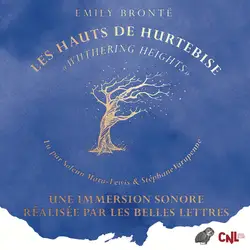
    Les Hauts de Hurtebise : Wuthering Heights

    Emily Brontë

  4. 4.8

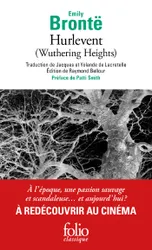
    Hurlevent

    Emily Brontë

  5. 4.1

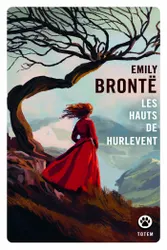
    Les hauts de Hurlevent

    Emily Brontë

  6. 50 Chefs-D'œuvre Que Vous Devez Lire Avant De Mourir : Vol 1 (Golden Deer Classics)

    Mark Twain, Stendhal, Edgar Allan Poe, Victor Hugo, Gustave Flaubert, Alexandre Dumas, Arthur Conan Doyle, René Descartes, Lewis Carroll, Charles Baudelaire, Guillaume Apollinaire, Golden Deer, Alain-Fournier, Jules Amédée d'Aurevilly, Paul Bourget, Charlotte Brontë, Emily Brontë, Pierre Corneille, Nikolai Gogol, Gustave Leroux, Marquis De Sade, Jack London, Sinclair Lewis, Daniel Lesueur, Marcel Proust, Edmond Rostand, Jean-Jacques Rousseau, Mary Shelley, Bram Stoker, Sun Tzu, Rodolphe Töpffer, Vatsyayana, Jules Verne, Voltaire, H.G. Wells, Oscar Wilde, Emile Zola

  7. 4.3

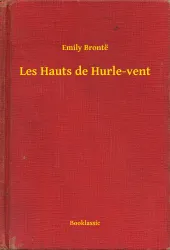
    Les Hauts de Hurle-vent

    Emily Brontë

  8. 4.3

    Brontë, Emily – Les Hauts de Hurlevent

    Emily Brontë

  9. 4.0

    Les Hauts de Hurlevent :

    Emily Brontë

  10. 3.8

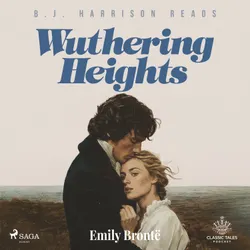
    B. J. Harrison Reads Wuthering Heights

    Emily Brontë

  11. 4.1

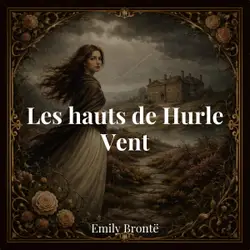
    Les hauts de Hurle Vent

    Emily Brontë

  12. DEEP, DARK & UNSETTLING: 100+ Gothic Classics in One Edition

    Charles Dickens, Friedrich Schiller, Oscar Wilde, Robert Louis Stevenson, Edgar Allan Poe, William Hope Hodgson, Joseph Sheridan Fanu, George MacDonald, Percy Bysshe Shelley, Bram Stoker, Charlotte Brontë, Emily Brontë, William Godwin, Henry James, Victor Hugo, Théophile Gautier, Arthur Conan Doyle, Joseph Conrad, Guy Boothby, Jane Austen, Mayne Reid, John Meade Falkner, Guy De Maupassant, George Eliot, Samuel Taylor Coleridge, Robert Hugh Benson, Horace Walpole, Frederick Marryat, Thomas love Peacock, Washington Irving, Nathaniel Hawthorne, Gaston Leroux, Grant Allen, Arthur Machen, Wilkie Collins, Thomas Peckett Prest, James Malcolm Rymer, Robert Browning, Walter Hubbell, Marie Corelli, Charles Brockden Brown, James Hogg, William Blake, Charlotte Perkins Gilman, John Keats, Richard Marsh, Clara Reeve, Charles Robert Maturin, John William Polidori, Lord Byron, W. W. Jacobs, E F Benson, M. R. James, E. T. Hoffmann, George W. Reynolds, William Thomas Beckford, Christina Rossetti, Tobias Smollett, Nikolai Gogol, Mary Shelley, Edward Bulwer-Lytton, Ann Radcliffe, Matthew Gregory Lewis, Eliza Parsons, Eleanor Sleath, Émile Erckmann, Alexandre Chatrian