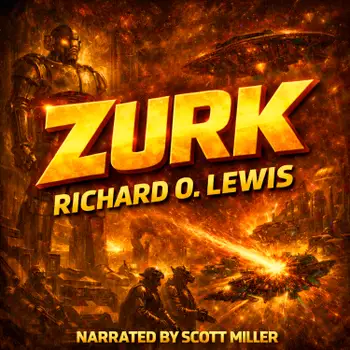
Guyard has spent years building weapons in secret, knowing they will never be enough. His people live under constant watch, their technology dismantled, their strongest voices silenced, their children taken on a schedule that cannot be delayed or negotiated. The one thing meant to stop it all sits motionless in a hidden laboratory, staring through a window and refusing to move.
As the deadline approaches, resistance shifts from planning to improvisation. A last weapon is rushed into existence, built from salvaged parts and borrowed time. Every attempt to test it risks immediate discovery. Every delay brings the black ships closer. The city prepares to fight anyway, knowing that failure will not mean retreat—it will mean the end of everything they have left to protect.
Zurk is not just a machine. It is a vessel for memory, intention, and something far more dangerous than steel. When events force that truth into the open, the meaning of strength changes. The story drives toward a moment where power, identity, and endurance collide under unbearable pressure.
Richard O. Lewis wrote compact, high-stakes science fiction built for momentum and payoff. His stories often place ordinary people inside impossible systems and ask how much control can survive once the rules are stacked against them. “Zurk” is one of his most direct confrontations with that question.