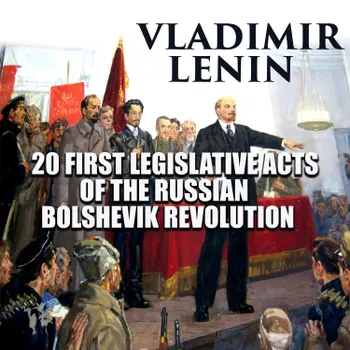
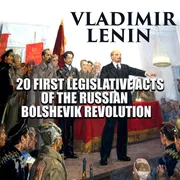
20 First Legislative Acts of the Russian Bolshevik Revolution

Decrees were legislative acts of the highest Soviet institutions, primarily of the Council of People's Commissars (the highest executive body — Sovnarkom) and of VTsIK (the highest legislative body between sessions of the Congress of Soviets).

The Bolshevik Initial Decrees were announced as soon as the Bolsheviks declared their success in the October Revolution (October 26, 1917). The Decrees seemed to conform to the popular Bolshevik slogan "Peace, Land and Bread". The slogan succinctly articulated the grievances of the Russian peasantry, armed forces and proletariat.

The Bolsheviks were not opportunists but benevolent idealists; the point of the Decrees was to bring about a better quality of life for the Russian people. Regardless of which view is the more accurate account, it is clear from these opposing perspectives that the history of the Initial Decrees is a politically charged issue. This is perhaps because historians use the Decrees to try to discern whether the implementation of Marxist thought has totalitarian tendencies.

Om den här boken

Decrees were legislative acts of the highest Soviet institutions, primarily of the Council of People's Commissars (the highest executive body — Sovnarkom) and of VTsIK (the highest legislative body between sessions of the Congress of Soviets).

The Bolshevik Initial Decrees were announced as soon as the Bolsheviks declared their success in the October Revolution (October 26, 1917). The Decrees seemed to conform to the popular Bolshevik slogan "Peace, Land and Bread". The slogan succinctly articulated the grievances of the Russian peasantry, armed forces and proletariat.

The Bolsheviks were not opportunists but benevolent idealists; the point of the Decrees was to bring about a better quality of life for the Russian people. Regardless of which view is the more accurate account, it is clear from these opposing perspectives that the history of the Initial Decrees is a politically charged issue. This is perhaps because historians use the Decrees to try to discern whether the implementation of Marxist thought has totalitarian tendencies.

Kom igång med den här boken idag för 0 kr

  • Få full tillgång till alla böcker i appen under provperioden
  • Ingen bindningstid, avsluta när du vill
Prova gratis nu
Mer än 52 000 personer har gett Nextory 5 stjärnor i App Store och på Google Play.

  1. 4.2

    What Is To Be Done?

    Vladimir Lenin

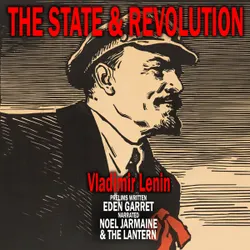
  2. The State & Revolution : The Book That Changed The World

    Vladimir Lenin

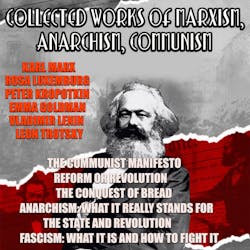
  3. Collected Works Of Marxism, Anarchism, Communism

    Karl Marx, Friedrich Engels, Rosa Luxemburg, Peter Kropotkin, Emma Goldman, Vladimir Lenin, Leon Trotsky

  4. 15+ Political Science. Classics Collection : The Art of War, Tao Te Ching, The Republic, Meditations, The Prince, Utopia, Utilitarianism, Anarchism and others

    Sun Tzu, Lao Tzu, Plato, Marcus Aurelius, Niccolo Machiavelli, Thomas More, Tommaso Campanella, Francis Bacon, Thomas Paine, John Stuart Mill, Karl Marx, Friedrich Engels, Vladimir Lenin, Rosa Luxemburg, Peter Kropotkin, Emma Goldman, Leon Trotsky

  5. 3.5

    The State and Revolution

    Vladimir Lenin

  6. 4.8

    Imperialism: The Final Stage of Capitalism

    Vladimir Lenin

  7. Imperialism: The Final Stage of Capitalism. Illustrated

    Vladimir Lenin

  8. What Is to Be Done? Illustrated

    Vladimir Lenin

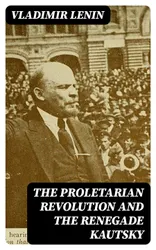
  9. The Proletarian Revolution and the Renegade Kautsky

    Vladimir Lenin

  10. The Proletarian Revolution and the Renegade Kautsky : Enriched edition. A Marxist Critique of Revisionism, Opportunism, and Revolutionary Theory

    Vladimir Lenin

  11. 15+ Political Science. Classics Collection : The Art of War, Tao Te Ching, The Republic, Meditations, The Prince, Utopia, Utilitarianism, Anarchism and others

    Sun Tzu, Lao Tzu, Plato, Marcus Aurelius, Niccolo Machiavelli, Thomas More, Tommaso Campanella, Francis Bacon, Thomas Paine, John Stuart Mill, Karl Marx, Vladimir Lenin, Rosa Luxemburg, Peter Kropotkin, Emma Goldman, Leon Trotsky

  12. Two Tactics of Social-Democracy

    Vladimir Lenin