An Enquiry Concerning Human Understanding

An Enquiry Concerning Human Understanding is a book by the Scottish empiricist philosopher David Hume, published in English in 1748. It was a revision of an earlier effort, Hume's A Treatise of Human Nature, published anonymously in London in 1739–40. Hume was disappointed with the reception of the Treatise, which "fell dead-born from the press," as he put it, and so tried again to disseminate his more developed ideas to the public by writing a shorter and more polemical work.

The end product of his labours was the Enquiry. The Enquiry dispensed with much of the material from the Treatise, in favor of clarifying and emphasizing its most important aspects. For example, Hume's views on personal identity do not appear. However, more vital propositions, such as Hume's argument for the role of habit in a theory of knowledge, are retained.

This book has proven highly influential, both in the years that would immediately follow and today. Immanuel Kant points to it as the book which woke him from his self-described "dogmatic slumber". The Enquiry is widely regarded as a classic in modern philosophical literature.

Om den här boken

An Enquiry Concerning Human Understanding is a book by the Scottish empiricist philosopher David Hume, published in English in 1748. It was a revision of an earlier effort, Hume's A Treatise of Human Nature, published anonymously in London in 1739–40. Hume was disappointed with the reception of the Treatise, which "fell dead-born from the press," as he put it, and so tried again to disseminate his more developed ideas to the public by writing a shorter and more polemical work.

The end product of his labours was the Enquiry. The Enquiry dispensed with much of the material from the Treatise, in favor of clarifying and emphasizing its most important aspects. For example, Hume's views on personal identity do not appear. However, more vital propositions, such as Hume's argument for the role of habit in a theory of knowledge, are retained.

This book has proven highly influential, both in the years that would immediately follow and today. Immanuel Kant points to it as the book which woke him from his self-described "dogmatic slumber". The Enquiry is widely regarded as a classic in modern philosophical literature.
Kom igång med den här boken idag för 0 kr

  • Få full tillgång till alla böcker i appen under provperioden
  • Ingen bindningstid, avsluta när du vill
Prova gratis nu
Mer än 52 000 personer har gett Nextory 5 stjärnor i App Store och på Google Play.

  1. 33 Human Science Masterpieces You Must Read Before You Die. Illustrated : The Art of Public Speaking, The Meditations, The Kama Sutra and other masterpieces

    Edwin A. Abbott, Aristotle, Dale Carnegie, Gilbert Chesterton, René Descartes, Epictetus, Marcus Aurelius Antoninus, Sigmund Freud, Hermann Hesse, David Hume, Lao Tzu, Confucius, Swami Abhedananda, Anonimous, David Herbert Lawrence, Niccolò Machiavelli, Benedictus de Spinoza, John Mill, Prentice Mulford, Thomas More, Friedrich Nietzsche, J. Allanson Picton, Plato, Sun Tzu, Vatsyayana, Voltaire, H.G. Wells, Frances Bacon

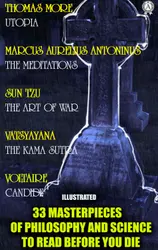
  2. 33 Masterpieces of Philosophy and Science to Read Before You Die (Illustrated) : Utopia, The Meditations, The Art of War, The Kama Sutra, Candide

    Thomas More, Marcus Aurelius Antoninus, Sun Tzu, Vatsyayana, Voltaire, Edwin A. Abbott, Aristotle, Dale Carnegie, Gilbert Keith Chesterton, René Descartes, Epictetus, Sigmund Freud, Hermann Hesse, David Hume, Lao Tzu, David Herbert Lawrence, Niccolò Machiavelli, John Mill, Prentice Mulford, Friedrich Nietzsche, Plato, Bertrand Russell, H.G. Wells, Frances Bacon

  3. On Religion : The Natural History of Religion & Dialogues Concerning Natural Religion

    David Hume

  4. The Natural History of Religion

    David Hume

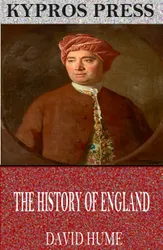
  5. The History of England

    David Hume

  6. The David Hume Collection

    David Hume

  7. The History of England : IC

    David Hume

  8. Ny

    The Dark Ages Collection

    J. B. Bury, Edward Creasy, Henry Bradley, Edward Gibbon, David Hume, Charles Oman

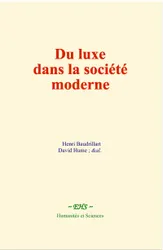
  9. Du luxe dans la société moderne

    Henri Baudrillart, David Hume, E. de Laveleye

  10. Ensayos morales [Selección]

    David Hume

  11. 1800 Citations de philosophes

    Aristote, Épicure, Platon, Thalès de Milet, – Socrate, Protagoras, Anaximandre, Épictète, Héraclite, Marc Aurèle, René Descartes, Michel de Montaigne, Alexis de Tocqueville, Voltaire, Charles De Montesquieu, Jean-Jacques Rousseau, Emmanuel Kant, Hannah Arendt, Gottfried Wilhelm Leibniz, Georg Wilhelm Friedrich Hegel, Friedrich Nietzsche, Arthur Schopenhauer, David Hume, John Locke, Francis Bacon, Thomas Hobbes, Thomas More, Confucius, Érasme, Lao Tseu, Baruch Spinoza, Søren Kierkegaard, Nicolas Machiavel, Thomas d'Aquin, Henry David Thoreau

  12. 4.0

    Comprendre David Hume

    David Hume