Om den här boken

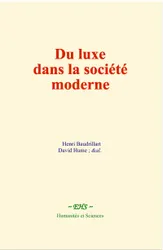
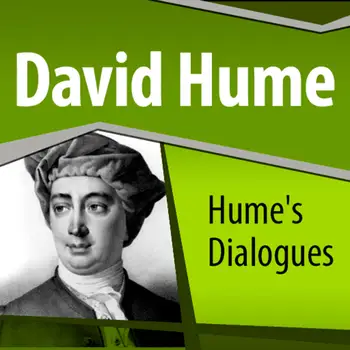
David Hume's Dialogues Concerning Natural Religion had not yet been published when he died in 1776. Even though the manuscript was mostly written during the 1750s, it did not appear until 1779. The subject itself was too delicate and controversial, and Hume's dialectical examination of religious knowledge was especially provocative.

What should we teach young people about religion? The characters Demea, Cleanthes, and Philo passionately present and defend three sharply different answers to that question. Demea opens the dialogue with a position derived from René Descartes and Father Malebranche - God's nature is a mystery, but God's existence can be proved logically. Cleanthes attacks that view, both because it leads to mysticism and because it attempts the impossible task of trying to establish existence on the basis of pure reason, without appeal to sense experience. As an alternative, he offers a proof both God's existence and God's nature based on the same kind of scientific reasoning established by Copernicus, Galileo, and Newton.

Taking a skeptical approach, Philo presents a series of arguments that question any attempt to use reason as a basis for religious faith. He suggests that human beings might be better off without religion. The dialogue ends without agreement among the characters, justifying Hume's choice of dialogue as the literary style for this topic.

© Agora Publications
Kom igång med den här boken idag för 0 kr

  • Få full tillgång till alla böcker i appen under provperioden
  • Ingen bindningstid, avsluta när du vill
Prova gratis nu
Mer än 52 000 personer har gett Nextory 5 stjärnor i App Store och på Google Play.

  1. 33 Human Science Masterpieces You Must Read Before You Die. Illustrated : The Art of Public Speaking, The Meditations, The Kama Sutra and other masterpieces

    Edwin A. Abbott, Aristotle, Dale Carnegie, Gilbert Chesterton, René Descartes, Epictetus, Marcus Aurelius Antoninus, Sigmund Freud, Hermann Hesse, David Hume, Lao Tzu, Confucius, Swami Abhedananda, Anonimous, David Herbert Lawrence, Niccolò Machiavelli, Benedictus de Spinoza, John Mill, Prentice Mulford, Thomas More, Friedrich Nietzsche, J. Allanson Picton, Plato, Sun Tzu, Vatsyayana, Voltaire, H.G. Wells, Frances Bacon

  2. 33 Masterpieces of Philosophy and Science to Read Before You Die (Illustrated) : Utopia, The Meditations, The Art of War, The Kama Sutra, Candide

    Thomas More, Marcus Aurelius Antoninus, Sun Tzu, Vatsyayana, Voltaire, Edwin A. Abbott, Aristotle, Dale Carnegie, Gilbert Keith Chesterton, René Descartes, Epictetus, Sigmund Freud, Hermann Hesse, David Hume, Lao Tzu, David Herbert Lawrence, Niccolò Machiavelli, John Mill, Prentice Mulford, Friedrich Nietzsche, Plato, Bertrand Russell, H.G. Wells, Frances Bacon

  3. The Dark Ages Collection

    J. B. Bury, Edward Creasy, Henry Bradley, Edward Gibbon, David Hume, Charles Oman, knowledge house, Washington Irving

  4. The Dark Ages Collection

    J. B. Bury, Edward Creasy, Henry Bradley, Edward Gibbon, David Hume, Charles Oman, Moon Classics, Washington Irving

  5. A Treatise of Human Nature

    David Hume

  6. An Enquiry Concerning Human Understanding

    David Hume

  7. A Treatise of Human Nature

    David Hume

  8. The History of England

    David Hume

  9. A Treatise of Human Nature : Illustrated

    David Hume

  10. The Dark Ages Collection

    J. B. Bury, Edward Creasy, Henry Bradley, Edward Gibbon, David Hume, Charles Oman

  11. The Dark Ages Collection

    J. B. Bury, Edward Creasy, Henry Bradley, Edward Gibbon, David Hume, Charles Oman