Om den här boken

Discover the groundbreaking work that transformed the way the world thinks about economics, markets, and prosperity.

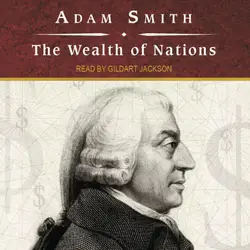
Adam Smith's The Wealth of Nations remains one of the most influential works in the history of economic thought. First published in 1776, this landmark book examines the forces that shape economic activity, including labor, trade, productivity, markets, prices, capital, and the division of labor.

Smith explores how individuals, businesses, governments, and societies interact within economic systems, offering observations that continue to influence discussions about capitalism, free markets, public policy, and economic development.

Whether you are studying economics, exploring the history of political thought, or simply interested in understanding the foundations of modern economic theory, this classic provides an essential opportunity to engage directly with Smith's influential ideas.

Experience the original work that helped shape modern economics and remains essential reading for students and curious minds alike.

Kom igång med den här boken idag för 0 kr

  • Få full tillgång till alla böcker i appen under provperioden
  • Ingen bindningstid, avsluta när du vill
Prova gratis nu
Mer än 52 000 personer har gett Nextory 5 stjärnor i App Store och på Google Play.

Liknande böcker

Mer av Adam Smith

  1. Harvard Classics : The Five-Foot Shelf of Books

    Aesop, Dante Alighieri, Hans Christian Andersen, Augustine of Hippo, Marcus Aurelius, Jane Austen, Francis Bacon, Honoré de Balzac, Francis Beaumont, Bjørnstjerne Bjørnson, Thomas Browne, Robert Browning, John Bunyan, EDMUND BURKE, Robert Burns, Lord Byron, Thomas Carlyle, Benvenuto Cellini, Miguel de Cervantes, Marcus Tullius Cicero, Richard Henry Jr., Charles Darwin, Alphonse Daudet, Thomas Dekker, Charles Dickens, Fyodor Dostoevsky, John Dryden, Charles W. Eliot, George Eliot, Ralph Waldo Emerson, Epictetus, John Fletcher, Theodor Fontane, Benjamin Franklin, Johann Wolfgang Goethe, Oliver Goldsmith, Jacob Grimm, Edward Everett Hale, Bret Harte, Nathaniel Hawthorne, Homer, Victor Hugo, Washington Irving, Henry James, Ben Jonson, Gottfried Keller, Thomas à Kempis, Alexander L. Kielland, Martin Luther, Niccolò Machiavelli, Alessandro Manzoni, Christopher Marlowe, Philip Massinger, Guy De Maupassant, John Stuart Mill, John Milton, Thomas More, William Morris, Alfred de Musset, William Allan Neilson, William Penn, Plato, Pliny the Younger, Plutarch, George Sand, Percy Bysshe Shelley, Richard Brinsley Sheridan, Adam Smith, Laurence Sterne, Theodor Storm, William Makepeace Thackeray, Leo Tolstoy, Ivan Turgenev, Mark Twain, Juan Valera, Virgil, Izaak Walton, John Webster, John Woolman

  2. 4.8

    The Wealth of Nations

    Adam Smith

  3. The Money Game

    Adam Smith

  4. The Theory of Moral Sentiments

    Adam Smith

  5. Buddha, Me, and a Cup of Tea : Finding Your True Zen

    Adam Smith

  6. The Harvard Classics & Fiction Collection [180 Books]

    Charles W. Eliot, Golden Deer Classics, John Milton, Plato, Benjamin Franklin, Adam Smith, Charles Darwin, Miguel de Cervantes, Virgil, Anonymous, Grimm Brothers, Hans Christian Andersen, Oliver Goldsmith, Dante Alighieri, Pierre Corneille, Jean Racine, Molière, Michel de Montaigne, Voltaire, Niccolò Machiavelli, Confucius, William Shakespeare, Eireann Press

  7. Ny

    The Wealth of Nations

    Adam Smith

  8. Ny

    An Inquiry into the Nature and Causes of the Wealth of Nations

    Adam Smith

  9. An Inquiry into the Nature and Causes of the Wealth of Nations

    Adam Smith

  10. Essays on Philosophical Subjects

    Adam Smith

  11. An Inquiry into the Nature and Causes of the Wealth of Nations

    Adam Smith