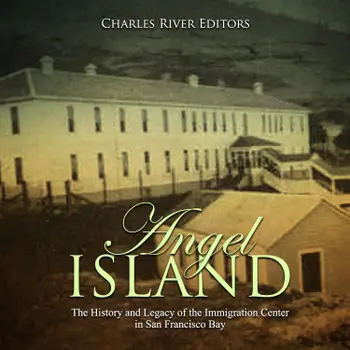
Angel Island: The History and Legacy of the Immigration Center in San Francisco Bay

Angel Island, the largest island in San Francisco Bay at about 740 acres, was originally named when Don Juan Manuel Ayala sailed into San Francisco Bay. Supposedly, the island was named “Angel” because the land mass appeared to him as an angel guarding the bay, and when Ayala made a map of the Bay, on it he marked Angel Island as, “Isla de Los Angeles.” This would remain the island’s name ever since, even as the use of the island would certainly change over time.

The island is currently a large state park with beautiful views of the San Francisco Bay and skyline, but the most noteworthy part of the park is the immigration museum. That site is what makes Angel Island so famous today, as it remains best known for being the entry point for Asian immigrants to the United States from 1910-1940. There is no way to know for sure how many people actually passed through Angel Island because of the destruction of most of the historical documentation in a fire, but historians estimate that it was between 100,000 and 500,000 people.

Angel Island is often referred to the Ellis Island of the West, but many argue that they are extremely different in their preservation of immigrant histories. For one, Angel Island took much longer to preserve, and the preservation of Ellis Island focuses on the positive reception of European immigrants on the East Coast, which plays well to corporate sponsors and the American story. Historian John Bodnar explained that Ellis Island represents “the view of American history as a steady succession progress and uplift for ordinary people.”


Kom igång med den här boken idag för 0 kr

  • Få full tillgång till alla böcker i appen under provperioden
  • Ingen bindningstid, avsluta när du vill
Prova gratis nu
Mer än 52 000 personer har gett Nextory 5 stjärnor i App Store och på Google Play.

  1. Ny

    The Hellenization of the Near East: The History of the Spread of Greek Culture to the Region under Alexander the Great and His Successors

    Charles River Editors

  2. Ny

    The Early Persecution of Christians: The History of the Roman Empire’s Efforts to Stamp Out Christianity

    Charles River Editors

  3. Ny

    Dieppe and D-Day: The Controversial History of the Allies’ Amphibious Operations across the English Channel

    Charles River Editors

  4. 5.0

    The Top 5 Greatest Artists : Leonardo, Michelangelo, Raphael, Vincent Van Gogh, and Pablo Picasso

    Charles River Editors

  5. Ny

    Cryptography in World War I: The History of the Efforts to Make and Break Secret Codes during the Great War

    Charles River Editors

  6. Ny

    California: The History and Legacy of the Land Before and After It Joined the United States

    Charles River Editors

  7. Ny

    World War II in 1942: The History of the Year the Allies Turned the Tide Against the Axis

    Charles River Editors

  8. Ny

    The Clovis Culture: The History and Legacy of the Prehistoric Paleoamericans

    Charles River Editors

  9. Ny

    NASA Programs in the 1970s: The History and Legacy of the Space Agency’s Missions to Mars and Beyond

    Charles River Editors

  10. Ny

    Cryptography and the World Wars: The History of Codemaking and Codebreaking during Both Global Conflicts

    Charles River Editors

  11. Ny

    World War II in 1940: The History of the Fighting that Culminated with the German Conquest of Western Europe and the Battle of Britain

    Charles River Editors

  12. Ny

    Admiral David Farragut: The Life and Legacy of the American Civil War’s Most Famous Naval Officer

    Charles River Editors