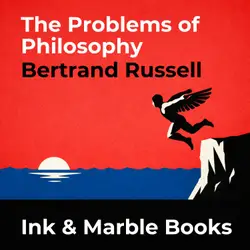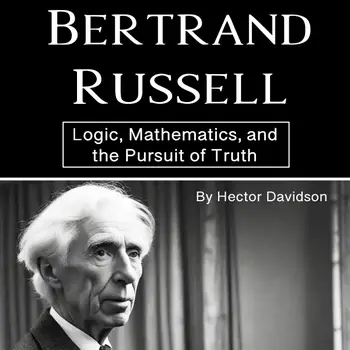
Bertrand Russell : Logic, Mathematics, and the Pursuit of Truth

Bertrand Russell, born on May 18, 1872, in Trellech, Monmouthshire, Wales, was a British philosopher, logician, mathematician, and social critic. Coming from a prominent aristocratic family, with his grandfather, Lord John Russell, having served as a British Prime Minister, Russell had an influential upbringing. He attended Cambridge University, where he studied under Alfred North Whitehead, a notable logician and philosopher. Russell was deeply influenced by the works of Gottlob Frege and David Hilbert.

One of his most significant contributions to philosophy and mathematics was the co-authorship of "Principia Mathematica" with Alfred North Whitehead. This monumental work aimed to derive all mathematical truths from a set of axioms using symbolic logic, laying the groundwork for much of modern mathematical logic and philosophy. Russell also developed the theory of logical atomism, proposing that the world consists of atomic facts that can be represented by logical propositions. His emphasis on logical rigor and clarity had a profound impact on the development of analytic philosophy.

Om den här boken

Bertrand Russell, born on May 18, 1872, in Trellech, Monmouthshire, Wales, was a British philosopher, logician, mathematician, and social critic. Coming from a prominent aristocratic family, with his grandfather, Lord John Russell, having served as a British Prime Minister, Russell had an influential upbringing. He attended Cambridge University, where he studied under Alfred North Whitehead, a notable logician and philosopher. Russell was deeply influenced by the works of Gottlob Frege and David Hilbert.

One of his most significant contributions to philosophy and mathematics was the co-authorship of "Principia Mathematica" with Alfred North Whitehead. This monumental work aimed to derive all mathematical truths from a set of axioms using symbolic logic, laying the groundwork for much of modern mathematical logic and philosophy. Russell also developed the theory of logical atomism, proposing that the world consists of atomic facts that can be represented by logical propositions. His emphasis on logical rigor and clarity had a profound impact on the development of analytic philosophy.
Kom igång med den här boken idag för 0 kr

  • Få full tillgång till alla böcker i appen under provperioden
  • Ingen bindningstid, avsluta när du vill
Prova gratis nu
Mer än 52 000 personer har gett Nextory 5 stjärnor i App Store och på Google Play.