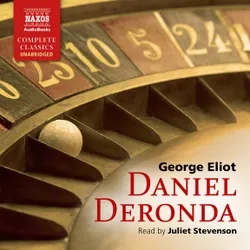
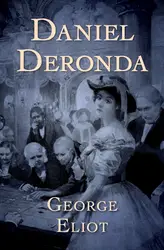
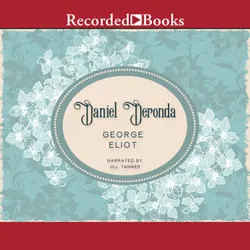
Daniel Deronda

In "Daniel Deronda," George Eliot intricately weaves a narrative that explores themes of identity, duty, and the complexities of Jewish heritage within Victorian society. The novel alternates between the lives of its titular character, Daniel Deronda, and Gwendolen Harleth, delving deeply into their psychological landscapes. Eliot's lyrical prose showcases her mastery of both character development and social commentary, presenting a richly textured tableau that interrogates the moral dilemmas faced by individuals against the backdrop of social expectations and cultural heritage. The book's exploration of Zionism and its philosophical underpinnings was groundbreaking for its time, positioning Eliot at the forefront of social discourse during the late 19th century. George Eliot, the pen name of Mary Ann Evans, was an innovative novelist and a prominent intellectual figure whose works challenged conventional norms. Her background in education and her progressive views regarding women's rights and social reform undoubtedly influenced her creation of compelling female characters and complex moral situations in "Daniel Deronda." Eliot's interest in Jewish culture likely stemmed from her study of diverse philosophies and her associations with Jewish intellectuals, which added to the authenticity of her portrayal of ethnic identity. "Daniel Deronda" is a seminal work that invites readers to reflect on their own identities and moral responsibilities in an ever-diversifying world. For those interested in profound character studies, historical context, and rich philosophical themes, this novel is an essential addition to the canon of English literature, offering insights that remain relevant to contemporary discussions on cultural identity and belonging.
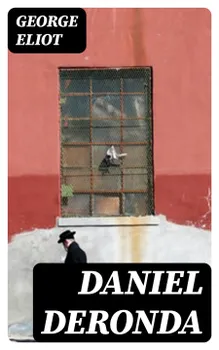
Om den här boken

In "Daniel Deronda," George Eliot intricately weaves a narrative that explores themes of identity, duty, and the complexities of Jewish heritage within Victorian society. The novel alternates between the lives of its titular character, Daniel Deronda, and Gwendolen Harleth, delving deeply into their psychological landscapes. Eliot's lyrical prose showcases her mastery of both character development and social commentary, presenting a richly textured tableau that interrogates the moral dilemmas faced by individuals against the backdrop of social expectations and cultural heritage. The book's exploration of Zionism and its philosophical underpinnings was groundbreaking for its time, positioning Eliot at the forefront of social discourse during the late 19th century. George Eliot, the pen name of Mary Ann Evans, was an innovative novelist and a prominent intellectual figure whose works challenged conventional norms. Her background in education and her progressive views regarding women's rights and social reform undoubtedly influenced her creation of compelling female characters and complex moral situations in "Daniel Deronda." Eliot's interest in Jewish culture likely stemmed from her study of diverse philosophies and her associations with Jewish intellectuals, which added to the authenticity of her portrayal of ethnic identity. "Daniel Deronda" is a seminal work that invites readers to reflect on their own identities and moral responsibilities in an ever-diversifying world. For those interested in profound character studies, historical context, and rich philosophical themes, this novel is an essential addition to the canon of English literature, offering insights that remain relevant to contemporary discussions on cultural identity and belonging.
Kom igång med den här boken idag för 0 kr

  • Få full tillgång till alla böcker i appen under provperioden
  • Ingen bindningstid, avsluta när du vill
Prova gratis nu
Mer än 52 000 personer har gett Nextory 5 stjärnor i App Store och på Google Play.

  1. 2.9

    Middlemarch - Del 1

    George Eliot

  2. 3.0

    50 Masterpieces you have to read before you die vol: 1 (2020 Edition) : Included: Little Women, The Richest Man in Babylon Emma, The Call Of The Wild ....

    Louisa May Alcott, Dante Alighieri, Marcus Aurelius, Jane Austen, L. Frank Baum, Charlotte Brontë, Emily Brontë, Anne Brontë, Miguel de Cervantes, Agatha Christie, George S. Clason, Arthur Conan Doyle, Joseph Conrad, Charles Dickens, Fyodor Dostoyevsky, Alexandre Dumas, George Eliot, G.K. Chesterton, G.K. Chesterton, Zane Grey, Nathaniel Hawthorne, Napoleon Hill, Homer, Victor Hugo, Frances Hodgson Burnett, Washington Irving, Henry James, Franz Kafka, Rudyard Kipling, Jack London, Leo Tolstoy, H.P. Lovecraft, Lucy Maud Montgomery, Joseph Murphy, Robert Louis Stevenson, Edgar Allan Poe, Marcel Proust, Publius, Mary Shelley, Bram Stoker, Mark Twain, Sun Tzu, Lew Wallace, Wallace D. Wattles, H.G. Wells

  3. 4.1

    Middlemarch

    George Eliot

  4. Toppbetyg
    4.8

    Middlemarch

    George Eliot

  5. 50 Masterpieces you need to read

    Louisa May Alcott, Jane Austen, Joseph Conrad, D. H. Lawrence, George Eliot, Leo Tolstoy, James Joyce, Charles Dickens, Bram Stoker, Oscar Wilde, Honoré de Balzac, Edgar Rice Burroughs, Anne Brontë, Charlotte Brontë, Emily Brontë, Lewis Carroll, Willa Cather, Miguel de Cervantes, E. Cummings, Fyodor Dostoyevsky, Daniel Defoe, Arthur Conan Doyle, Alexandre Dumas, Gustave Flaubert, Henry James, Victor Hugo

  6. Middlemarch

    George Eliot

  7. Toppbetyg
    3.6

    Middlemarch

    George Eliot

  8. 3.3

    Daniel Deronda

    George Eliot

  9. 5.0

    Middlemarch

    George Eliot

  10. 3.1

    Middlemarch

    George Eliot

  11. 60 Gothic Classics : Enriched edition. The Castle of Otranto, The Tell-Tale Heart, The Phantom Ship, The Headless Horseman, The Man-Wolf, The Beetle, The Phantom of the Opera...

    Charles Dickens, Oscar Wilde, Robert Louis Stevenson, Edgar Allan Poe, William Hope Hodgson, Joseph Sheridan Le Fanu, Anna Katharine Green, George MacDonald, Bram Stoker, Charlotte Brontë, Emily Brontë, William Godwin, Henry James, Victor Hugo, Théophile Gautier, Arthur Conan Doyle, Jane Austen, John Meade Falkner, Guy De Maupassant, George Eliot, Robert Hugh Benson, Horace Walpole, Frederick Marryat, Thomas love Peacock, Washington Irving, Nathaniel Hawthorne, Gaston Leroux, Grant Allen, Arthur Machen, Wilkie Collins, Thomas Peckett Prest, James Malcolm Rymer, Charles Brockden Brown, James Hogg, Charlotte Perkins Gilman, Richard Marsh, Charles Robert Maturin, John William Polidori, H.G. Wells, W. Jacobs, William Thomas Beckford, Nikolai Gogol, Mary Shelley, Ann Radcliffe, Matthew Gregory Lewis, Eliza Parsons

  12. 4.5

    Middlemarch

    George Eliot


Relaterade kategorier