Om den här boken

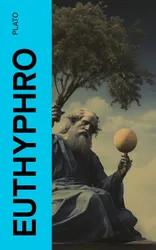
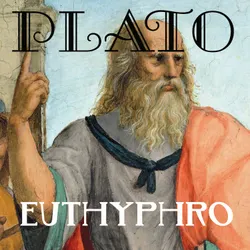
Discover the Essence of Morality with Plato's EuthyphroEuthyphro, penned by the renowned ancient Greek philosopher Plato around 428-348 BCE, is a profound dialogue that explores the nature of piety and justice. Set against the backdrop of Athens, this philosophical work features Socrates engaging with Euthyphro, a man known for his religious zeal, as they discuss the essence of piety and the relationship between human morality and divine authority. Through their conversation, Plato delves into fundamental questions: What makes an act pious? Is something pious because the gods love it, or do the gods love it because it is pious? This dialogue not only challenges readers to think critically about the foundations of morality but also exemplifies Socratic questioning, encouraging a deeper understanding of ethical principles. Euthyphro's attempt to define piety ultimately highlights the complexities and ambiguities inherent in moral concepts, making the work a timeless exploration of ethics and religion. As a cornerstone of Western philosophy, Euthyphro invites readers to reflect on the nature of divine command and human morality, inspiring ongoing debates about the basis of ethical conduct.About the Author:Plato was a pioneering Greek philosopher born in Athens, around 428 BCE. A student of Socrates and teacher of Aristotle, Plato founded the Academy, one of the earliest institutions of higher learning in the Western world. His writings, composed in the form of dialogues, have profoundly influenced Western thought, covering topics from ethics and politics to metaphysics and epistemology. Through his philosophical works, Plato sought to explore the pursuit of truth, justice, and the ideal society, establishing foundational concepts that continue to shape philosophical discourse today.

Kom igång med den här boken idag för 0 kr

  • Få full tillgång till alla böcker i appen under provperioden
  • Ingen bindningstid, avsluta när du vill
Prova gratis nu
Mer än 52 000 personer har gett Nextory 5 stjärnor i App Store och på Google Play.

  1. 4.0

    3500 Final Quotes

    Marcus Aurelius, Jane Austen, Beaumarchais, Napoleon Bonaparte, Buddha, Winston Churchill, Cicero, Confucius, Nicolas de Chamfort, Charles de Gaulle, Antoine de Saint-Exupéry, Denis Diderot, Fyodor Dostoevsky, Albert Einstein, Ralph Waldo Emerson, Anne Frank, Mahatma Gandhi, Immanuel Kant, Søren Kierkegaard, Martin Luther King, Georg Christoph Lichtenberg, Abraham Lincoln, Montesquieu, Friedrich Nietzsche, Plato, Marcel Proust, Arthur Schopenhauer, William Shakespeare, Socrates, Baruch Spinoza, Henry David Thoreau, Leonardo da Vinci, Voltaire, Oscar Wilde, Laozi

  2. Ny
    4.5

    The Republic

    Plato

  3. Ny

    The Essential Ancient Wisdom Library : 10 Timeless Classics of Stoicism, Philosophy, Strategy and Self-Mastery

    Marcus Aurelius, Seneca, Epictetus, Laozi, Plato, Sun Tzu, Miyamoto Musashi, Niccolò Machiavelli, Friedrich Nietzsche, James Allen

  4. The Republic of Plato

    Plato

  5. Plato - Theaetetus

    Plato

  6. Plato's Atlantis : The Complete Audio Presentation of Plato’s Account

    Plato, Benjamin Jowett

  7. The Republic

    Plato

  8. Euthydemus : Logic, Language, and the Absurd – Plato’s Satirical Dialogue on Sophistry and Education

    Plato, Tim Zengerink

  9. 10 Masterpieces You Have to Read Before You Die, Vol.5 : The Odyssey, The Republic, Meditations, The Divine Comedy, Faust and others

    Homer, Plato, Aristotle, Marcus Aurelius, Niccolo Machiavelli, Dante Alighieri, Johann Wolfgang von Goethe, Leo Tolstoy

  10. Plato Collection : The Republic, The Apology, Symposium, Crito, Meno

    Plato

  11. Plato: Five Dialogues: Apology, Phaedo, Euthyphro, Crito, Meno

    Plato

  12. 15+ Political Science. Classics Collection : The Art of War, Tao Te Ching, The Republic, Meditations, The Prince, Utopia, Utilitarianism, Anarchism and others

    Sun Tzu, Lao Tzu, Plato, Marcus Aurelius, Niccolo Machiavelli, Thomas More, Tommaso Campanella, Francis Bacon, Thomas Paine, John Stuart Mill, Karl Marx, Friedrich Engels, Vladimir Lenin, Rosa Luxemburg, Peter Kropotkin, Emma Goldman, Leon Trotsky