3.5(2)

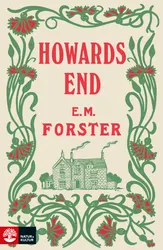
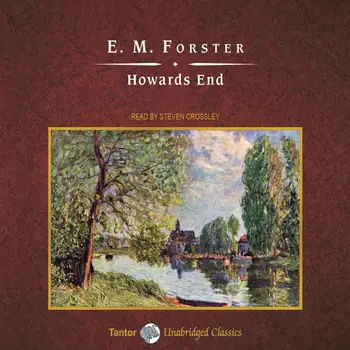
Howards End

Considered by many to be E. M. Forster's greatest novel, Howards End is a beautifully subtle tale of two very different families brought together by an unusual event. The Schlegels are intellectuals, devotees of art and literature. The Wilcoxes are practical and materialistic, leading lives of "telegrams and anger." When the elder Mrs. Wilcox dies and her family discovers she has left their country home—Howards End—to one of the Schlegel sisters, a crisis between the two families is precipitated that takes years to resolve.

Written in 1910, Howards End is a symbolic exploration of the social, economic, and intellectual forces at work in England in the years preceding World War I, a time when vast social changes were occurring. In the Schlegels and the Wilcoxes, Forster perfectly embodies the competing idealism and materialism of the upper classes, while the conflict over the ownership of Howards End represents the struggle for possession of the country's future.

Forster refuses to take sides in this conflict. Instead he poses one of the book's central questions: In a changing modern society, what should be the relation between the inner and outer life, between the world of the intellect and the world of business? Can they ever, as Forster urges, "only connect"?
Om den här boken

Considered by many to be E. M. Forster's greatest novel, Howards End is a beautifully subtle tale of two very different families brought together by an unusual event. The Schlegels are intellectuals, devotees of art and literature. The Wilcoxes are practical and materialistic, leading lives of "telegrams and anger." When the elder Mrs. Wilcox dies and her family discovers she has left their country home—Howards End—to one of the Schlegel sisters, a crisis between the two families is precipitated that takes years to resolve.

Written in 1910, Howards End is a symbolic exploration of the social, economic, and intellectual forces at work in England in the years preceding World War I, a time when vast social changes were occurring. In the Schlegels and the Wilcoxes, Forster perfectly embodies the competing idealism and materialism of the upper classes, while the conflict over the ownership of Howards End represents the struggle for possession of the country's future.

Forster refuses to take sides in this conflict. Instead he poses one of the book's central questions: In a changing modern society, what should be the relation between the inner and outer life, between the world of the intellect and the world of business? Can they ever, as Forster urges, "only connect"?
Kom igång med den här boken idag för 0 kr

  • Få full tillgång till alla böcker i appen under provperioden
  • Ingen bindningstid, avsluta när du vill
Prova gratis nu
Mer än 52 000 personer har gett Nextory 5 stjärnor i App Store och på Google Play.

  1. En färd till Indien

    E. M. Forster

  2. 2.0

    Maurice

    E. M. Forster

  3. 16 okt.

    Howards End

    E. M. Forster

  4. Ny

    Fallen Worlds 3 : Timeless Stories of Survival, Collapse, and Hope

    E. M. Forster, Robert Silverberg, Morrison Colladay, Frank Lillie Pollock, Paul Macnamara, William Brittain

  5. 4.4

    A Room with a View

    E. M. Forster

  6. Fallen Worlds : Timeless Stories of Survival, Collapse, and Hope

    Ben Bova, Frederik Pohl, Robert Abernathy, Alan E. Nourse, Jack Sharkey, Philip K Dick, Herbert D. Kastle, Alfred Bester, G. Peyton Wertenbaker, Harlan Ellison, William F. Nolan, Lynn Venable, Edward W. Ludwig, Miguel Hidalgo, Robert Sheckley, H.G. Wells, Dean Evans, Donald E. Westlake, William Oberfield, Fritz Leiber, E. M. Forster, William Brittain, Robert Silverberg, Paul Macnamara, Morrison Colladay, Frank Lillie Pollock, John W. Campbell, Lester del Rey

  7. 11 Tales of the Unknown Before Lovecraft : Early Science Fiction, Weird Tales & Speculative Fiction

    Algernon Blackwood, William Hope Hodgson, E. M. Forster, Ambrose Bierce, Jack London, H.G. Wells, Arthur Machen, Nathaniel Hawthorne

  8. A room with a view

    E. M. Forster

  9. A Room With A View

    E. M. Forster

  10. #186

    The Machine Stops : When Machines Rule: The Cost of Convenience in a Dystopian Society

    E. M. Forster

  11. 50 Masterpieces you have to read before you die vol : A Monumental Collection of Fiction That Continues the Legacy of World Literature's Greatest Voices

    Lewis Carroll, Mark Twain, Jules Verne, Arthur Conan Doyle, Louisa May Alcott, Jane Austen, G.K. Chesterton, Wilkie Collins, Charles Dickens, Fyodor Dostoyevsky, Alexandre Dumas, F. Scott Fitzgerald, E. M. Forster, Thomas Hardy, Hermann Hesse

  12. World's Greatest Sci-Fi Stories

    Daniel Defoe, Benjamin Franklin, Washington Irving, Mateo Falcone, Charlotte Bronte, Mary Shelley, Nathaniel Hawthorne, Nikolai Gogol, Edgar Allan Poe, Fyodor Dostoyevsky, Charles Dickens, Herman Melville, Mark Twain, Guy De Maupassant, Oscar Wilde, Leo Tolstoy, H.G. Wells, Ambrose Bierce, Stephen Crane, Kate Chopin, Jack London, E. M. Forster