Om den här boken

William Shakespeare's ;King Lear; stands as a towering masterpiece, a tragic tale of power, betrayal, and the human condition. This timeless play delves into the complexities of familial relationships and the consequences of unchecked ambition.

At its core, ;King Lear; tells the story of an aging monarch who, in a moment of misguided judgment, divides his kingdom among his three daughters based on their flattery. The consequences of this rash decision spiral into chaos, exposing the treachery and cruelty lurking beneath the surface of the court.

The character of Lear himself undergoes a profound transformation, evolving from a proud and authoritarian ruler into a broken and humbled figure. His descent into madness is a poignant exploration of the fragility of sanity and the corrosive effects of unchecked power.

Shakespeare weaves a rich tapestry of characters, each grappling with their own desires and flaws. The play's exploration of filial ingratitude, loyalty, and the nature of love remains strikingly relevant to contemporary audiences.

;King Lear; is a visceral experience, featuring intense emotional highs and lows. It navigates themes of justice and injustice, fate, and the capriciousness of life. The storm scene, in which Lear rages against the elements, is one of the most iconic and powerful moments in all of literature.

This tragedy's enduring appeal lies in its profound insights into the human psyche and society's capacity for cruelty and redemption. ;King Lear; continues to captivate audiences and scholars alike, reminding us of the enduring relevance of Shakespeare's exploration of human nature and the consequences of power.

ABOUT THE AUTHOR

William Shakespeare, the immortal bard of Avon, was a masterful playwright and poet whose brilliance continues to captivate the world. Born in 1564 in Stratford-upon-Avon, England, his life remains shrouded in mystery, yet his literary legacy shines brightly. Shakespeare's unparalleled talent crafted timeless works such as ;Romeo and Juliet;, ;Hamlet;, and ;Macbeth;, exploring the depths of human emotion and the complexities of the human psyche. His words, like a symphony of language, have left an indelible mark on literature, theater, and culture, transcending time and space. Today, his eloquence and storytelling prowess continue to enchant audiences, making him an everlasting icon of artistic excellence.
Kom igång med den här boken idag för 0 kr

  • Få full tillgång till alla böcker i appen under provperioden
  • Ingen bindningstid, avsluta när du vill
Prova gratis nu
Mer än 52 000 personer har gett Nextory 5 stjärnor i App Store och på Google Play.

Mer av William Shakespeare

  1. 50 Masterpieces You Have to Read : Volume One - An Essential Library of World Literature

    Louisa May Alcott, Jane Austen, Honoré de Balzac, Henri Barbusse, Anne Brontë, Charlotte Brontë, Emily Brontë, Edgar Rice Burroughs, Samuel Butler, Lewis Carroll, Willa Cather, Miguel de Cervantes, Kate Chopin, John Cleland, Wilkie Collins, Joseph Conrad, Charles Dickens, Fyodor Dostoevsky, Alexandre Dumas, George Eliot, Ralph Waldo Emerson, Gustave Flaubert, E. M. Forster, H. Rider Haggard, Thomas Hardy, Nathaniel Hawthorne, Robert Heinlein, Victor Hugo, Aldous Huxley, Henry James, D. H. Lawrence, H.P. Lovecraft, Herman Melville, John Milton, Robert Musil, Vladimir Nabokov, George Orwell, Edgar Allan Poe, Marcel Proust, William Shakespeare, Mary Shelley, Leo Tolstoy

  2. 3.8

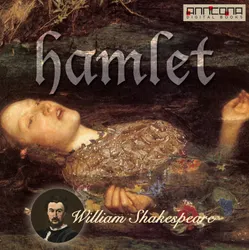
    Hamlet

    William Shakespeare

  3. 3.6

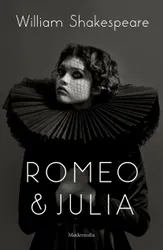
    Romeo och Julia

    William Shakespeare

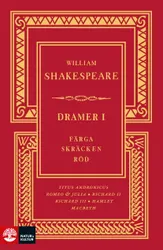
  4. Dramer I. Färga skräcken röd : Hamlet, Macbeth, Richard II, Richard III, Romeo och Julia, Titus Andronicus

    William Shakespeare

  5. 4.1

    Hamlet

    William Shakespeare

  6. 3.8

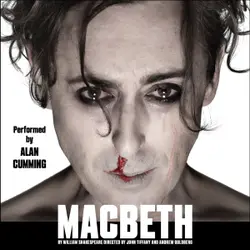
    Macbeth

    William Shakespeare

  7. 4.0

    3500 Final Quotes

    Marcus Aurelius, Jane Austen, Beaumarchais, Napoleon Bonaparte, Buddha, Winston Churchill, Cicero, Confucius, Nicolas de Chamfort, Charles de Gaulle, Antoine de Saint-Exupéry, Denis Diderot, Fyodor Dostoevsky, Albert Einstein, Ralph Waldo Emerson, Anne Frank, Mahatma Gandhi, Immanuel Kant, Søren Kierkegaard, Martin Luther King, Georg Christoph Lichtenberg, Abraham Lincoln, Montesquieu, Friedrich Nietzsche, Plato, Marcel Proust, Arthur Schopenhauer, William Shakespeare, Socrates, Baruch Spinoza, Henry David Thoreau, Leonardo da Vinci, Voltaire, Oscar Wilde, Laozi

  8. 50 Masterpieces you have to read before you die

    Frances Hodgson Burnett, Homer, Charles Dickens, Lyman Frank Baum, Nathaniel Hawthorne, Thomas Hardy, Robert Louis Stevenson, Henry Haggard, Wilkie Collins, H.G. Wells, Sir Walter Scott, Lucy Maud Montgomery, Louisa May Alcott, Henry Fielding, Mary Shelley, Arthur Conan Doyle, Leo Tolstoy, Euripides, Fyodor Dostoevsky, Alexander Pushkin, James Fenimore Cooper, Daniel Defoe, Joseph Conrad, Jonathan Swift, William Shakespeare, Oscar Wilde, John Bunyan, Charles Darwin, Alfred Tennyson, Bram Stoker, James Joyce, Dante Alighieri, Howard Pyle, Jane Austen, Emily Bronte, Giovanni Boccaccio, Rudyard Kipling

  9. 5.0

    Hamlet

    William Shakespeare

  10. Rediscover Your Holiday Sparkle : A Treasury of Classic Christmas Tales, Poems, Carols, and Legends

    Mark Twain, Beatrix Potter, Louisa May Alcott, Charles Dickens, O.Henry, William Shakespeare, Harriet Beecher Stowe, Emily Dickinson, Robert Louis Stevenson, Rudyard Kipling, Hans Christian Andersen, Selma Lagerlöf, Fyodor Dostoevsky, Martin Luther, Walter Scott, J.M. Barrie, Anthony Trollope, Brothers Grimm, L. Frank Baum, Lucy Maud Montgomery, George MacDonald, Leo Tolstoy, Henry van Dyke, E. T. Hoffmann, Clement Moore, Henry Wadsworth Longfellow, William Wordsworth, Alfred Lord Tennyson, William Butler Yeats, Eleanor H. Porter, Jacob A. Riis, Susan Anne Sedgwick, Sophie May, Lucas Malet, Juliana Horatia Ewing, Alice Hale Burnett, Ernest Ingersoll, Annie F. Johnston, Amanda M. Douglas), Amy Ella Blanchard, Carolyn Wells, Walter Crane, Thomas Nelson Page, Florence L. Barclay, A. S. Boyd, Edward A. Rand, Max Brand

  11. Ny
    3.0
    #11

    Romeo och Julia

    William Shakespeare

  12. Richard III

    William Shakespeare