Om den här boken

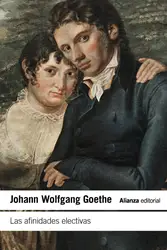
El apasionado y sentimental Werther ha encontrado la felicidad en un pequeño pueblo en el que el delicioso paisaje y la gente sencilla que lo habita aportan la calma y la serenidad que precisa su inquieto espíritu. Durante un baile trabará amistad con Lotte, la hija de un corregidor del príncipe, quien desde el primer instante despierta en él una pasión que ni siquiera el compromiso matrimonial de la joven puede apagar. Pese a ser consciente de la imposibilidad de su relación, se ve incapaz de renunciar a su amistad, alimentando de esta manera un sentimiento autodestructivo en el que se mezclan el placer más sublime con el dolor más intenso. "Los padecimientos del joven Werther" supusieron un éxito editorial sin precedentes en su país y se convirtieron en una pieza indispensable para comprender el desarrollo posterior de la literatura alemana y europea. Pero sobre todo es una de las más brillantes descripciones de las facetas más hermosas y crueles del amor que mantiene toda su vigencia pese al tiempo transcurrido, ya que, como le comentaba el propio Goethe a su secretario Eckermann, sería malo si cada uno no tuviera una época en su vida en el que le parezca que Werther fue escrito sólo para él.

Kom igång med den här boken idag för 0 kr

  • Få full tillgång till alla böcker i appen under provperioden
  • Ingen bindningstid, avsluta när du vill
Prova gratis nu
Mer än 52 000 personer har gett Nextory 5 stjärnor i App Store och på Google Play.

  1. 3.4

    Den unge Werthers lidanden

    Johann Wolfgang F

  2. 4.0

    Faust

    Johann Wolfgang Goethe

  3. Faust

    Johann Wolfgang Goethe

  4. Faust : The First Part of the Tragedy

    Johann Wolfgang Goethe

  5. Harvard Classics : The Five-Foot Shelf of Books

    Aesop, Dante Alighieri, Hans Christian Andersen, Augustine of Hippo, Marcus Aurelius, Jane Austen, Francis Bacon, Honoré de Balzac, Francis Beaumont, Bjørnstjerne Bjørnson, Thomas Browne, Robert Browning, John Bunyan, EDMUND BURKE, Robert Burns, Lord Byron, Thomas Carlyle, Benvenuto Cellini, Miguel de Cervantes, Marcus Tullius Cicero, Richard Henry Jr., Charles Darwin, Alphonse Daudet, Thomas Dekker, Charles Dickens, Fyodor Dostoevsky, John Dryden, Charles W. Eliot, George Eliot, Ralph Waldo Emerson, Epictetus, John Fletcher, Theodor Fontane, Benjamin Franklin, Johann Wolfgang Goethe, Oliver Goldsmith, Jacob Grimm, Edward Everett Hale, Bret Harte, Nathaniel Hawthorne, Homer, Victor Hugo, Washington Irving, Henry James, Ben Jonson, Gottfried Keller, Thomas à Kempis, Alexander L. Kielland, Martin Luther, Niccolò Machiavelli, Alessandro Manzoni, Christopher Marlowe, Philip Massinger, Guy De Maupassant, John Stuart Mill, John Milton, Thomas More, William Morris, Alfred de Musset, William Allan Neilson, William Penn, Plato, Pliny the Younger, Plutarch, George Sand, Percy Bysshe Shelley, Richard Brinsley Sheridan, Adam Smith, Laurence Sterne, Theodor Storm, William Makepeace Thackeray, Leo Tolstoy, Ivan Turgenev, Mark Twain, Juan Valera, Virgil, Izaak Walton, John Webster, John Woolman

  6. Goethe : Enriched edition.

    Johann Wolfgang Goethe

  7. Letters from Switzerland and Travels in Italy : Enriched edition.

    Johann Wolfgang Goethe

  8. 3.0

    2000 Final Quotations

    Marcus Aurelius, Jane Austen, Buddha, Anton Chekhov, Cicero, Emil Cioran, Confucius, Albert Einstein, Anne Frank, Mahatma Gandhi, Johann Wolfgang Goethe, Carl Jung, Immanuel Kant, Friedrich Nietzsche, Marcel Proust, Arthur Schopenhauer, William Shakespeare, Baruch Spinoza, Leonardo da Vinci, Laozi

  9. 3.0

    100 Quotes by Johann Wolfgang von Goethe

    Johann Wolfgang Goethe

  10. 2000 citations ultimes

    Marc Aurèle, Jane Austen, Bouddha, Cicéron, Emil Cioran, Confucius, Léonard de Vinci, Albert Einstein, Anne Frank, Mahatma Gandhi, Johann Wolfgang Goethe, Carl Jung, Emmanuel Kant, Friedrich Nietzsche, Marcel Proust, Arthur Schopenhauer, William Shakespeare, Baruch Spinoza, Anton Tchekhov, Lao Tseu

  11. 5.0

    Les Souffrances du jeune Werther

    Johann Wolfgang Goethe

  12. 2.5
    #1

    Faust 1

    Johann Wolfgang Goethe