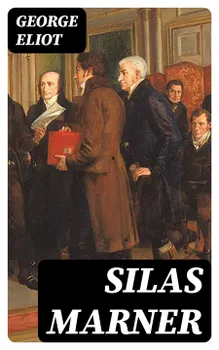
Om den här boken

In "Silas Marner," George Eliot weaves a poignant narrative that delves into themes of isolation, redemption, and the transformative power of love. Set against the backdrop of a rural English village during the early 19th century, the novel employs Eliot's signature intricate character development and rich, evocative prose. This work serves as a reflection on the Industrial Revolution's impact on society, contrasting the values of community and personal integrity with the isolating effects of modernity, ultimately culminating in the redemptive relationship between the reclusive weaver and the orphaned child he adopts. George Eliot, the pen name of Mary Ann Evans, was notable for her progressive views on gender and morality and for her groundbreaking work as a female novelist in a predominantly male literary landscape. Her own experiences with societal expectations and personal upheaval inspired her deep understanding of human psychology, which is vividly illustrated in Marner's character arc. Eliot's empathy for the marginalized and her exploration of faith and doubt were deeply influenced by her background in philosophy and her own struggles with belief. "Silas Marner" stands as a timeless exploration of the human condition, and I recommend this novel to readers who appreciate rich, character-driven narratives that probe the complexities of life. It is an essential read for those interested in Victorian literature, providing insightful reflections on community and personal transformation that resonate even in contemporary times.
Kom igång med den här boken idag för 0 kr

  • Få full tillgång till alla böcker i appen under provperioden
  • Ingen bindningstid, avsluta när du vill
Prova gratis nu
Mer än 52 000 personer har gett Nextory 5 stjärnor i App Store och på Google Play.

  1. Toppbetyg
    4.8

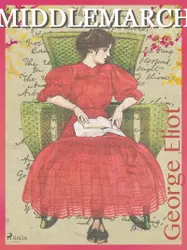
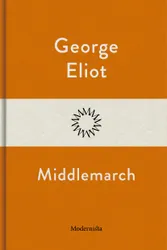
    Middlemarch

    George Eliot

  2. 4.1

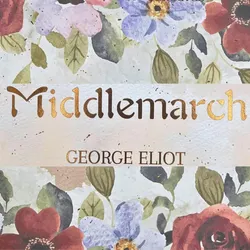
    Middlemarch

    George Eliot

  3. 2.9

    Middlemarch - Del 1

    George Eliot

  4. 3.6

    Middlemarch

    George Eliot

  5. 50 Masterpieces you need to read

    Louisa May Alcott, Jane Austen, Joseph Conrad, D. H. Lawrence, George Eliot, Leo Tolstoy, James Joyce, Charles Dickens, Bram Stoker, Oscar Wilde, Honoré de Balzac, Edgar Rice Burroughs, Anne Brontë, Charlotte Brontë, Emily Brontë, Lewis Carroll, Willa Cather, Miguel de Cervantes, E. Cummings, Fyodor Dostoyevsky, Daniel Defoe, Arthur Conan Doyle, Alexandre Dumas, Gustave Flaubert, Henry James, Victor Hugo

  6. 3.0

    50 Masterpieces you have to read before you die vol: 1 (2020 Edition) : Included: Little Women, The Richest Man in Babylon Emma, The Call Of The Wild ....

    Louisa May Alcott, Dante Alighieri, Marcus Aurelius, Jane Austen, L. Frank Baum, Charlotte Brontë, Emily Brontë, Anne Brontë, Miguel de Cervantes, Agatha Christie, George S. Clason, Arthur Conan Doyle, Joseph Conrad, Charles Dickens, Fyodor Dostoyevsky, Alexandre Dumas, George Eliot, G.K. Chesterton, G.K. Chesterton, Zane Grey, Nathaniel Hawthorne, Napoleon Hill, Homer, Victor Hugo, Frances Hodgson Burnett, Washington Irving, Henry James, Franz Kafka, Rudyard Kipling, Jack London, Leo Tolstoy, H.P. Lovecraft, Lucy Maud Montgomery, Joseph Murphy, Robert Louis Stevenson, Edgar Allan Poe, Marcel Proust, Publius, Mary Shelley, Bram Stoker, Mark Twain, Sun Tzu, Lew Wallace, Wallace D. Wattles, H.G. Wells

  7. 4.2

    100 Quotes That Will Change Your life

    Napoleon Hill, Steve Jobs, Lao Tzu, Sam Levenson, Winston Churchill, George Eliot, Franklin D. Roosevelt, Theodore Roosevelt, Henry Ford, Buddha, Norman Vincent Peale, John D. Rockefeller, Oscar Wilde, Elon Musk, Mahatma Gandhi, Stephen King, Vincent van Gogh, Andrew Carnegie, Paulo Coelho, Muhammad Ali

  8. 3.3

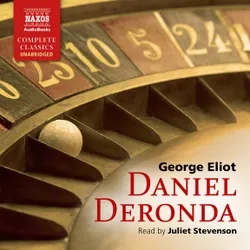
    Daniel Deronda

    George Eliot

  9. Toppbetyg
    4.8

    Middlemarch

    George Eliot

  10. 5.0

    Middlemarch

    George Eliot

  11. 2.8

    Förfärande kvinnor

    Mary Elisabeth Braddon, Charlotte Brontë, Emily Brontë, Amelia Edwards, George Eliot, Charlotte Perkins Gilman, Adelaide Ann Procter, Charlotte Riddell, Hesba Stretton, Ellen Wood

  12. 4.0

    Middlemarch

    George Eliot