Om den här boken

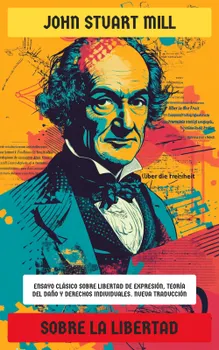
Publicado en 1859, Sobre la libertad es una de las defensas más influyentes del individualismo moderno y de los límites del poder social y político. Mill articula aquí su célebre "principio del daño", según el cual solo es legítimo restringir la acción individual para evitar perjuicio a otros. Con prosa rigurosa, sobria y argumentativa, examina la libertad de pensamiento, de expresión y de conducta, y advierte contra la "tiranía de la mayoría", rasgo decisivo del liberalismo decimonónico en una Europa marcada por la expansión democrática y sus temores. John Stuart Mill, filósofo y economista inglés, fue formado de manera excepcional por James Mill y profundamente influido por Jeremy Bentham, aunque se distanció del utilitarismo más estrecho para defender una visión más rica de la dignidad humana. Su relación intelectual con Harriet Taylor fue asimismo crucial en la gestación de este libro, cuyo trasfondo combina experiencia política, reflexión moral y preocupación por la uniformidad de la opinión pública en la sociedad victoriana. Recomiendo vivamente esta obra a quienes busquen comprender los fundamentos éticos y políticos de la libertad individual. Su vigencia es notable: en tiempos de polarización, censura informal y presión conformista, Mill sigue ofreciendo un marco lúcido para pensar la autonomía, el disenso y la convivencia plural. Es un clásico exigente, pero indispensable.
Kom igång med den här boken idag för 0 kr

  • Få full tillgång till alla böcker i appen under provperioden
  • Ingen bindningstid, avsluta när du vill
Prova gratis nu
Mer än 52 000 personer har gett Nextory 5 stjärnor i App Store och på Google Play.

  1. Kvinnornas förtryck: Vägen till jämlikhet

    John Stuart Mill

  2. Utilitarismen: Nyttans princip

    John Stuart Mill

  3. On Liberty

    John Stuart Mill

  4. Utilitarianism :

    John Stuart Mill

  5. 12 Masterpieces You Have to Read Before You Die. Philosophy

    Niccolo Machiavelli, Tommaso Campanella, Francis Bacon, Thomas More, John Stuart Mill, Immanuel Kant, Kahlil Gibran, Leo Tolstoy, G.K. Chesterton, Henry David Thoreau

  6. Om friheten

    John Stuart Mill

  7. The Essential Feminist Classics : Including Biographies & Memoirs of the Most Influential Women in History

    Henrik Ibsen, Charlotte Brontë, Marietta Holley, Henry James, Louisa May Alcott, John Stuart Mill, Zona Gale, Jane Austen, Thomas Hardy, Edith Wharton, Gene Stratton-Porter, Rebecca Harding Davis, Margaret Fuller, Elizabeth Cady Stanton, Elia Wilkinson Peattie, Virginia Woolf, Mary Wollstonecraft, Willa Cather, Nathaniel Hawthorne, Mary Johnston, Grant Allen, Theodore Dreiser, Kate Chopin, Sojourner Truth, Charlotte Perkins Gilman, Harriet Martineau, Fanny Burney, Mary Ware Dennett, Julia Ward Howe, Ada Cambridge, H.G. Wells, Sarah H. Bradford, D. H. Lawrence, Nikolai Leskov, Lucy Maud Montgomery, Leo Tolstoy, Margaret Deland, Elizabeth Gaskell, Margaret Oliphant, Margaret Mitchell, Elizabeth von Arnim, Elizabeth Burgoyne Corbett

  8. 4.0

    On Liberty

    John Stuart Mill

  9. 4.0

    Mill's On Liberty

    John Stuart Mill

  10. The Subjection of Women

    John Stuart Mill

  11. On Liberty

    John Stuart Mill

  12. Ny

    50 Clásicos que Debes Leer Antes de Morir : Un viaje literario por los tesoros de la literatura universal

    Dante Alighieri, Aristóteles, Jane Austen, Charles Baudelaire, Giovanni Boccaccio, Anne Brontë, C. Collodi, James Fenimore Cooper, Fedor Mikhaïlovitch Dostoïevski, Arthur Conan Doyle, Alexandre Dumas, José de Espronceda, Gustave Flaubert, Sigmund Freud, Benito Pérez Galdós, Kahlil Gibran, Johann Wolfgang Goethe, Victor Hugo, Thomas Hardy, Nathaniel Hawthorne, Vicente Blasco Ibáñez, Washington Irving, James Joyce, Mariano José Larra, Jack London, Federico García Lorca, H.P. Lovecraft, Antonio Machado, Gustav Meyrink, John Stuart Mill, Amado Nervo, Friedrich Nietzsche, Solomon Northup, Alexander Sergeyevich Pushkin, Francisco de Quevedo, Walter Scott, William Shakespeare, Robert Louis Stevenson, Harriet Beecher Stowe, Jonathan Swift, Mark Twain, Miguel De Unamuno, Ramón María Valle-Inclán, Julio Verne, Virginia Woolf