In the early 1st century A.D., the Romans were bewildered about how to handle Judea, where the Jews were absolutely, adamantly opposed to worshiping any deity above God (in the universal form of Yahweh), or even alongside or beneath God. At this point in their theological history, the Jews had become strict monotheists, and they believed worshiping the emperor as a deity would imperil their immortal souls. Therefore, they absolutely refused to do this and were willing to die for their faith. The Jewish refusal to tolerate the Cult of the Emperor in their main place of worship was a direct challenge to Roman political power, whereas the Roman refusal to recognize Jewish monotheism was a direct challenge to Jewish theology. It would bring about incredibly deadly conflicts in Judea in the last half of the century.
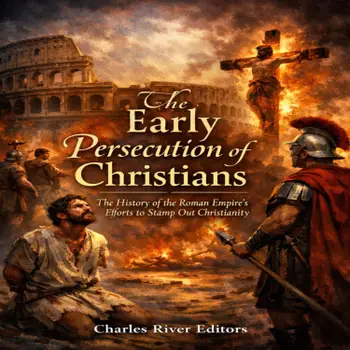
Given that backdrop, it might not be surprising that the Romans had little tolerance for a nascent monotheistic offshoot of Judaism: Christianity. Early Christianity’s most famous and effective missionary, Paul the Apostle, was martyred during the reign of Nero, and oppression as an official state policy would take hold under Nero in the wake of the Great Fire of Rome. Nero ranks among the very worst of the emperors, alongside the likes of mad Caligula, slothful Commodus, and paranoid Domitian, a figure so hated that, in many ancient Christian traditions, he is literally considered the Antichrist. According to a notable Biblical scholar, the coming of the Beast and the number 666 in the Book of Revelation are references to Nero.
The extent of the oppression would continue to ebb and flow for centuries, often depending on the personal whims of emperors, before reaching a fevered pitch in the 3rd century as Rome was wracked by civil wars and constant unrest. In the wake of Diocletian’s murderous policies, Constantine would finally reverse the discrimination before ultimately converting the entire empire.