Om den här boken

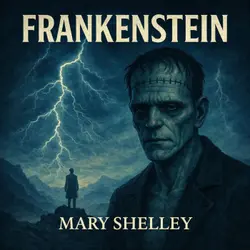
Mary Shelley, the renowned author behind the iconic novel Frankenstein, also penned The Last Man, a lesser-known but equally powerful work. The Last Man is a captivating tale set in a post-apocalyptic world, delving into themes of loneliness, mortality, and the human spirit. Shelley's writing style is rich in vivid imagery and emotive language, reminiscent of the Romantic literary movement of the early 19th century. The Last Man offers a unique perspective on societal collapse and the resilience of the individual amidst chaos. In contrast, Frankenstein explores complex ethical questions surrounding creation and identity, showcasing Shelley's prowess in crafting thought-provoking narratives. Both novels showcase Shelley's ability to blend elements of science fiction, gothic horror, and philosophical inquiry into her storytelling. Mary Shelley's experiences with personal tragedy and societal upheaval undoubtedly influenced her exploration of these profound themes in her works. Readers interested in thought-provoking narratives that challenge conventional notions of humanity and society will find both The Last Man and Frankenstein to be essential reads in the realm of classic literature.

In this enriched edition, we have carefully created added value for your reading experience:

- A comprehensive Introduction outlines these selected works' unifying features, themes, or stylistic evolutions.

- The Author Biography highlights personal milestones and literary influences that shape the entire body of writing.

- A Historical Context section situates the works in their broader era—social currents, cultural trends, and key events that underpin their creation.

- A concise Synopsis (Selection) offers an accessible overview of the included texts, helping readers navigate plotlines and main ideas without revealing critical twists.

- A unified Analysis examines recurring motifs and stylistic hallmarks across the collection, tying the stories together while spotlighting the different work's strengths.

- Reflection questions inspire deeper contemplation of the author's overarching message, inviting readers to draw connections among different texts and relate them to modern contexts.

- Lastly, our hand‐picked Memorable Quotes distill pivotal lines and turning points, serving as touchstones for the collection's central themes.
Kom igång med den här boken idag för 0 kr

  • Få full tillgång till alla böcker i appen under provperioden
  • Ingen bindningstid, avsluta när du vill
Prova gratis nu
Mer än 52 000 personer har gett Nextory 5 stjärnor i App Store och på Google Play.

Mer av Mary Shelley

  1. 4.5

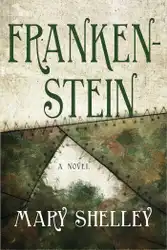
    Frankenstein :

    Mary Shelley

  2. 3.1

    Frankenstein

    Mary Shelley

  3. 3.9

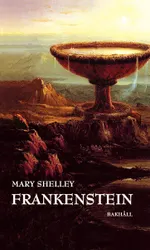
    Frankenstein

    Mary Shelley

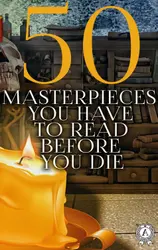
  4. 50 Masterpieces you have to read before you die

    Frances Hodgson Burnett, Homer, Charles Dickens, Lyman Frank Baum, Nathaniel Hawthorne, Thomas Hardy, Robert Louis Stevenson, Henry Haggard, Wilkie Collins, H.G. Wells, Sir Walter Scott, Lucy Maud Montgomery, Louisa May Alcott, Henry Fielding, Mary Shelley, Arthur Conan Doyle, Leo Tolstoy, Euripides, Fyodor Dostoevsky, Alexander Pushkin, James Fenimore Cooper, Daniel Defoe, Joseph Conrad, Jonathan Swift, William Shakespeare, Oscar Wilde, John Bunyan, Charles Darwin, Alfred Tennyson, Bram Stoker, James Joyce, Dante Alighieri, Howard Pyle, Jane Austen, Emily Bronte, Giovanni Boccaccio, Rudyard Kipling

  5. 3.9

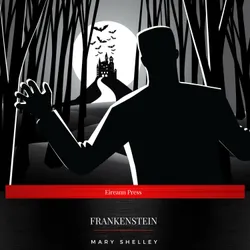
    Frankenstein

    Mary Shelley

  6. Frankenstein

    Mary Shelley

  7. 3.1

    Frankenstein

    Mary Shelley

  8. 3.9
    #1

    Frankenstein

    Mary Shelley

  9. 4.1

    Frankenstein

    Mary Shelley

  10. 4.0

    10 Masterpieces you have to listen before you die (Halloween Edition)

    H.P. Lovecraft, Washington Irving, Robert Louis Stevenson, Henry James, William Black, Mary Shelley, Bram Stoker, Gaston Leroux, Edgar Allan Poe, Joseph Thomas Fanu

  11. 50 Masterpieces you have to read before you die vol: 1

    Louisa May Alcott, Jane Austen, Honoré de Balzac, Henri Barbusse, Anne Brontë, Charlotte Brontë, Emily Brontë, Edgar Rice Burroughs, Samuel Butler, Lewis Carroll, Willa Cather, Miguel de Cervantes, Kate Chopin, John Cleland, Wilkie Collins, Joseph Conrad, Charles Dickens, Fyodor Dostoevsky, Alexandre Dumas, George Eliot, Ralph Waldo Emerson, Gustave Flaubert, E. M. Forster, H. Rider Haggard, Thomas Hardy, Nathaniel Hawthorne, Robert Heinlein, Victor Hugo, Aldous Huxley, Henry James, D. H. Lawrence, H.P. Lovecraft, Herman Melville, John Milton, Robert Musil, Vladimir Nabokov, George Orwell, Edgar Allan Poe, Marcel Proust, William Shakespeare, Mary Shelley, Leo Tolstoy

  12. 5.0

    Mary Shelley's Frankenstein

    Mary Shelley