Om den här boken

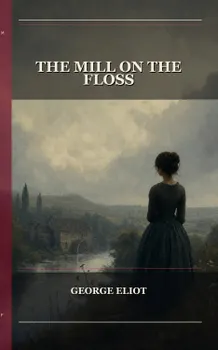
Published in 1860, The Mill on the Floss was the second novel published by George Eliot (the pen name of Mary Ann Evans). Set in the late 1820s or early 1830s, it tells the story of two young people, Tom and Maggie Tulliver, from their childhood into early adulthood. Their father, Jeremy Tulliver, owns Dorlcote Mill on the river Floss, and the children grow to adolescence in relative comfort. However Mr. Tulliver is litigious and initiates an unwise legal suit against a local solicitor, Mr. Wakem. The suit is thrown out and the associated costs throw the Tulliver family into poverty, and they lose possession of the mill. The main character of the novel is Maggie Tulliver, an intelligent and passionate child and young woman, whose mental, romantic, and moral struggles we follow closely. As in Eliot's other novels, the author shows a realistic and sympathetic understanding of human behavior. The Mill on the Floss is regarded as a classic of English literature, and has been made into both a film and a television series. George Eliot (died 1880) was one of the most distinguished authors of the Victorian age. Their work has endured across generations and continues to be read and studied worldwide. As a work of classic literary fiction, The Mill On The Floss exemplifies the narrative craft and social insight that defined great storytelling of its era. Literary fiction of this period was characterized by careful attention to character psychology, social milieu, and the moral questions that animated public discourse.
Kom igång med den här boken idag för 0 kr

  • Få full tillgång till alla böcker i appen under provperioden
  • Ingen bindningstid, avsluta när du vill
Prova gratis nu
Mer än 52 000 personer har gett Nextory 5 stjärnor i App Store och på Google Play.

  1. Toppbetyg
    4.8

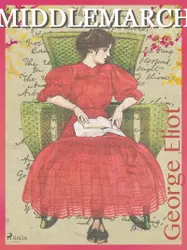
    Middlemarch

    George Eliot

  2. 4.1

    Middlemarch

    George Eliot

  3. 2.9

    Middlemarch - Del 1

    George Eliot

  4. 3.6

    Middlemarch

    George Eliot

  5. 50 Masterpieces you need to read

    Louisa May Alcott, Jane Austen, Joseph Conrad, D. H. Lawrence, George Eliot, Leo Tolstoy, James Joyce, Charles Dickens, Bram Stoker, Oscar Wilde, Honoré de Balzac, Edgar Rice Burroughs, Anne Brontë, Charlotte Brontë, Emily Brontë, Lewis Carroll, Willa Cather, Miguel de Cervantes, E. Cummings, Fyodor Dostoyevsky, Daniel Defoe, Arthur Conan Doyle, Alexandre Dumas, Gustave Flaubert, Henry James, Victor Hugo

  6. 3.0

    50 Masterpieces you have to read before you die vol: 1 (2020 Edition) : Included: Little Women, The Richest Man in Babylon Emma, The Call Of The Wild ....

    Louisa May Alcott, Dante Alighieri, Marcus Aurelius, Jane Austen, L. Frank Baum, Charlotte Brontë, Emily Brontë, Anne Brontë, Miguel de Cervantes, Agatha Christie, George S. Clason, Arthur Conan Doyle, Joseph Conrad, Charles Dickens, Fyodor Dostoyevsky, Alexandre Dumas, George Eliot, G.K. Chesterton, G.K. Chesterton, Zane Grey, Nathaniel Hawthorne, Napoleon Hill, Homer, Victor Hugo, Frances Hodgson Burnett, Washington Irving, Henry James, Franz Kafka, Rudyard Kipling, Jack London, Leo Tolstoy, H.P. Lovecraft, Lucy Maud Montgomery, Joseph Murphy, Robert Louis Stevenson, Edgar Allan Poe, Marcel Proust, Publius, Mary Shelley, Bram Stoker, Mark Twain, Sun Tzu, Lew Wallace, Wallace D. Wattles, H.G. Wells

  7. 4.2

    100 Quotes That Will Change Your life

    Napoleon Hill, Steve Jobs, Lao Tzu, Sam Levenson, Winston Churchill, George Eliot, Franklin D. Roosevelt, Theodore Roosevelt, Henry Ford, Buddha, Norman Vincent Peale, John D. Rockefeller, Oscar Wilde, Elon Musk, Mahatma Gandhi, Stephen King, Vincent van Gogh, Andrew Carnegie, Paulo Coelho, Muhammad Ali

  8. 3.3

    Daniel Deronda

    George Eliot

  9. Toppbetyg
    4.8

    Middlemarch

    George Eliot

  10. 5.0

    Middlemarch

    George Eliot

  11. 2.8

    Förfärande kvinnor

    Mary Elisabeth Braddon, Charlotte Brontë, Emily Brontë, Amelia Edwards, George Eliot, Charlotte Perkins Gilman, Adelaide Ann Procter, Charlotte Riddell, Hesba Stretton, Ellen Wood

  12. 4.0

    Middlemarch

    George Eliot