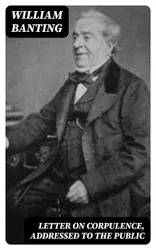
William Banting's Letter on Corpulence, Addressed to the Public is a landmark Victorian pamphlet in the history of dietetics, written as a candid epistolary testimony rather than a formal medical treatise. Combining personal narrative, practical instruction, and public-minded exhortation, it recounts Banting's rejection of bread, sugar, potatoes, beer, and similar starches in favor of meat, fish, vegetables, fruit, and limited wine. Its plain, persuasive prose places it within nineteenth-century self-help literature while anticipating modern discussions of carbohydrate restriction. Banting was not a physician but a prosperous London undertaker whose social respectability and bodily suffering gave the work unusual authority. Long afflicted by obesity and frustrated by exercise, spa cures, purgatives, and conventional advice, he adopted the regimen recommended by Dr. William Harvey, who had been influenced by contemporary physiological research on digestion and metabolism. Banting's decision to publish sprang from gratitude, evangelical zeal, and a desire to spare others the humiliations he had endured. This book is recommended to readers interested in medical history, nutrition, Victorian print culture, or the origins of popular dieting. Brief yet consequential, it reveals how personal experience can reshape public health discourse and why "Banting" became a verb synonymous with slimming.
This enriched edition has been carefully crafted to add value to your reading experience.
- A succinct Introduction situates the work's timeless appeal and themes.
- The Synopsis outlines the central plot, highlighting key developments without spoiling critical twists.
- A detailed Historical Context immerses you in the era's events and influences that shaped the writing.
- A thorough Analysis dissects symbols, motifs, and character arcs to unearth underlying meanings.
- Reflection questions prompt you to engage personally with the work's messages, connecting them to modern life.
- Hand‐picked Memorable Quotes shine a spotlight on moments of literary brilliance.
- Interactive footnotes clarify unusual references, historical allusions, and archaic phrases for an effortless, more informed read.