À propos de ce livre

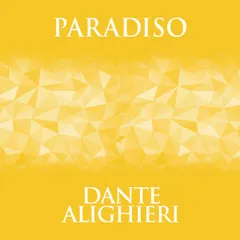
Paradiso is the third and final part of The Divine Comedy, Dante's epic poem describing man's progress from hell to salvation. In it, the author progresses through nine concentric spheres of heaven. Corresponding with medieval astronomy, the Moon, Mercury, Venus, the Sun, Mars, Jupiter and Saturn deal with the four cardinal virtues Prudence, Fortitude, Justice and Temperance. The remaining two spheres are the fixed stars and the Primum Mobile, containing the purely virtuous and the angels, followed by the Empyrean, or God itself, continuing the 9+1 theme that runs throughout the Divine Comedy. The Paradiso is more theological in nature than the Inferno and the Purgatorio, features encounters with several great saints, and finishes with the author's soul becoming aligned with God's love.

Commencez ce livre dès aujourd'hui pour 0 €

  • Accédez à tous les livres de l'app pendant la période d'essai
  • Sans engagement, annulez à tout moment
Essayer gratuitement
Plus de 52 000 personnes ont noté Nextory 5 étoiles sur l'App Store et Google Play.

  1. Nouveau
    2.4

    The Divine Comedy

    Dante Alighieri

  2. Nouveau
    2.4

    The Divine Comedy

    Dante Alighieri

  3. Nouveau

    The Divine Comedy : Hell, Purgatory and Paradise

    Dante Alighieri

  4. Nouveau

    The Divine Comedy : Hell, Purgatory and Paradise

    Dante Alighieri

  5. Nouveau
    2.4

    The Divine Comedy

    Dante Alighieri

  6. Les mieux notés
    4.6

    La Divina Comedia

    Dante Alighieri

  7. Nouveau

    La Divina Commedia

    Dante Alighieri

  8. 50 Clásicos que debes leer antes de morir

    Dante Alighieri, Aristóteles, Jane Austen, Charles Baudelaire, Giovanni Boccaccio, Anne Brontë, C. Collodi, James Fenimore Cooper, Fedor Mikhaïlovitch Dostoïevski, Arthur Conan Doyle, Alexandre Dumas, José de Espronceda, Gustave Flaubert, Sigmund Freud, Benito Pérez Galdós, Kahlil Gibran

  9. 100 Clásicos de la Literatura Universal

    Francis Scott Fitzgerald, Mary Shelley, Lyman Frank Baum, Louisa May Alcott, Dante Alighieri, Jane Austen, Ambrose Bierce, Emily Brontë, Edgar Rice Burroughs, Lewis Carroll, Wilkie Collins, René Descartes, Charles Dickens, Emily Dickinson, Alexandre Dumas, Gustave Flaubert, Benito Pérez Galdós, Johann Wolfgang Goethe, Thomas Hardy, E. T. Hoffmann, Washington Irving, Henry James, James Joyce, Franz Kafka

  10. 100 Obras Maestras Que Debes Leer Antes De Morir

    Francis Scott Fitzgerald, Mary Shelley, L. Frank Baum, Edith Nesbit, Dante Alighieri, Jane Austen, Ambrose Bierce, Emily Brontë, Edgar Rice Burroughs, Lewis Carroll, Wilkie Collins, René Descartes, Charles Dickens, Emily Dickinson, Alexandre Dumas

  11. The Epic Poems Collection : Cinq chefs-d'oeuvre de la poesie epique occidentale

    Homer, Virgil, Dante Alighieri, William Shakespeare, John Milton

  12. Harvard Classics : The Five-Foot Shelf of Books

    Aesop, Dante Alighieri, Hans Christian Andersen, Augustine of Hippo, Marcus Aurelius, Jane Austen, Francis Bacon, Honoré de Balzac, Francis Beaumont, Bjørnstjerne Bjørnson, Thomas Browne, Robert Browning, John Bunyan, EDMUND BURKE, Robert Burns, Lord Byron, Thomas Carlyle, Benvenuto Cellini, Miguel de Cervantes, Marcus Tullius Cicero, Richard Henry Jr., Charles Darwin, Alphonse Daudet, Thomas Dekker, Charles Dickens, Fyodor Dostoevsky, John Dryden, Charles W. Eliot, George Eliot, Ralph Waldo Emerson, Epictetus, John Fletcher, Theodor Fontane, Benjamin Franklin, Johann Wolfgang Goethe, Oliver Goldsmith, Jacob Grimm, Edward Everett Hale, Bret Harte, Nathaniel Hawthorne, Homer, Victor Hugo, Washington Irving, Henry James, Ben Jonson, Gottfried Keller, Thomas à Kempis, Alexander L. Kielland, Martin Luther, Niccolò Machiavelli, Alessandro Manzoni, Christopher Marlowe, Philip Massinger, Guy De Maupassant, John Stuart Mill, John Milton, Thomas More, William Morris, Alfred de Musset, William Allan Neilson, William Penn, Plato, Pliny the Younger, Plutarch, George Sand, Percy Bysshe Shelley, Richard Brinsley Sheridan, Adam Smith, Laurence Sterne, Theodor Storm, William Makepeace Thackeray, Leo Tolstoy, Ivan Turgenev, Mark Twain, Juan Valera, Virgil, Izaak Walton, John Webster, John Woolman