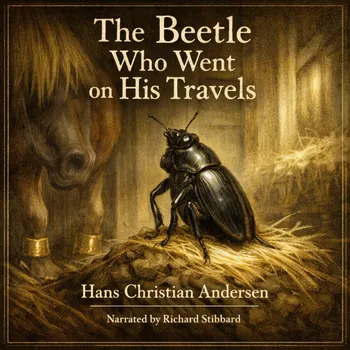
In The Beetle Who Went on His Travels, Hans Christian Andersen delivers one of his sharpest and most quietly amusing moral tales—a story that looks light and whimsical on the surface, yet cuts deep with irony and insight.
When a proud beetle takes offense at the Emperor’s horse receiving golden shoes, he sets off into the world convinced that he, too, deserves recognition, luxury, and admiration. What follows is a series of encounters—comic, frustrating, and revealing—in which the beetle repeatedly misunderstands the world around him, mistaking misfortune for persecution and coincidence for destiny.
With dry humor and elegant restraint, Andersen exposes the absurdity of inflated self-importance and the way pride reshapes reality to suit itself. The beetle’s travels are not heroic adventures, but a mirror held up to human vanity, entitlement, and the comforting stories we tell ourselves to remain satisfied.
Narrated with clarity and subtle wit by Richard Stibbard, this classic fairy tale reveals Andersen at his most ironic and perceptive—proving that even the smallest creature can carry a very human flaw.